Senza titolo
Nuovo titolo
You are taking part in an exhibition project with Darte. What drew you to the project, and what impression have you formed so far of Darte and the way we work with artists?
Adriana Orlandi contacted me. She told me about this group exhibition at Must Museum and from the beginning, I found it to be a very interesting challenge. Throughout the process, Andrea Tapparini and Matteo Novembre have been incredibly kind and professional with great attention to every detail which I particularly appreciate.
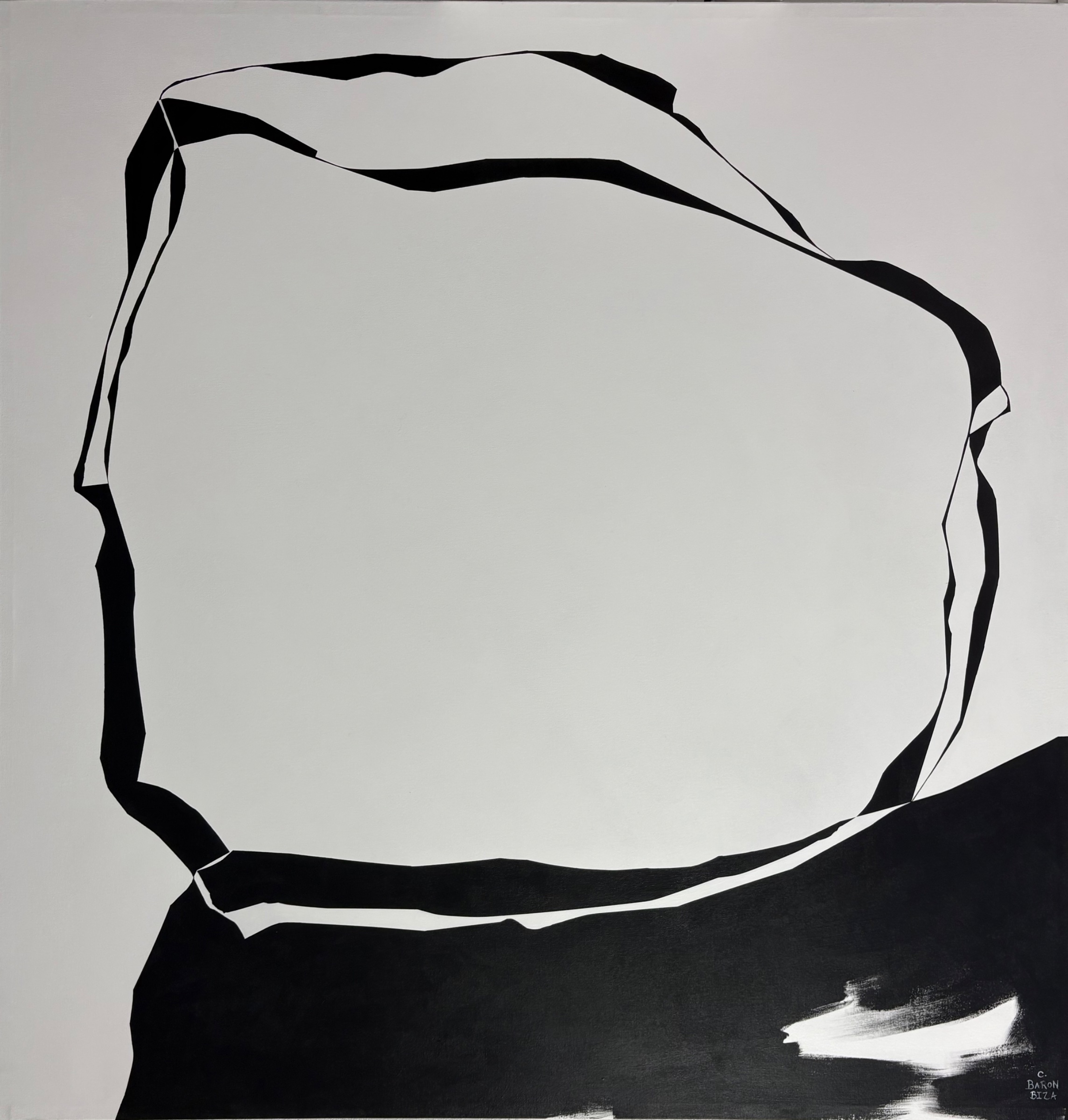
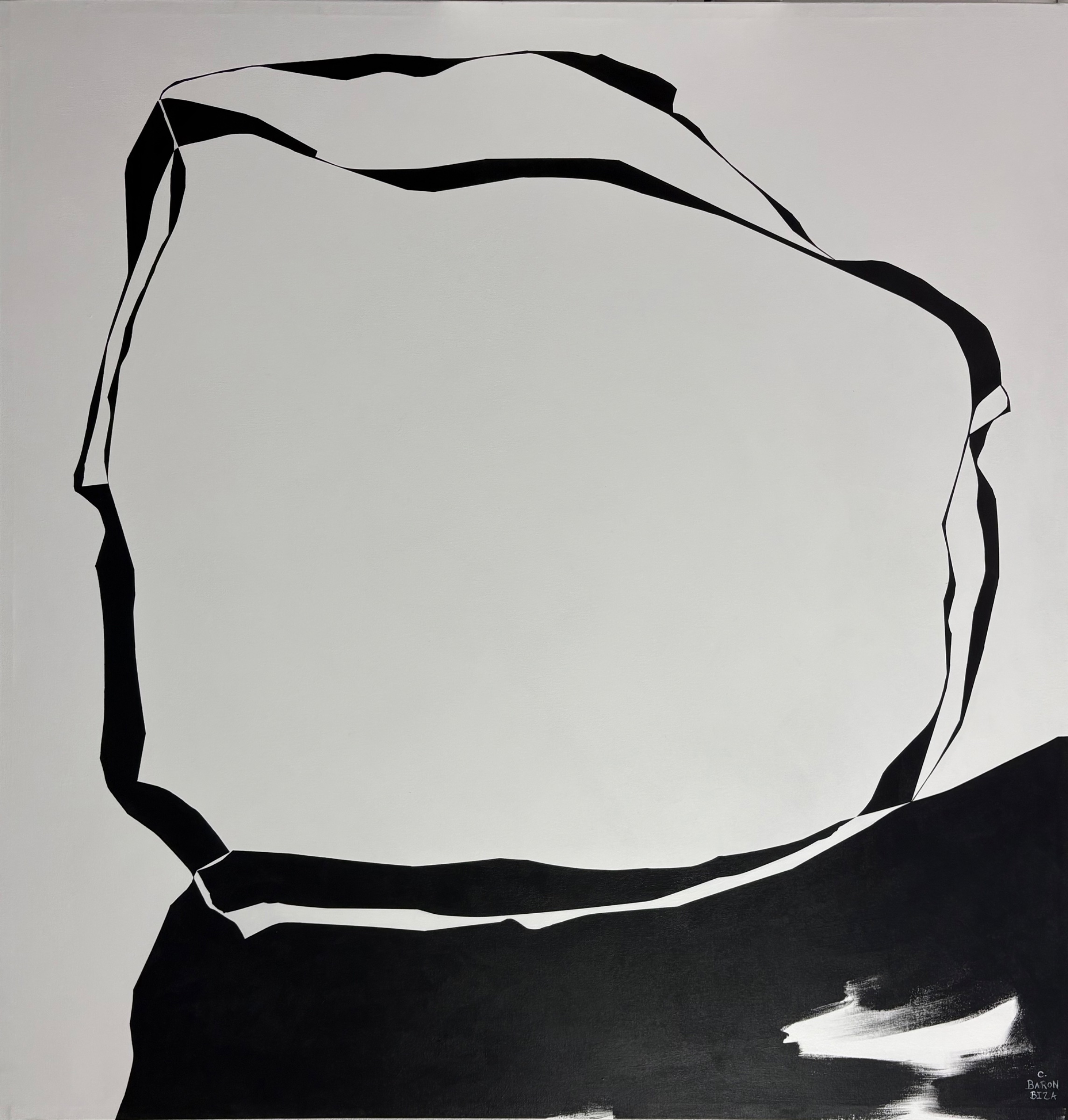
Your practice begins with a very precise question: how little is necessary for an image to emerge? How do you know when a composition has reached that point and no longer needs anything else?
When I feel that there is nothing more to add and nothing more to take away without altering its balance. It is that moment when the work seems to find its own place, and I feel that any further intervention would be unnecessary.
Your artistic practice has evolved over many years. Was there a particular moment, encounter, or experience that truly changed the way you saw your work and your path as an artist?
Since I was a child, I have a clear memory of myself painting; I have always painted. The way I see my work has evolved over time, alongside the different moments and experiences in my life. In some way, everything I experience finds its way into my painting. For that reason, I cannot point to a single moment that changed the way I see my work as an artist. I feel it has been an ongoing process, in which my life and painting have continued to evolve together.
In your paintings, empty space is not a background but an active part of the composition. What can an empty space communicate that a painted form cannot?
Perhaps silence. The empty space can hold a kind of silence that a painted form cannot. It is not an absence for me, but a presence in its own right.
In your recent work, you have moved towards greater reduction, often through black and white. What have you discovered by removing colour? And what becomes more visible when only form, weight, and space remain?
This series of paintings, which I have been developing intermittently since 2023, began in a hospital room in Buenos Aires. I was accompanying my father there for more than tree weeks and with some free time on my hands, I started painting small works in the room beside him. The reduction of my color palette came initially from a practical circumstance: I walked to and from the hospital every day, so I could only carry a limited amount of materials. The restricted palette gradually led me toward simpler, more minimal forms. In a way, the room itself also influenced the work. The furniture was constantly being moved; everything had wheels and nothing seemed fixed, while the space of the room itself remained unchanged. What changed was the light coming through the large window beside his bed, which brought a sense of warmth to the otherwise simple space. Working in black and white made me more aware of the relationship between form, weight, movement and space. Without color, these elements become much more present and exposed.
You describe your process as intuitive, yet also based on constant adjustment. How do you know when to follow instinct and when to intervene in order to restore balance and order?
I always follow my instinct. For me, balance and order can also emerge from chaos; I often find the order within the chaos itself. I don’t see instinct and structure as opposites, but rather as part of the same process.
In this series, however, my focus has been on refining and reducing: the form, the color, and the silences or spaces between things. That process of distillation is where my main pictorial focus lies at this stage of my work.
Abstract work can change significantly when it leaves the studio and encounters a different space, audience, or city. How important is it for you to exhibit physically and see your work exist in different contexts?
I paint first and foremost for myself. My series are connected to my own history; in a way, I paint my story. But once a work leaves my studio, it is no longer entirely mine. It becomes part of someone else’s experience, and each viewer can create their own story through their eyes, their own surroundings and their own history. That is why exhibiting my work in different contexts is extremely important to me. Seeing the paintings in new spaces, cities and environments allows them to take on new meanings and in a sense to become someone else’s story.
Your background also includes design, and you have built your career through different experiences and contexts. Do you think making strong work is enough today, or does an artist also need to know how to present it, communicate their practice, and build their career professionally?
I did not come from a Fine Arts background as you mentioned; my background is in design. In that sense, I feel fortunate because I have built my career by embracing opportunities that interest me, challenge me and that I genuinely enjoy. I have never followed a linear or predetermined path; not have I felt the need to. Of course, I believe it is important to continue developing and showing the work, but not in a frantic way, where everything has to be constantly visible and available at the click of a phone. For me, it is also about knowing how to choose: where, when and how to present the work. I believe that what matters most is the work itself, and that everything surrounding it should serve and support it.
What does an artist need today, beyond selling their work?
Time. Time to be in the studio and make the work.
You have written that, for you, abstraction is a way of discovering an image rather than illustrating one that already exists. After all these years of painting, what are you still trying to discover?
I don’t really know and I think that is part of what keeps me painting. I still want to be surprised-to keep discovering new forms and possibilities without knowing exactly where they will lead me. There is something playful about that process, almost like being a child again: sitting down and drawing without thinking about anything else, simply seeing what emerges. I hope I never lose that sense of curiosity and the ability to surprise myself.