
Giuseppe Gallace: painting what is missing
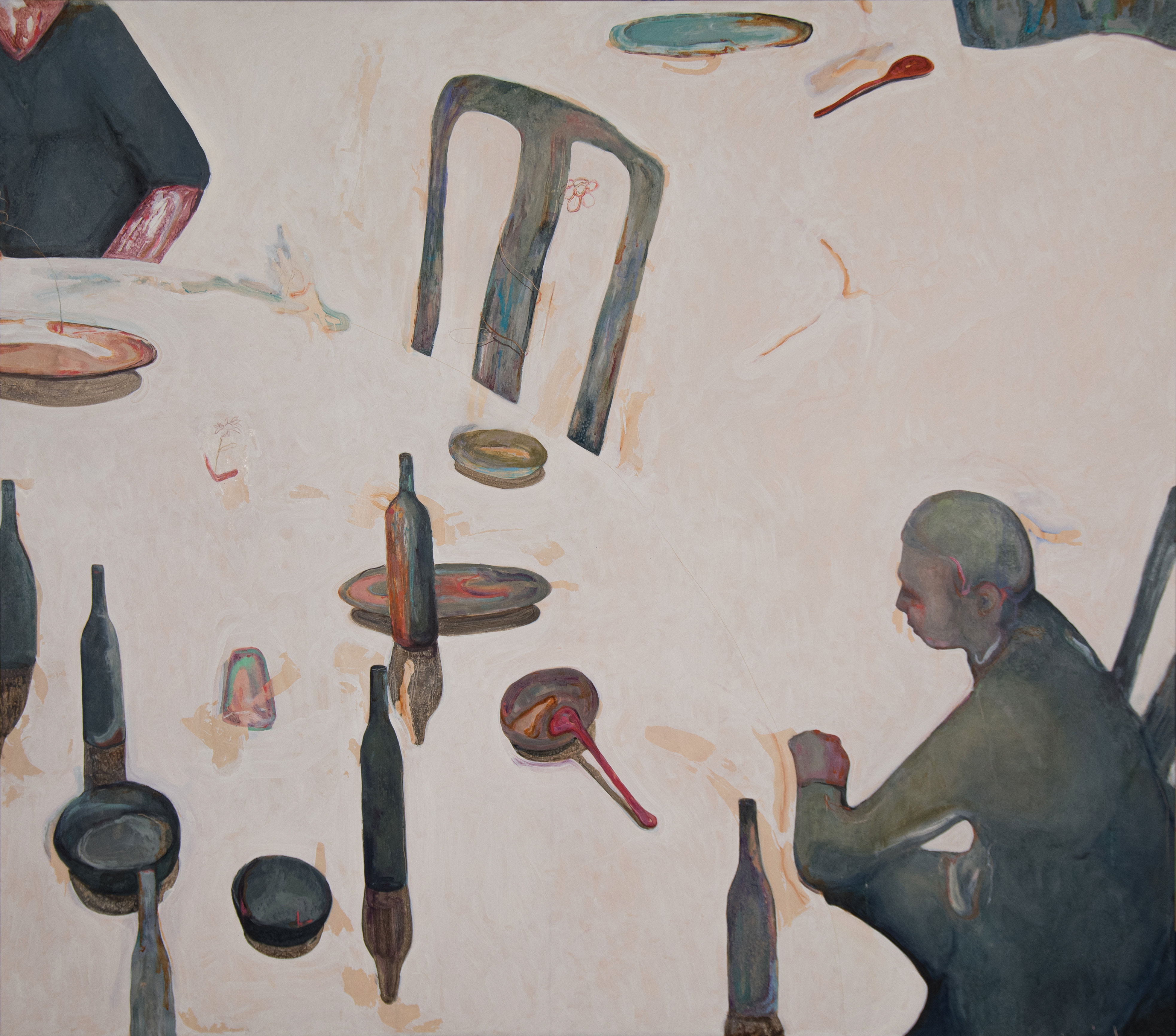
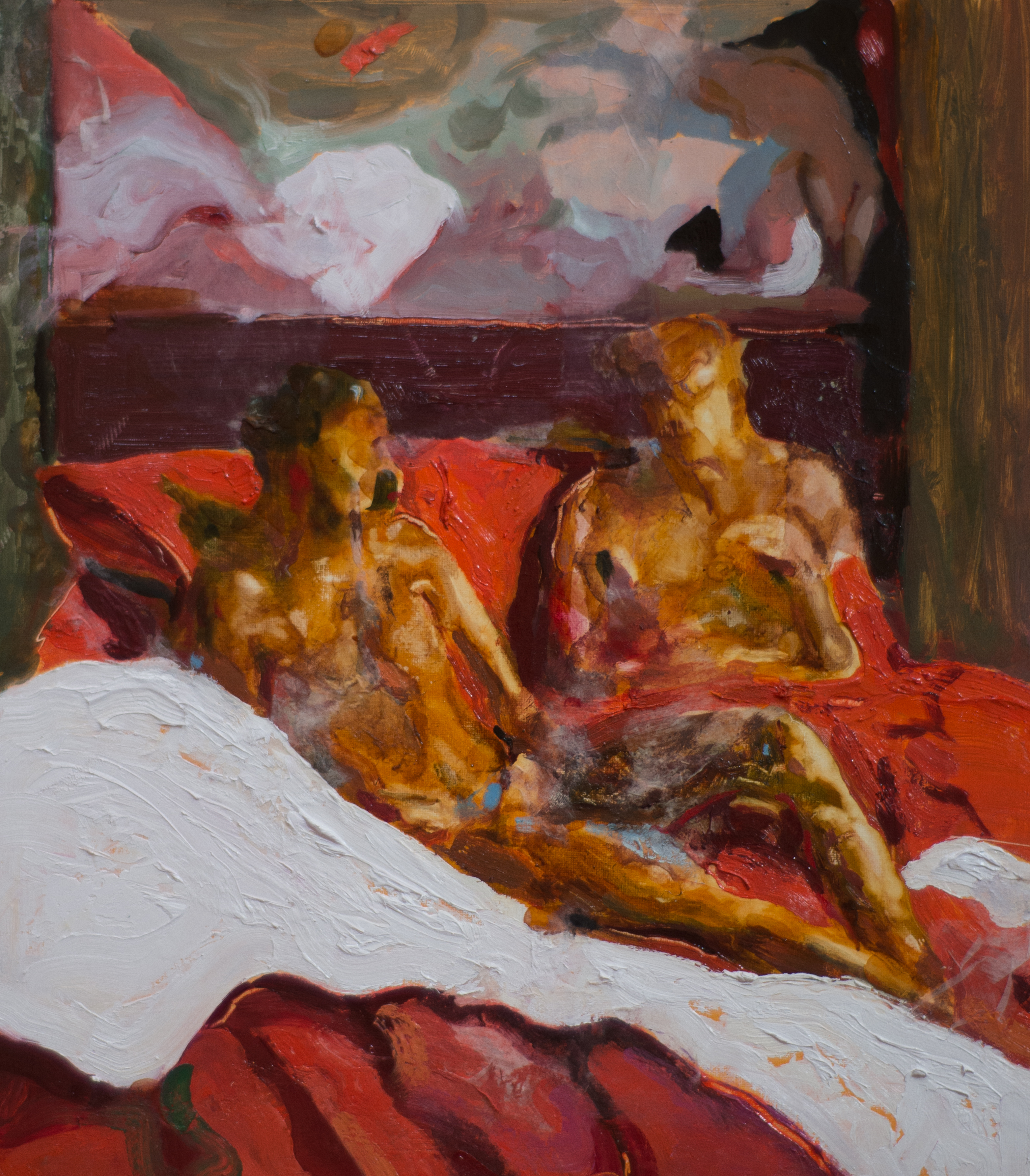
Domestic interiors, figures seemingly about to appear or disappear, suspended colours and details that interrupt the logic of a scene. Giuseppe Gallace creates paintings in which what is missing matters as much as what is represented. In 2025, Darte presented Fragmenta, his solo exhibition in the Sacristy of San Francesco della Scarpa in Lecce: eight oil paintings exploring a practice that does not tell complete stories, but leaves viewers to imagine what happened before and what might happen next.
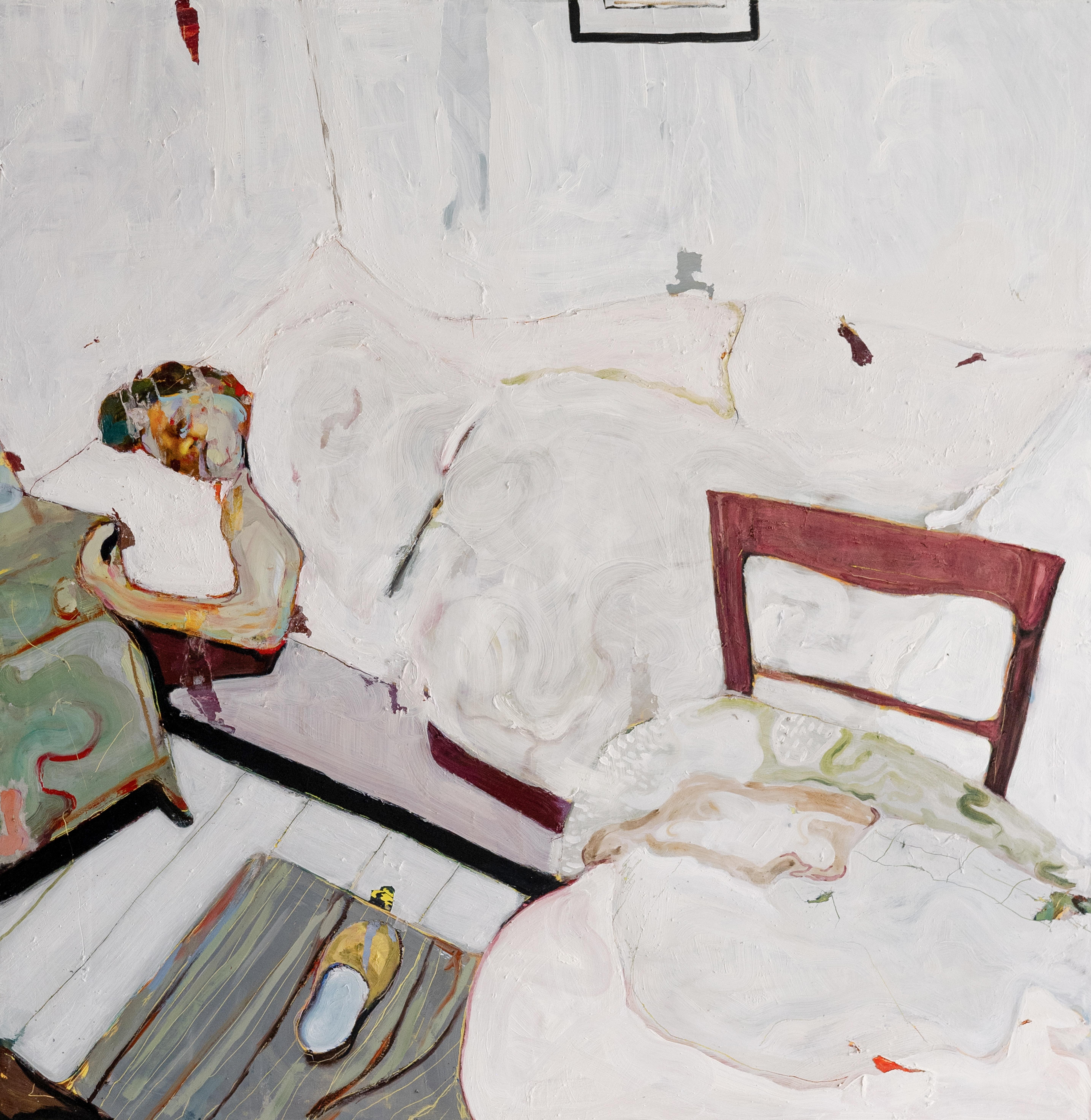
“The viewer is playfully challenged by the artist in a mental exercise, invited to complete the narrative and fill in its gaps.”
— Von Buren Contemporary, Giuseppe Gallace biography
A room, someone who may have been there
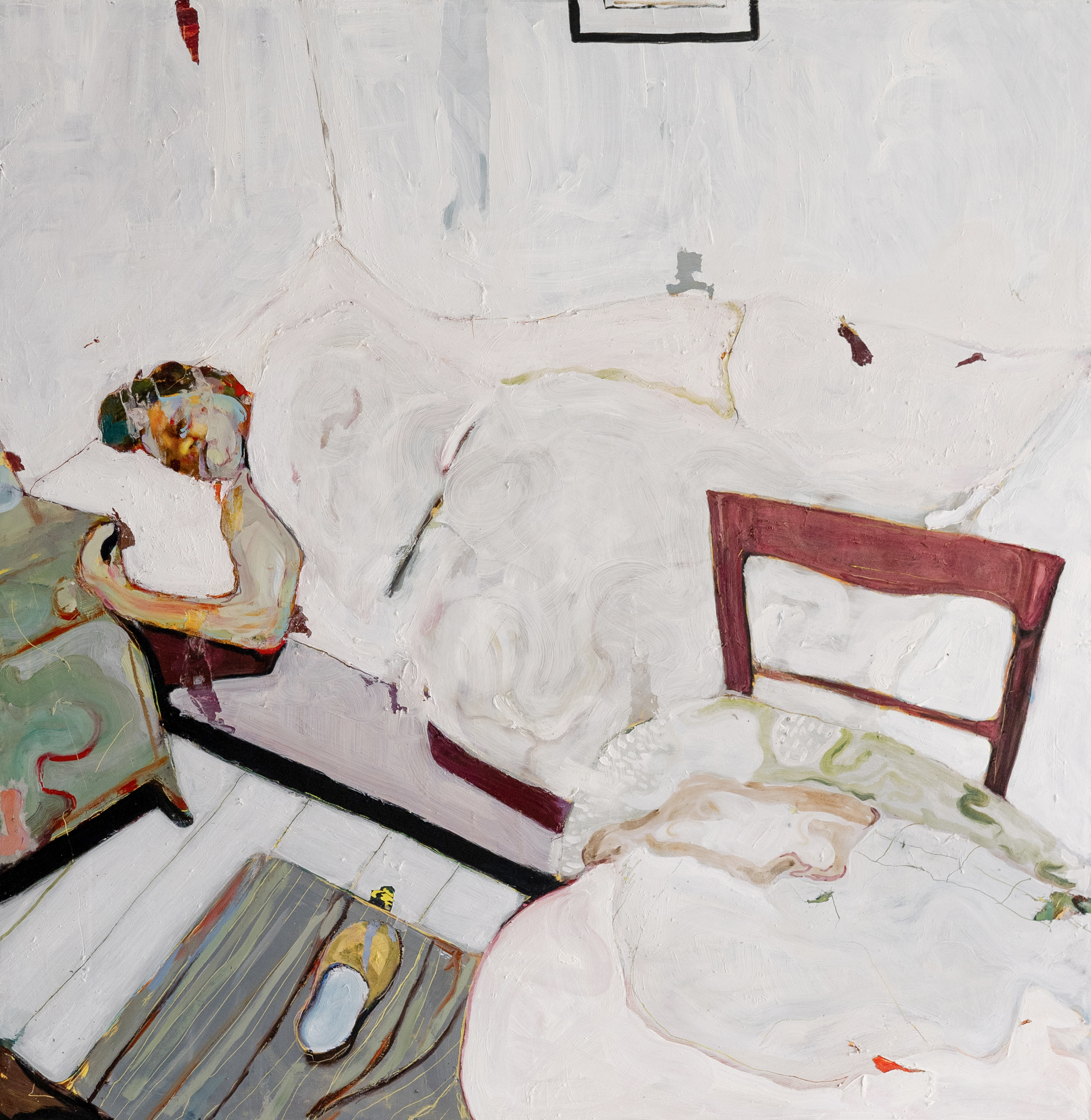
A room can feel familiar without ever becoming truly welcoming. We may recognise a chair, a table or a window, sense that someone has been there, and still feel that something is slightly out of place. Much of Giuseppe Gallace’s painting develops within this subtle distance between recognition and estrangement. Born in Soverato in 1993 and trained at Turin’s Accademia Albertina di Belle Arti, Gallace is now included among the artists represented by Von Buren Contemporary, which describes a practice built around domestic interiors and outdoor settings where human figures are often only suggested and intimacy is accompanied by a persistent sense of alienation. Gallace does not appear interested in giving the viewer a fully resolved scene. Narratives remain open, certain forms seem to stop before completion, relationships between subjects are left unexplained, and colour does not necessarily make what is happening easier to understand. Von Buren Contemporary identifies precisely this incompleteness as one of the central mechanisms of his work: viewers are invited to mentally fill the gaps deliberately left by the artist, turning observation into a form of participation. The question, then, is not only what Gallace chooses to paint, but how much he deliberately chooses not to show us.
Absence is not an empty space
In narrative painting, we are accustomed to looking for clues that might lead towards an explanation: who the people are, what connects them, where they are and what has just happened. Gallace uses many of these same elements, but instead of organising them towards a clear answer, he leaves the scene in an unstable condition. The result is a form of painting in which emptiness does not mean an absence of content; it becomes precisely the space in which the viewer begins constructing possibilities. Domestic interiors are particularly effective in this respect. The home is one of the environments we recognise most quickly and one onto which we readily project memory, safety and belonging; in Gallace’s paintings, however, that familiarity is continually disturbed by ambiguous presences, proportions, colours and details that prevent the image from fully settling. In 2024, Von Buren Contemporary described his canvases as sparse and disquieting, marked by loneliness but also by a persistent vitality, again emphasising the deliberately incomplete nature of their narratives. This contradiction matters: the paintings are not empty because something is missing; they become denser precisely because something is missing. Absence forces viewers to enter the image with their own memories, associations and even unease, because an unfinished story can be considerably harder to control than one whose ending we already know.
Fragmenta: eight paintings inside a sacristy
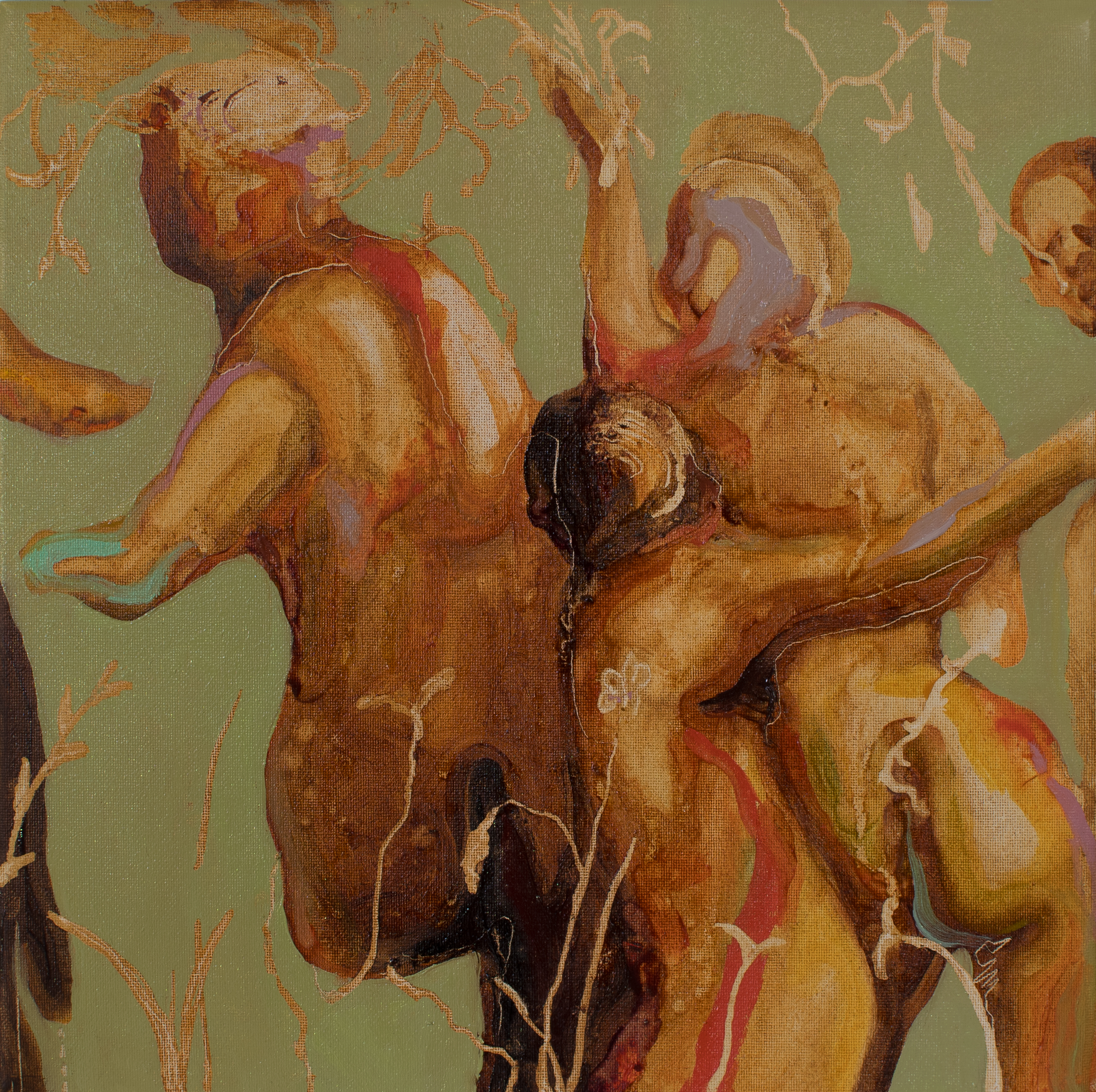
In June 2025, as part of Lecce Art Week, Darte presented Gallace’s solo exhibition Fragmenta, curated by Irene Fedele in the Sacristy of the San Francesco della Scarpa complex. The project brought together eight oil paintings and focused on the elements that most clearly defined his practice at the time: apparently familiar domestic interiors, ambiguous figures, barely articulated structures, evanescent colours and narratives continually interrupted. Both Itinerari nell’Arte and Arte e Luoghi, presenting the fourth edition programme, emphasised the central role played by emptiness within the exhibition. The choice of the Sacristy also contributed to the way the project could be read. This was not the monumental nave of the church but a smaller, more lateral space, historically associated with preparation, safekeeping and what precedes public ritual. Without turning the architecture into a literal explanation of the works, that more intimate condition allowed Gallace’s paintings to be encountered almost as fragments of private memory, images placed within a transitional space between what remains backstage and what is eventually revealed. The title Fragmenta therefore did not simply describe formally incomplete painting. Fragmentation became a narrative method: showing enough to draw us in while withholding enough to prevent us from knowing exactly where we have arrived.
When the everyday stops being innocent
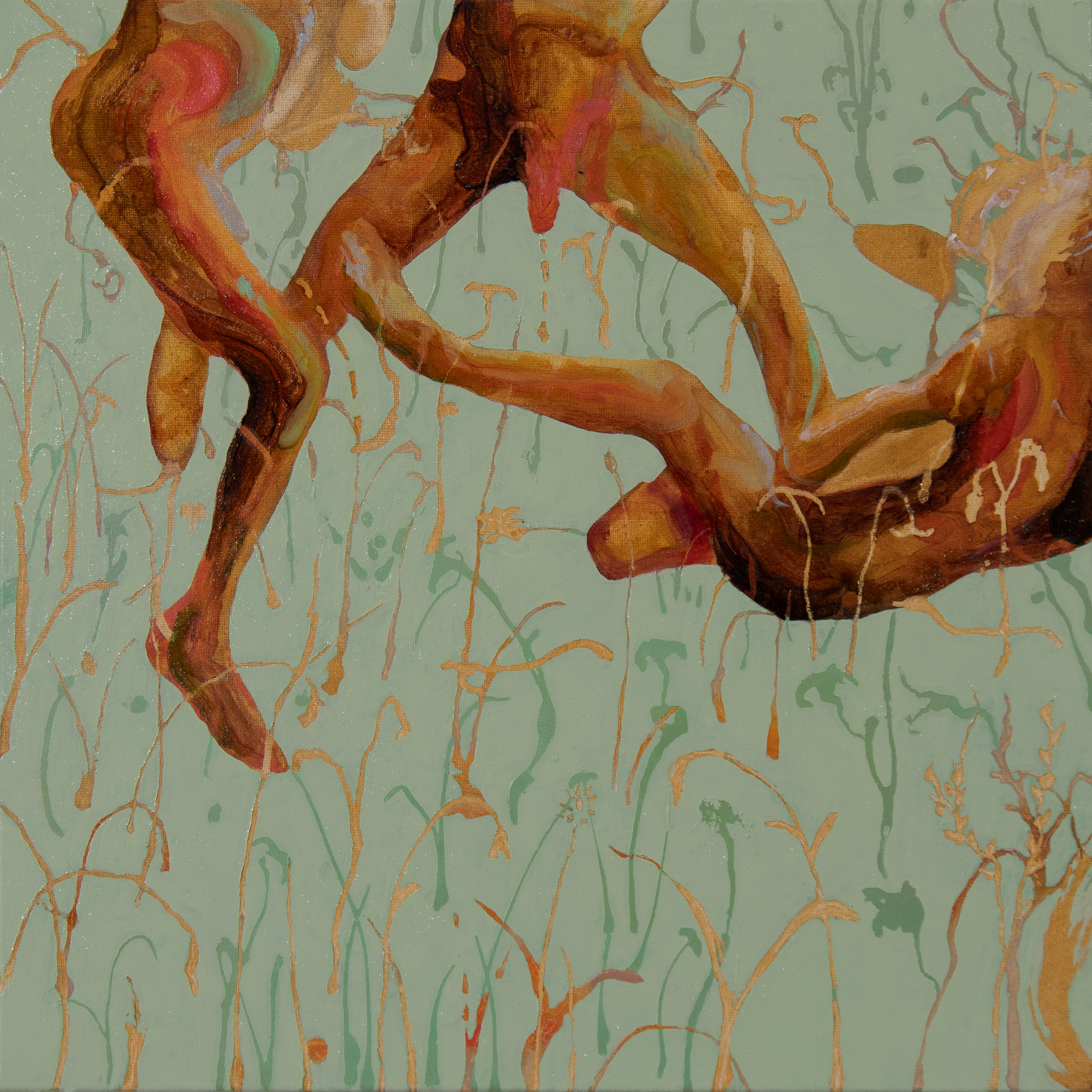
One of the most interesting qualities of Gallace’s painting is that it does not necessarily require an exceptional event in order to generate tension. Many of his images begin with ordinary environments and objects, yet something in their arrangement prevents everyday life from remaining entirely innocent. Figures can feel absent while still leaving a trace, or present without ever becoming fully accessible; a space may be filled with light without becoming reassuring, while a natural element can appear simultaneously vital and fragile. In later developments of his research, this ambiguity became even more visible through recurring floral elements. In 2026, for the two-person exhibition Frammenti at SAC – Spazio Arte Contemporanea, Sofia De Pascali’s critical text explicitly placed Gallace within a territory close to Magical Realism, understood as an unstable threshold where the everyday and the fantastic coexist without disturbing the image’s apparent stillness. Flowers, often fragile and on the verge of bending, break through the painted surface, creating tension between the childhood imagery they evoke and a far less reassuring sensation. Exibart, writing about the same exhibition, similarly observed how these floral presences seem to inhabit Gallace’s scenes while remaining strangely detached from them, appearing before men and women suspended in an undefined time. This development is consistent with what was already visible in Lecce: Gallace takes something recognisable and, without destroying it, shifts it just far enough to make our certainty unstable.
The fragment is not what remains
The word “fragment” may suggest what survives after an originally complete whole has been broken, but in Gallace’s painting it seems to operate differently. The fragment does not necessarily arrive after rupture; it can be the initial condition through which the image is constructed. A room, a face, a flower, a figure or a field of colour does not need to resolve into a definitive narrative in order to have meaning, because it is precisely their unstable relationship that creates the territory through which the viewer begins to move. This idea becomes particularly clear in the critical reception of his more recent work. ATP Diary, reviewing Frammenti in 2026, interprets fragmentation in Gallace as perceptual, holding onto something that appears about to happen within an almost fairy-tale suspension; Exibart, meanwhile, describes the fragment as a grammar, a language capable of expressing what a complete whole cannot contain. This may be what makes Fragmenta such an appropriate title even retrospectively. Gallace does not appear to ask painting to reconstruct an intact world, but to make visible our inability to possess it completely. The painting is not a window onto a story that has already happened somewhere else; it is the place where that story continues to change while someone is looking at it.
A practice building its own space
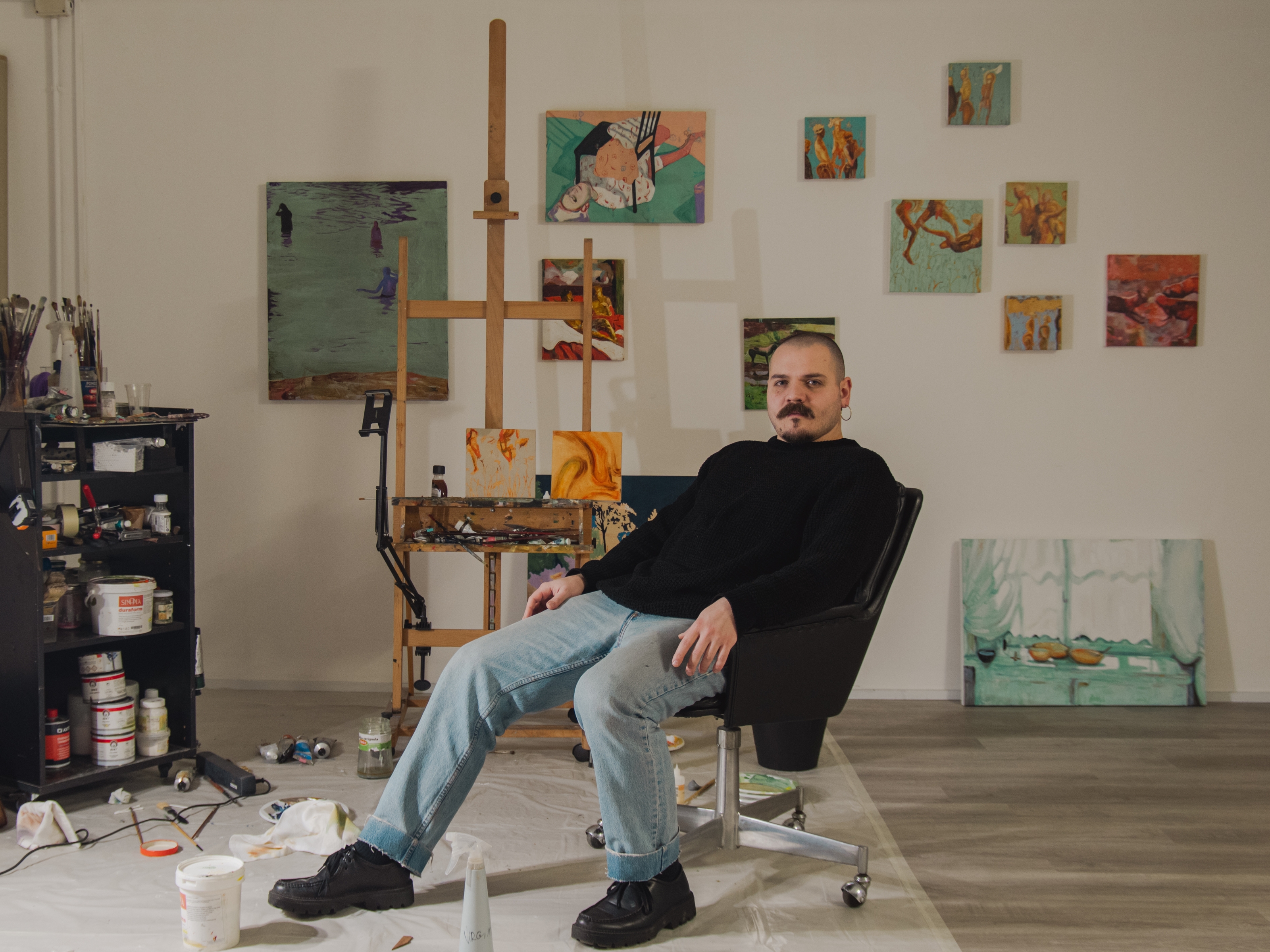
The Lecce solo exhibition belongs to a trajectory that is still young but already moving through different contexts. Gallace lives and works in Turin, trained at the Accademia Albertina and has participated in solo and group exhibitions across independent, institutional and private spaces; his work is now included in the roster of Von Buren Contemporary in Rome as well as other exhibition contexts, while his paintings have entered public and private collections. In 2023, Artribune recorded his Turin solo exhibition Il vento dentro casa, a title that already suggests how domestic space functions in Gallace’s work as something more than a simple pictorial subject. In 2026, following the Lecce exhibition, his practice appeared in the two-person show Frammenti at SAC – Spazio Arte Contemporanea near Milan, a project that also followed his victory in the 2023/2024 Premio Candiani with the work La Passeggiata. There is no need to turn this progression into a linear narrative of consecration. It is more interesting to observe how the same group of concerns—memory, absence, domesticity, fragility and incomplete narrative—continues to change as it enters different spaces and relationships. In Lecce, Darte chose to engage with Gallace precisely at this stage: not when the artist’s history had already been fully defined, but while that history remained open enough to move in new directions.
Leaving a story unfinished
Giuseppe Gallace’s painting therefore works through an unusual form of generosity: rather than fully controlling what the viewer is expected to understand, it leaves part of the image available for interpretation. This does not mean abandoning formal construction, because every omission must be precise enough to create tension; it means accepting that the painting may continue producing meanings the artist cannot entirely determine. This openness distinguishes incompleteness from generic ambiguity. Interiors, figures, flowers and empty areas do not operate as puzzles with a correct solution, but as elements capable of activating different memories and narratives in each viewer. Familiarity becomes particularly effective in this respect: we recognise enough of the scene to enter it, but not enough to feel completely secure. How much does a painting need to show before we begin telling the story ourselves? In Lecce, the eight works in Fragmenta occupied precisely this threshold. Gallace did not complete the story for us, and perhaps that was exactly the point: some images remain in memory not because they explained everything, but because they left something unresolved for long enough to make us return.
Keep reading
Ambra Castagnetti: how much of us truly belongs only to us?
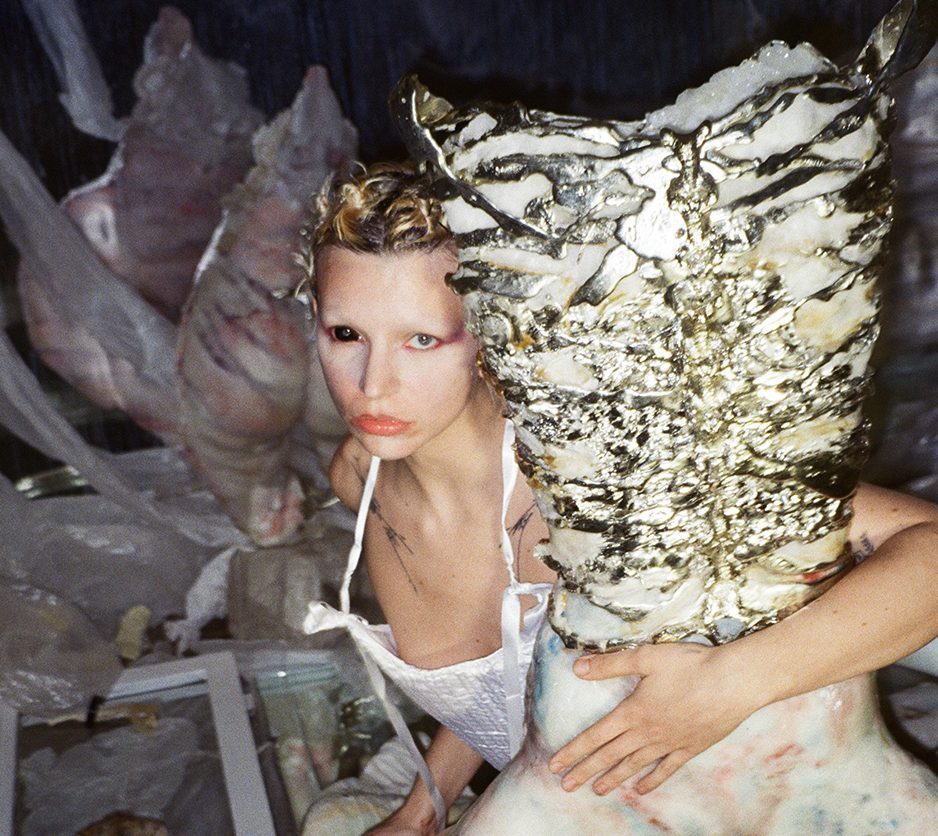
Snakes, bound bodies, wax, orchids, avatars and digital apparitions. Ambra Castagnetti creates a world in which the human, the animal and the technological continually cease to exist as separate categories. From the Venice Biennale to MAMBO in Bogotá, her practice begins with a question that concerns us all: if our bodies are shaped by relationships, environment, desire and technology, how much of what we call “I” truly belongs only to us?
Benedetto Pietromarchi: building a bestiary for a changing world
Birds, roots, marine creatures and impossible animals inhabit Benedetto Pietromarchi’s sculpture, yet nature is never treated as something stable to be reproduced. Trained in classical sculpture and architecture, after fifteen years in London the artist found in the Maremma landscape a territory from which to extract materials, images and new mythologies. From terracotta to contemporary bestiaries, his work explores a world in which animal, vegetal, mineral and artificial forms seem increasingly difficult to separate.
Giampaolo Parrilla: painting after the crisis of images
News photography, propaganda, social media, surveillance, war imagery and AI-generated content now coexist within the same visual space. Giampaolo Parrilla uses painting to slow this flow down and examine the way images construct what we understand as reality. In 2026, Darte curated his solo exhibition Redemption Machines at Fondazione Palmieri in Lecce, connecting this research with the history of a place shaped by protection, discipline and control.