
Benedetto Pietromarchi: building a bestiary for a changing world
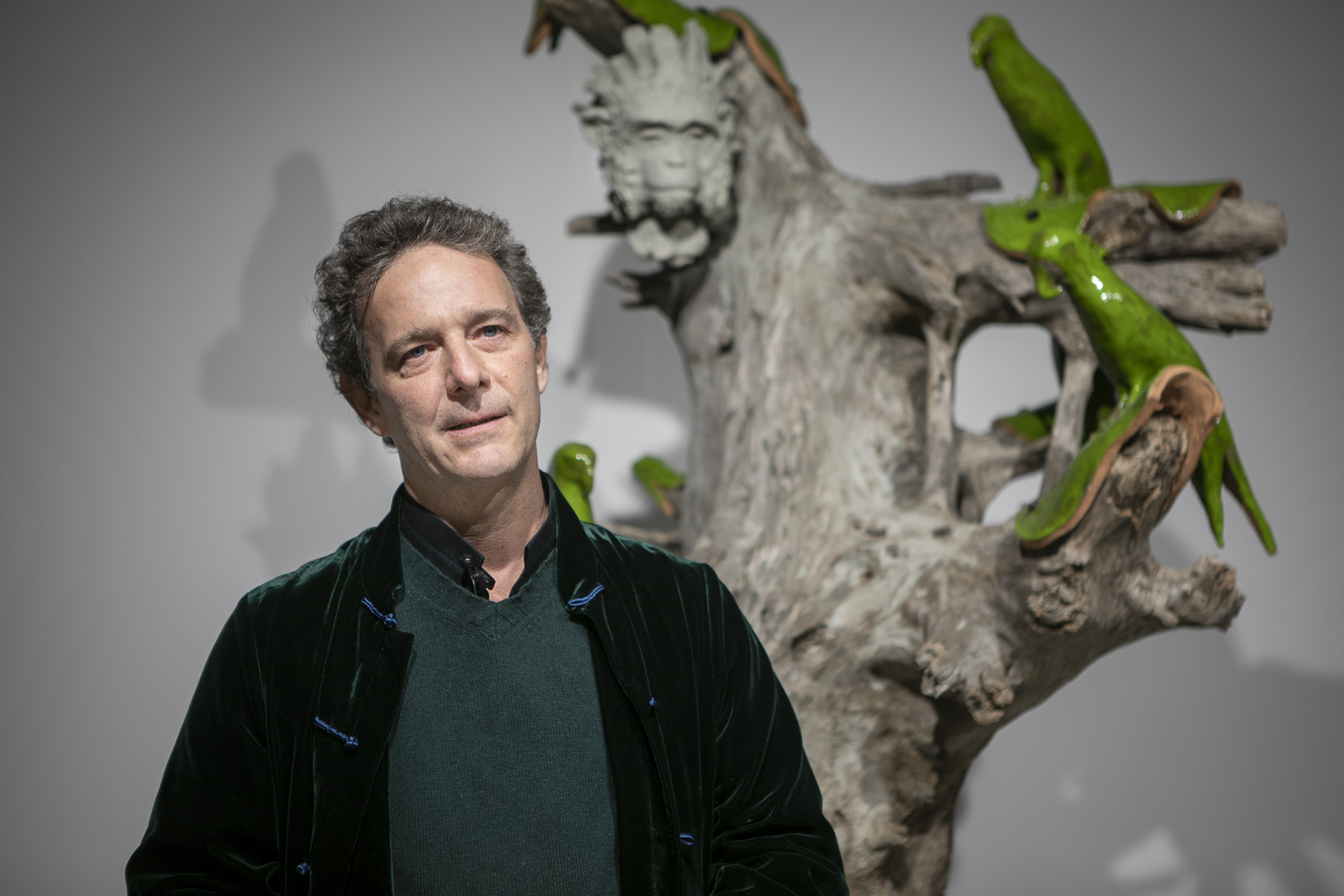
Birds, roots, marine creatures and impossible animals inhabit Benedetto Pietromarchi’s sculpture, yet nature is never treated as something stable to be reproduced. Trained in classical sculpture and architecture, after fifteen years in London the artist found in the Maremma landscape a territory from which to extract materials, images and new mythologies. From terracotta to contemporary bestiaries, his work explores a world in which animal, vegetal, mineral and artificial forms seem increasingly difficult to separate.
“The garden represents the interior of man and explanatory and admonishing figures dwell on the threshold.”
— Benedetto Pietromarchi, interview with My Art Guides
Animals are never just animals
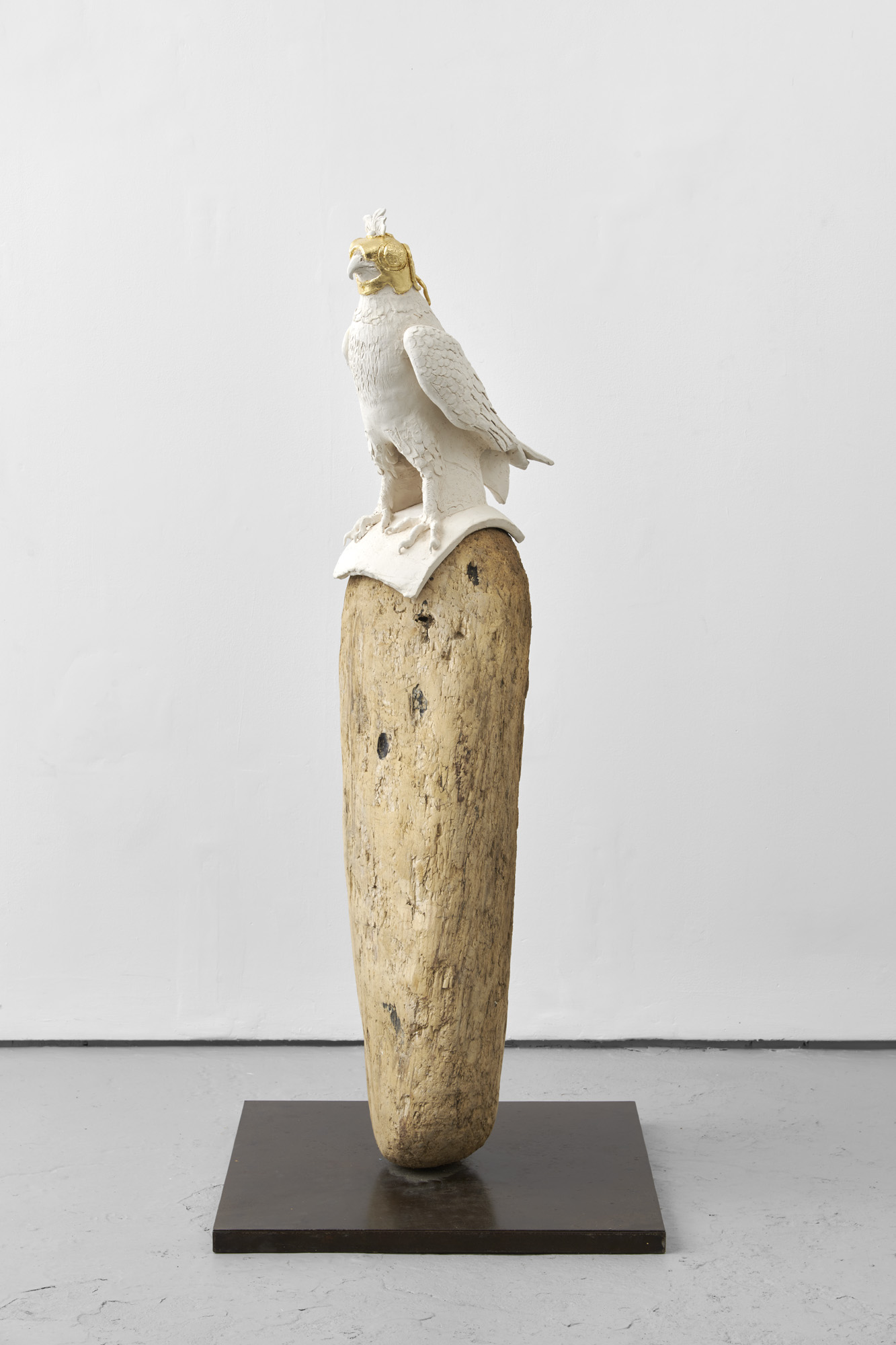
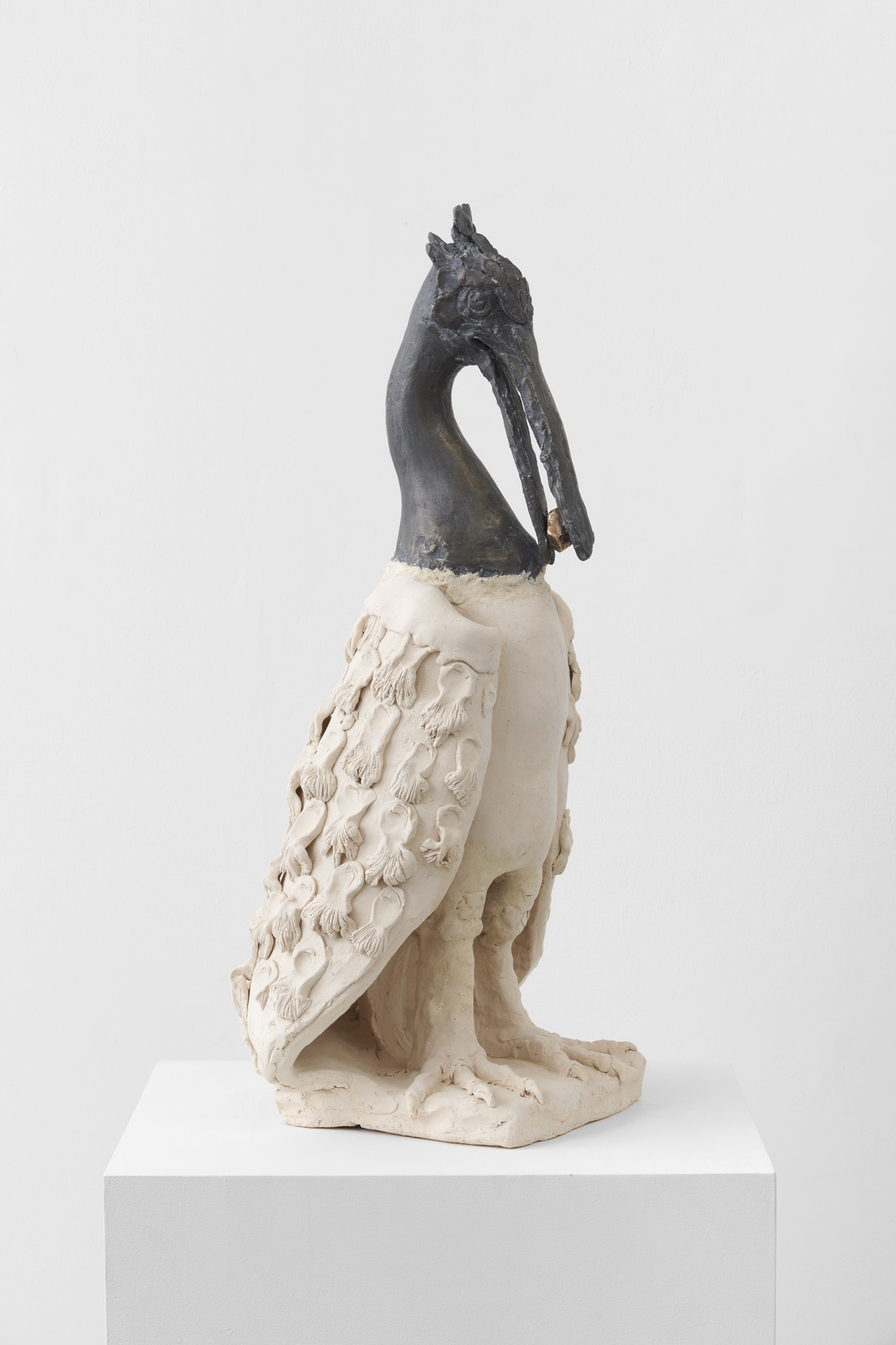
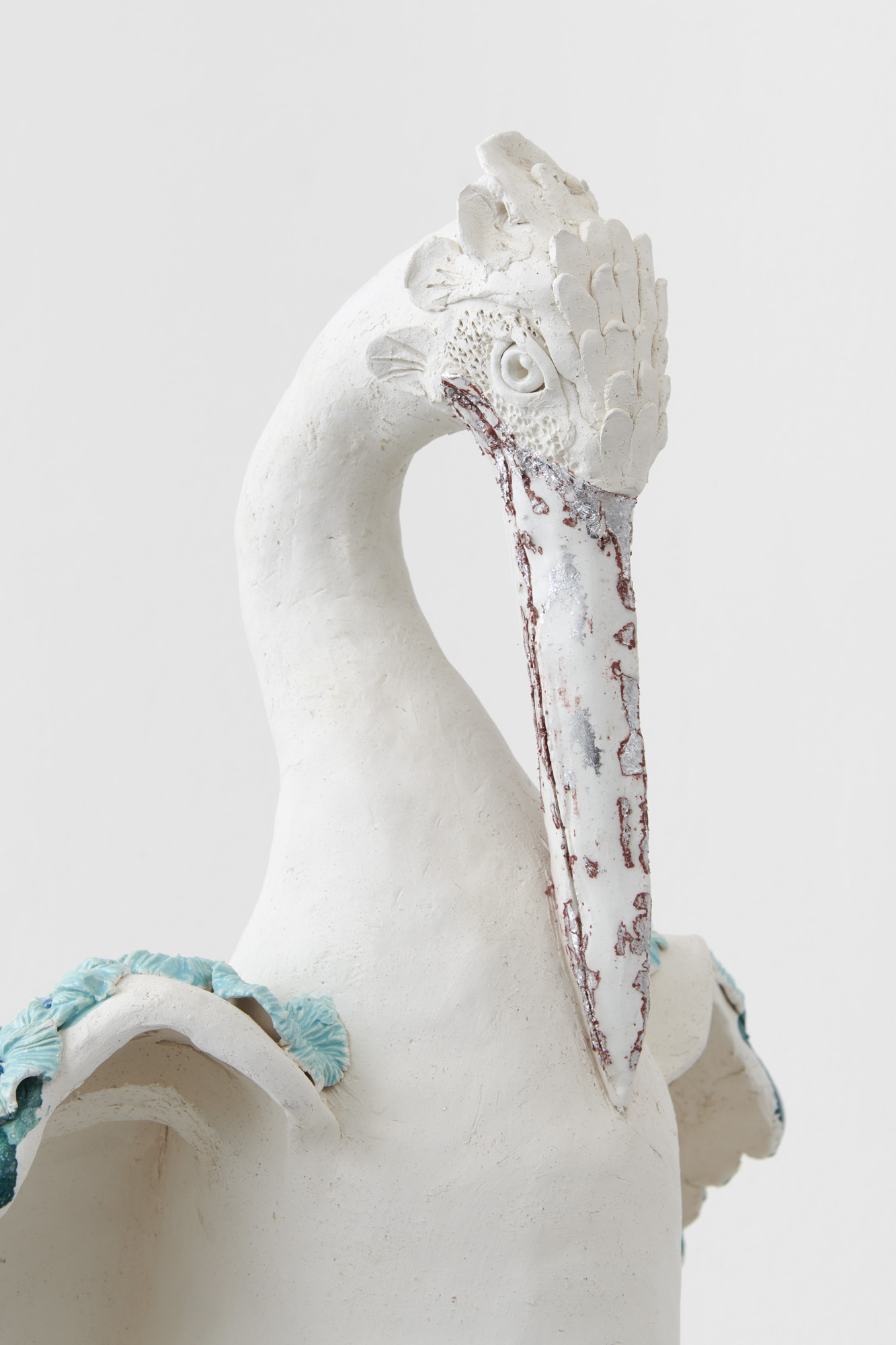
A pelican can become an image of sacrifice, a hooded bird of prey can speak of constraint, and a hoopoe can suggest communication between the living and the dead. In Benedetto Pietromarchi’s sculpture, animals retain their physical recognisability but rarely remain confined to zoology. Their forms carry mythology, fear, behaviour and human projection, turning what might initially resemble a naturalistic bestiary into a system of figures through which we can also observe ourselves. In 2020, while presenting Guardians at Josh Lilley Gallery in London, Pietromarchi explained to My Art Guides that his fascination with birds came not only from their physical presence but from the many archetypal meanings cultures have attached to them over time. This mechanism is ancient. For centuries, humans have used animals to describe virtues, dangers, powers, gods and moral behaviour; Pietromarchi recovers that symbolic capacity without turning it into nostalgic quotation. His creatures carry the technical precision of someone deeply familiar with sculptural construction, yet something in their posture, material or relationship with their surroundings prevents them from becoming simple representations of nature. The real animal seems to function only as the starting point for a form capable of moving continually between observation, memory and imagination.
From the city back to the land
Pietromarchi’s relationship with nature has not remained unchanged throughout his career. Born in Rome in 1972, he trained in sculpture at the Academy of Fine Arts in Carrara and studied architecture at London’s Architectural Association; he later lived and worked in London for around fifteen years before establishing a studio in the Maremma countryside, while today also maintaining his base in Rome. His official biography identifies this return to Maremma as a decisive shift, as the territory progressively stopped being something to travel through and became material for the work itself. In a 2020 interview with My Art Guides, Pietromarchi described this transformation by looking back at an earlier period shaped by travel and the sea: after a long journey by boat from Uruguay to the Netherlands, his return to Italy coincided with a desire to settle and with a change in his practice, which increasingly began to focus on the landscape and natural environment of Maremma. Yet this is not simply a pastoral return to the countryside in opposition to the city. In his work, territory is observed, excavated and physically incorporated into objects, making the distinction between what sculpture represents and what sculpture is made from progressively less clear.
The land enters the sculpture itself
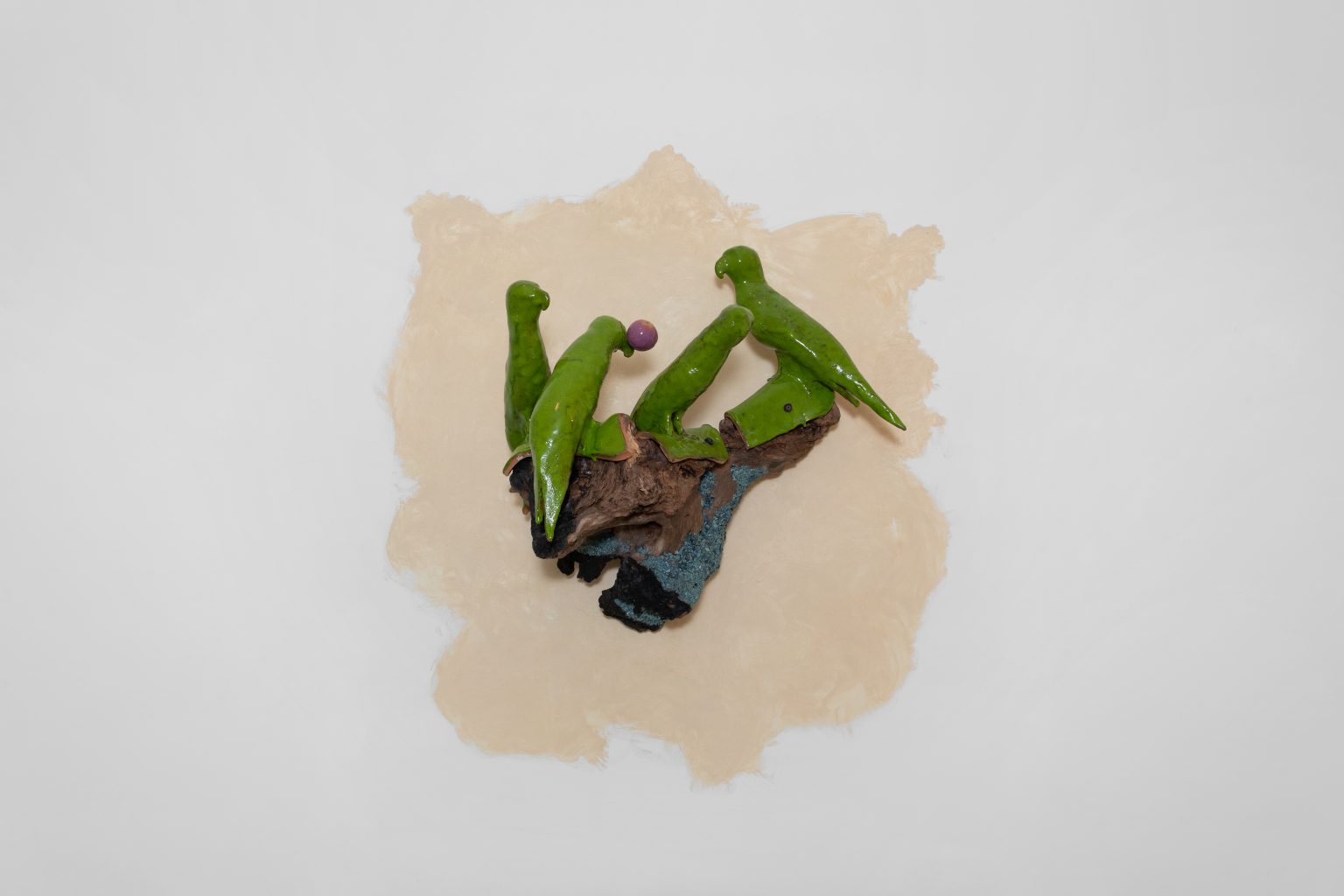
This relationship becomes particularly clear in [adapt], presented in 2021 at Francesca Antonini Arte Contemporanea. For the exhibition, Pietromarchi collected clay, olive roots, foliage and fragments of iron connected to Capalbio’s industrial history from around his studio, using actual elements of the territory to construct a bestiary in which animal and vegetal forms progressively merged. Feathers become leaves, plant veins cross the bodies of birds, and roots turn into structures: the artist’s website describes the project as an investigation into the interconnection between mineral, animal and vegetal worlds and into nature’s ability to continually recombine its elements in response to changing conditions. Ecological questions therefore enter the work without turning the sculptures into illustrations of an environmental message. [adapt] addressed regeneration, species adaptability, plant intelligence and the resilience of biosystems through forms that retained a formal balance strongly connected with sculptural tradition. This tension is central to Pietromarchi’s work: what appears ancient in technique can describe distinctly contemporary problems, while an elemental material such as clay becomes a place in which to imagine organisms that may never have existed yet feel entirely plausible in a world being forced to transform.
Sculpture is also seen through the body
Before Maremma and the bestiaries, Pietromarchi’s training already brought together two disciplines that explain much about the way he constructs his work: classical sculpture, studied in Carrara, and architecture, studied in London. The Kenneth Armitage Foundation, which awarded him a fellowship from 2009 to 2011, notes how his architectural background emerges especially through the manipulation of scale and the relationship between objects and the viewer’s body, while his sculptural training is visible in the technical precision with which he works across materials including terracotta, metal and wood. This dual perspective prevents sculpture from functioning only frontally, like a three-dimensional image contemplated at a distance. The works occupy space, alter our perception of proportion and force viewers to compare their own bodies with the real or imagined body of the creature before them. Even in earlier works concerned with travel, the Kenneth Armitage Foundation notes that large structures seemingly capable of functioning as vehicles moved between constructive plausibility and functional impossibility, combining architectural solidity with absurdity. The same tension survives in his later works concerned with nature. Even when Pietromarchi models a bird, a root or a marine creature, the question is not simply one of formal accuracy but of the psychological and physical space that presence is capable of creating around itself.
Guardians: placing a creature on the threshold
In 2020, Guardians, presented by Josh Lilley in London, brought together a family of life-size birds made in terracotta and bronze: pelicans, birds of prey, hoopoes and other presences conceived as threshold figures between terrestrial and transcendent worlds. The gallery described these sculptures as carriers of mythology, hope, warning and emotion, connected as though they formed a small constellation around the artist’s psyche. The idea of the threshold is central. Pietromarchi imagined these birds positioned at the entrance to a symbolic garden, figures capable of guiding and simultaneously warning those about to enter. Speaking with My Art Guides, the artist explained that the garden corresponded to an interior dimension of the human being, while its animals occupied the boundary carrying imperfections, virtues and archetypes. Nature is therefore not idealised as a pure refuge from society, but used as a mirror distant enough for us to recognise something human without directly depicting a human being. Perhaps this is why Pietromarchi’s animals so often possess such a strangely psychological presence. They are not simply standing before us; they seem to know that we have arrived.
Nature is not an innocent place
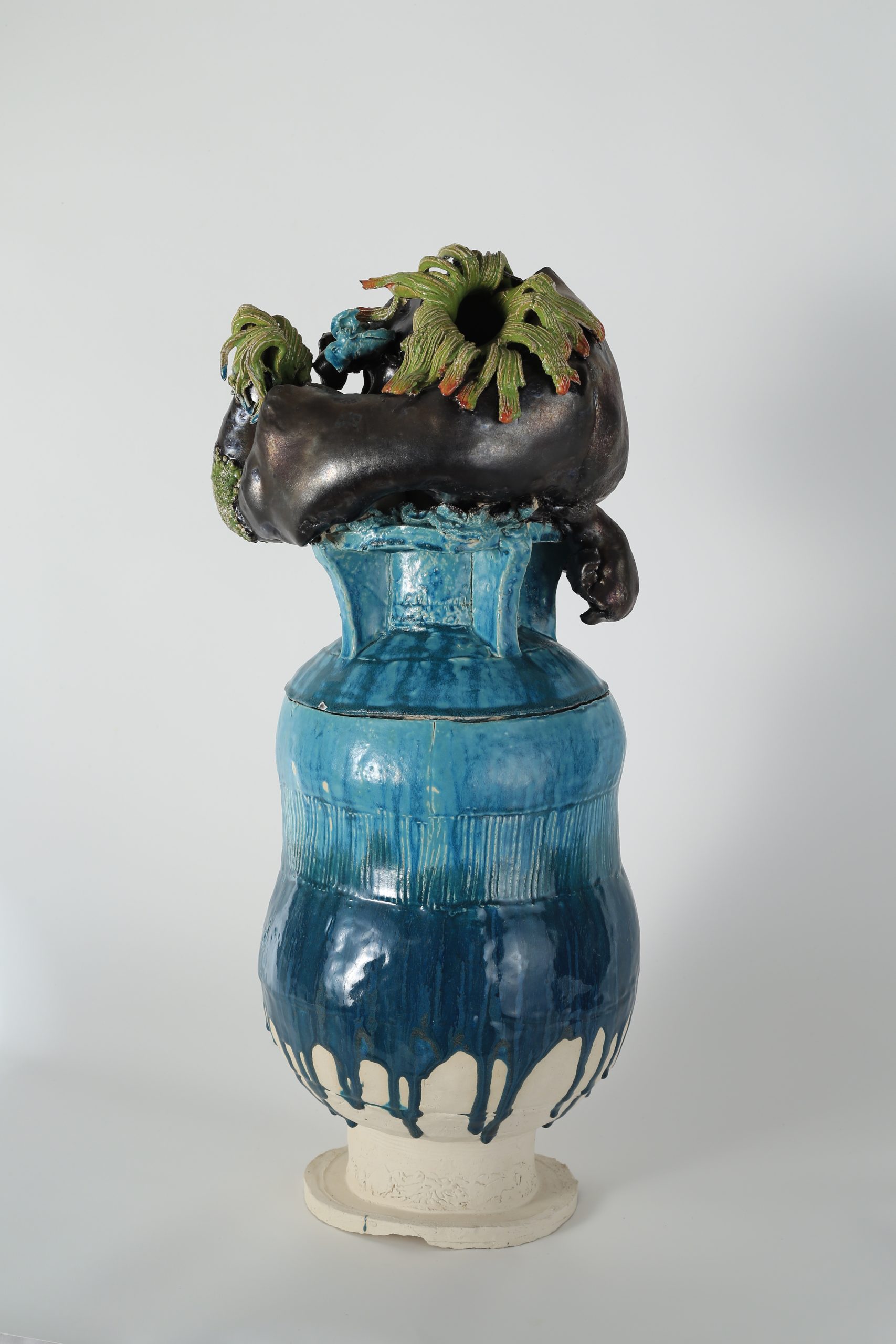
Pietromarchi’s return to nature never corresponds to the idea of an uncontaminated world existing outside history. On the contrary, much of his recent work begins from the evidence that natural environments are continually transformed by human intervention. For La Natura Ama Nascondersi, presented in Rome between 2022 and 2023, the artist worked with the landscape of the Tiber, incorporating earth gathered from its banks and producing sculptures inspired by the monumental forms of Ponte Vittorio Emanuele II. Finestre sull’Arte described a project connecting urban history, geological transformation, the balance between humans and animals, and the physical material of the river itself. A year later, with Abyss at Josh Lilley, the research moved towards the sea and confronted the consequences of human intervention in ecosystems more directly. The exhibition created an environment populated by marine organisms, anthropomorphic creatures and science-fiction forms, using the imagery of the abyss to think simultaneously about the origins of life and the transformations imposed upon nature by human activity. Nature, in this sense, is not the opposite of civilisation. It is what civilisation continually intervenes within, leaving behind materials, waste, architecture, technology and new biological conditions. Pietromarchi seems particularly interested in this contaminated territory, where it is increasingly difficult to draw a clean line between what grows spontaneously and what we have constructed.
From medieval bestiaries to digital imagination
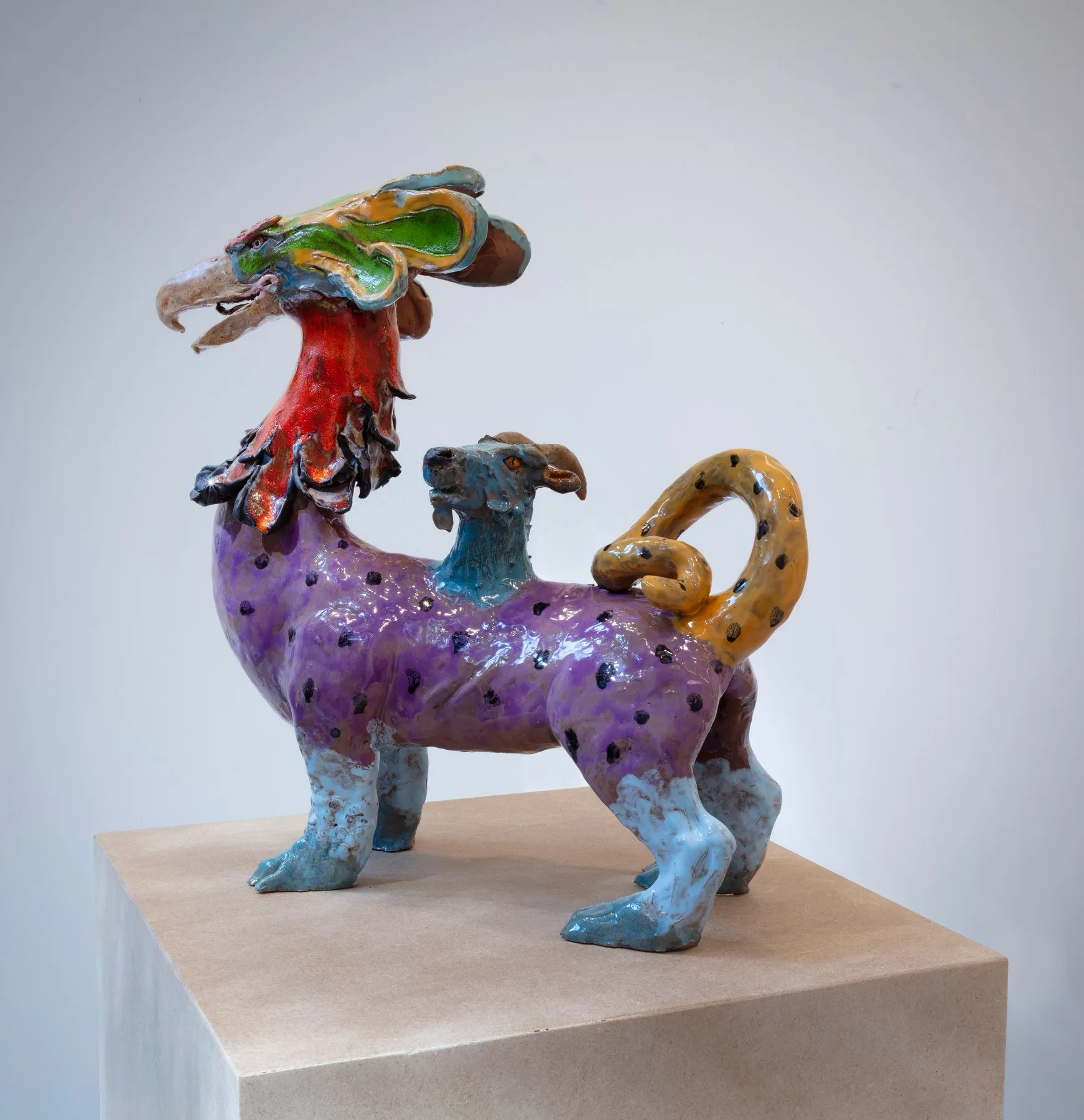
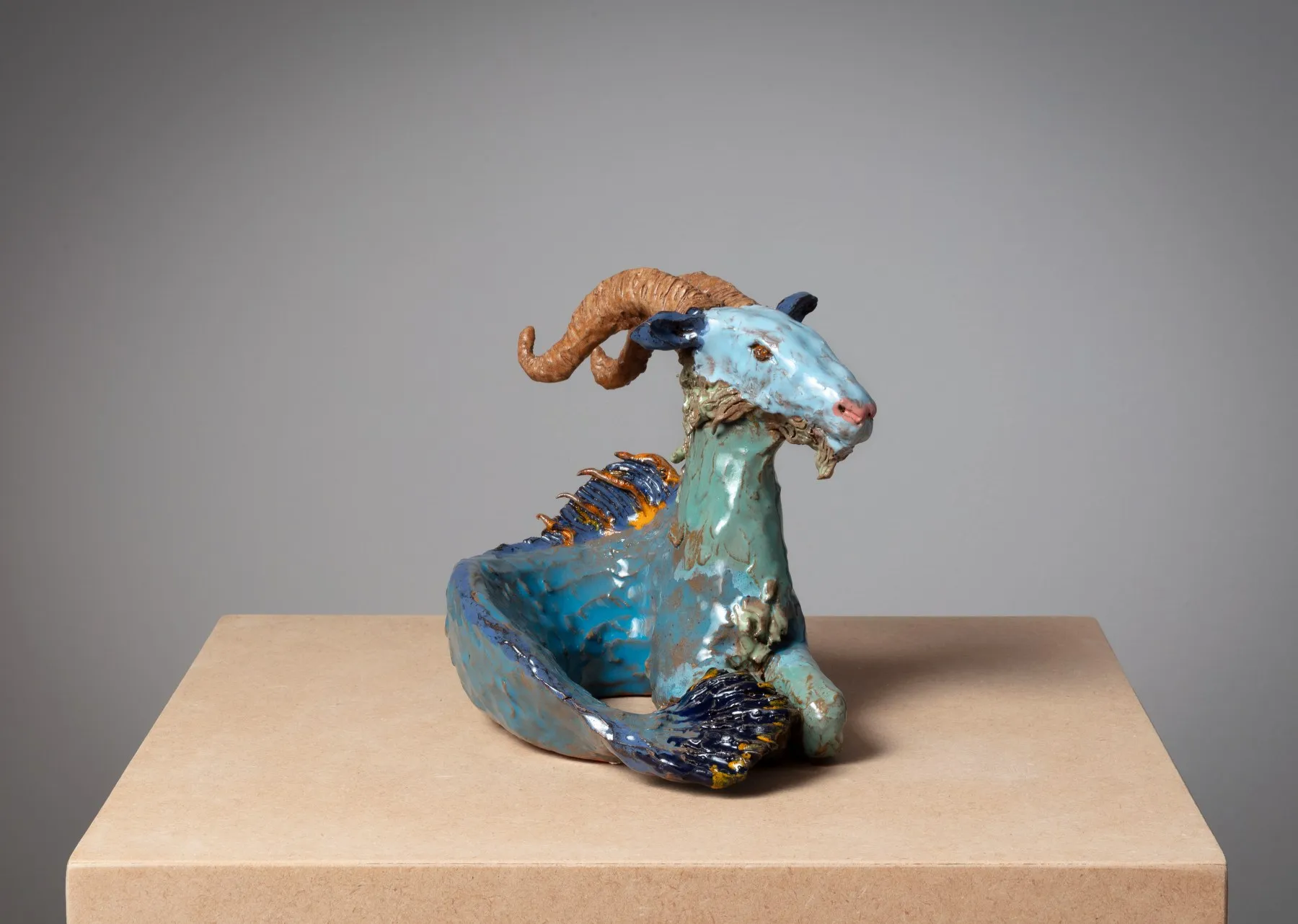
The most recent transformation of this research makes Pietromarchi’s movement between past and present even clearer. In 2025, Wizard Gallery presented Elsewhere in Milan, a two-person exhibition with Marko Lađušić in which Pietromarchi showed a new series of polychrome ceramic sculptures inspired by the tradition of medieval bestiaries. Those collections mixed real animals, fantastic beings and moral interpretations of the natural world; Pietromarchi recovers their structure to create hybrid creatures that belong neither entirely to nature nor entirely to invention. Wizard Gallery connects these forms to a contemporary imagination marked by digital metamorphosis, fluid identities and an increasing blurring of reality and artifice: Pietromarchi’s creatures appear simultaneously to emerge from an ancient manuscript and from a future not yet imagined, suspended between animal, vegetal and synthetic forms. This is particularly interesting because it demonstrates that the bestiary is not a genre belonging only to the past. We continue to produce impossible creatures constantly through video games, cinema, artificial intelligence, filters and virtual environments. The difference is that Pietromarchi brings this capacity for metamorphosis back into matter. Faced with a culture capable of generating infinite creatures within seconds without giving any of them a body, ceramics impose weight, scale, fragility, firing and manual labour. This is not nostalgia for a pre-digital world; it is a way of asking what happens when imagination is given mass again.
Does making something by hand still change the way we see it?
Pietromarchi’s trajectory crosses London, Carrara, Rome and Maremma, moves from architectural training to classical sculpture and arrives today at a ceramic practice capable of bringing ancient archetypes, ecological crisis and digital imagination into the same space. His official biography records solo exhibitions with Josh Lilley, Visionarea and Francesca Antonini, participation in exhibitions at Saatchi Gallery and Whitechapel Gallery, and a practice developed across very different materials and contexts; in 2026, Wizard Gallery also included him in its presentations at miart and Enter Art Fair in Copenhagen. What holds this trajectory together seems less a specific subject than a question about our relationship with living forms. Animals can become symbols, plants can turn into anatomies, clay can contain the geology of a territory, and a fantastic creature can simultaneously evoke a medieval manuscript and a digital present. Sculpture prevents these transformations from remaining abstract metaphors because every transformation must ultimately confront a material that resists. This may be where Pietromarchi’s work feels particularly relevant now. At a time when we can generate almost any image without touching what we represent, his creatures remind us that imagining can still mean modelling, firing, assembling, gathering earth and understanding the weight of things. The question is not whether manual work is somehow more authentic than technology—an opposition too simple to be useful—but whether contact with matter continues to produce a form of knowledge that no completely immaterial image can replace.
Keep reading
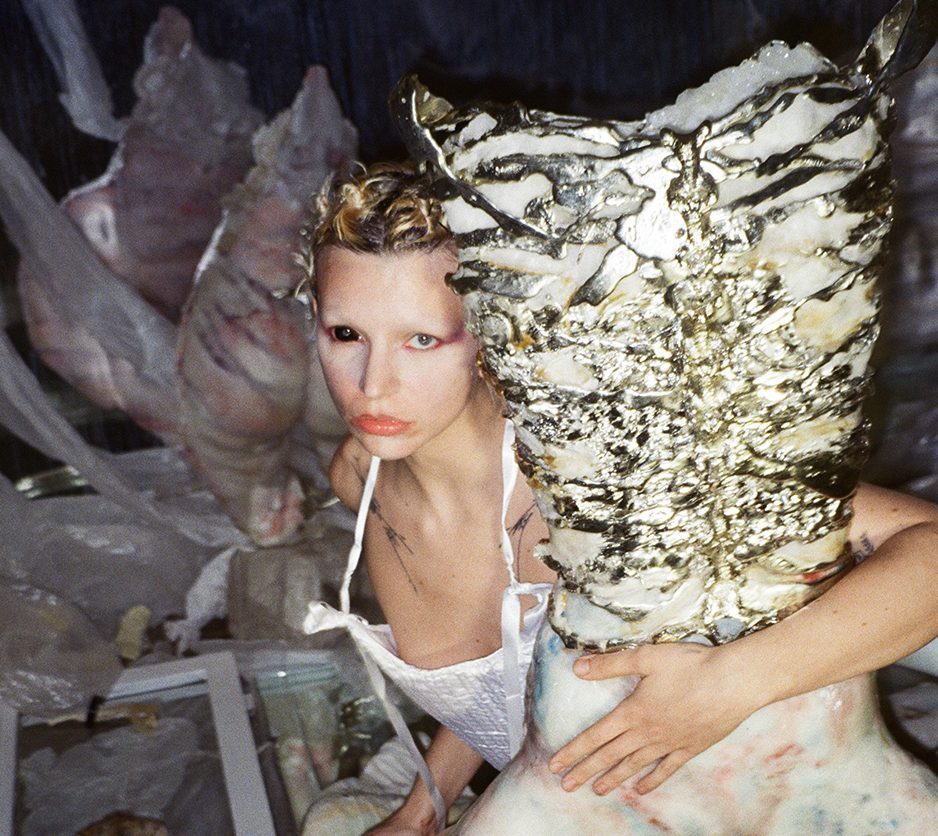
Ambra Castagnetti: how much of us truly belongs only to us?
Snakes, bound bodies, wax, orchids, avatars and digital apparitions. Ambra Castagnetti creates a world in which the human, the animal and the technological continually cease to exist as separate categories. From the Venice Biennale to MAMBO in Bogotá, her practice begins with a question that concerns us all: if our bodies are shaped by relationships, environment, desire and technology, how much of what we call “I” truly belongs only to us?
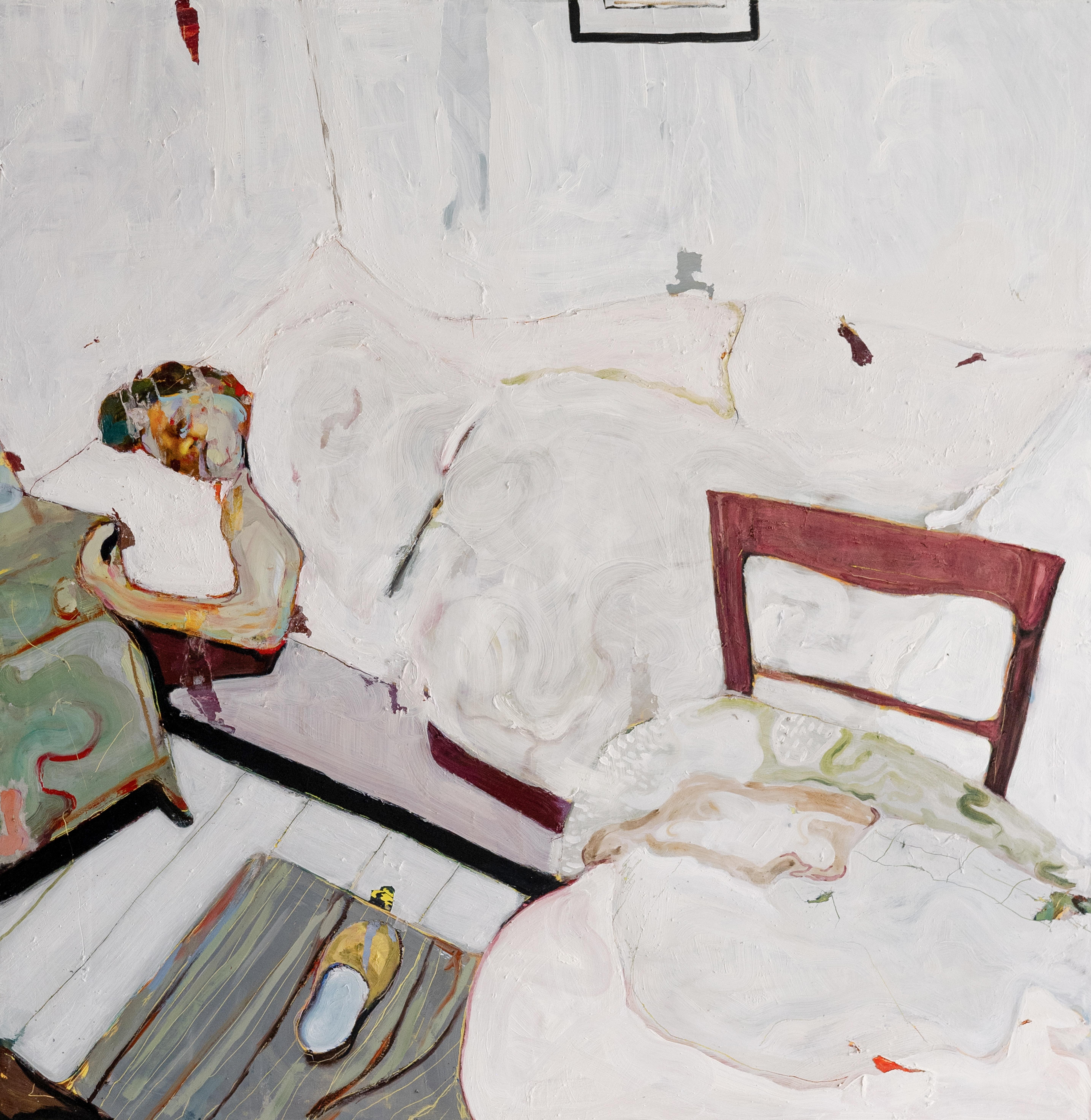
Giuseppe Gallace: painting what is missing
Domestic interiors, figures seemingly about to appear or disappear, suspended colours and details that interrupt the logic of a scene. Giuseppe Gallace creates paintings in which what is missing matters as much as what is represented. In 2025, Darte presented Fragmenta, his solo exhibition in the Sacristy of San Francesco della Scarpa in Lecce: eight oil paintings exploring a practice that does not tell complete stories, but leaves viewers to imagine what happened before and what might happen next.
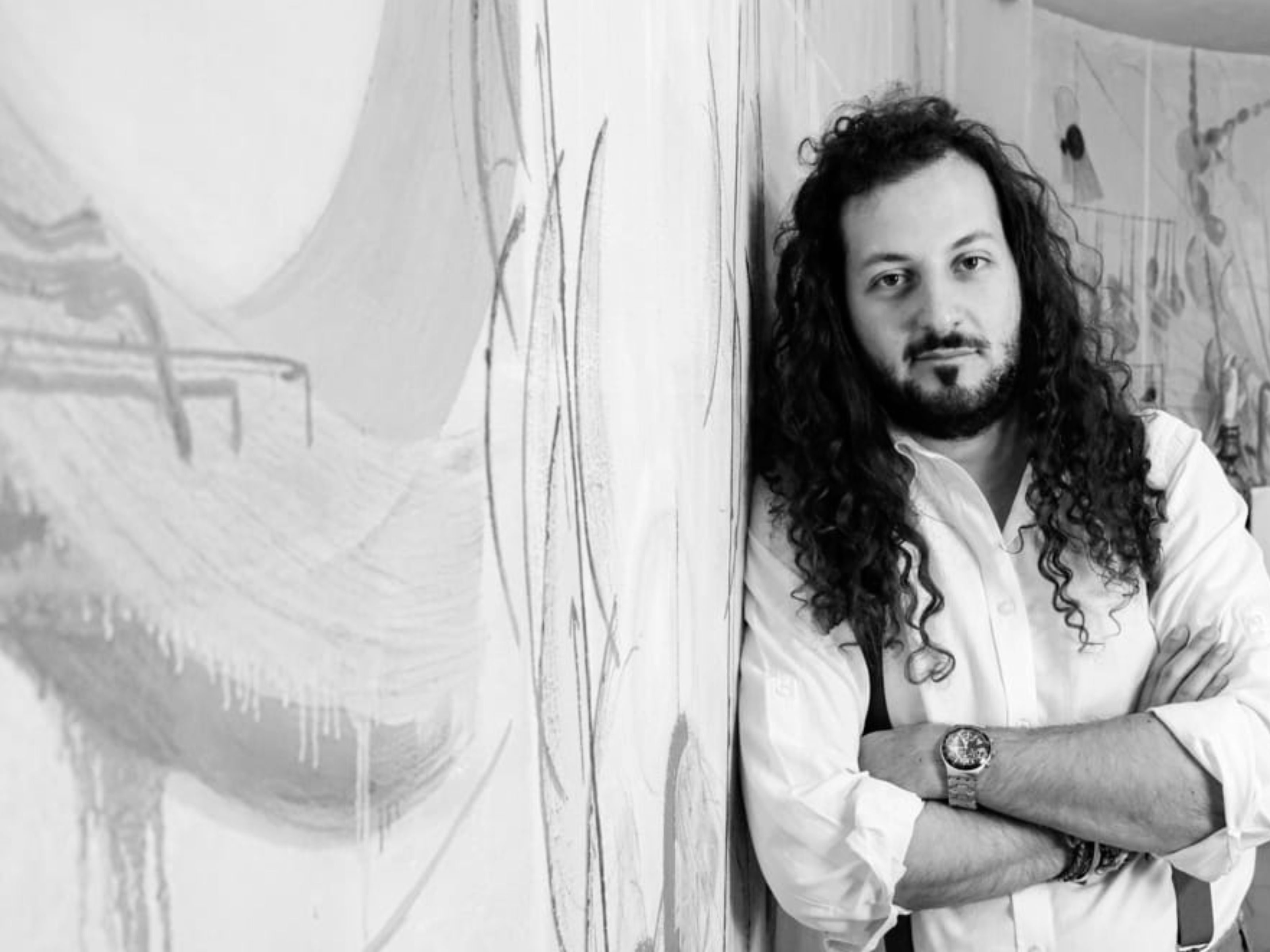
Giampaolo Parrilla: painting after the crisis of images
News photography, propaganda, social media, surveillance, war imagery and AI-generated content now coexist within the same visual space. Giampaolo Parrilla uses painting to slow this flow down and examine the way images construct what we understand as reality. In 2026, Darte curated his solo exhibition Redemption Machines at Fondazione Palmieri in Lecce, connecting this research with the history of a place shaped by protection, discipline and control.