
Ambra Castagnetti: how much of us truly belongs only to us?
Snakes, bound bodies, wax, orchids, avatars and digital apparitions. Ambra Castagnetti creates a world in which the human, the animal and the technological continually cease to exist as separate categories. From the Venice Biennale to MAMBO in Bogotá, her practice begins with a question that concerns us all: if our bodies are shaped by relationships, environment, desire and technology, how much of what we call “I” truly belongs only to us?
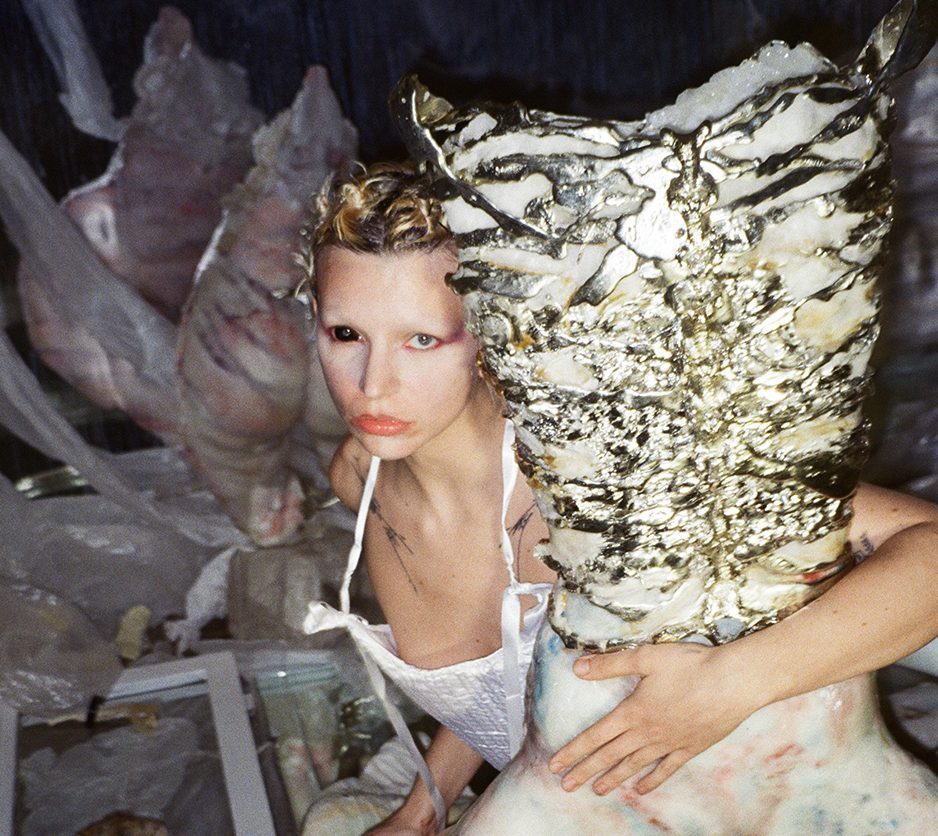
“In my work, the body is never a singular entity, but a vehicle shaped by forces that transcend it.”
— Ambra Castagnetti, artist statement
Are we really separate individuals?
We tend to think of identity as something personal: our body, memories, personality and the choices through which we learn to say “I”. Yet the closer we look, the more difficult it becomes to separate that construction from everything outside us. The body changes with age and environment, the way we perceive ourselves is affected by other people’s gaze, relationships modify our behaviour, and technology has entered the ways we communicate, desire and construct ourselves in public. This instability is central to the work of Ambra Castagnetti, born in Genoa in 1993 and based in Milan. Trained first in Anthropology and later in visual arts at NABA, Castagnetti works across sculpture, video, installation and performance to imagine bodies that never seem completely closed: they encounter other species, merge with artificial materials, pass through rituals or assume digital forms. In her own statement, she describes bodies as unstable, permeable and constantly evolving, and her practice as an exploration of the fluid boundaries between the human, animal and technological. Her work is therefore about more than the aesthetics of hybridity. Behind these creatures lies a question much closer to everyday experience: if we are continually changed by what we encounter, where can we truly say that a person ends and the rest of the world begins?

The body is never entirely our own
In 2022, this idea entered the 59th Venice Biennale, within The Milk of Dreams, through Dependency. Selected for the inaugural Biennale College Arte, Castagnetti presented brushed-aluminium structures resembling operating tables in the Central Pavilion, alongside ceramic snakes, a Medusa-like head and wearable sculptures activated by performers. The Biennale connects the project with BDSM bondage, ancient imaginaries of transformation between species and the anthropological concept of the mindful body, arriving at the core of Castagnetti’s research: the body does not possess a fixed identity but is continually constituted by the environmental, social and political circumstances in which it exists. The title Dependency itself shifts the perspective. Contemporary culture tends to consider independence desirable and dependency something to overcome, yet no body truly exists alone: it depends on its environment, care, other living beings, social structures and countless systems that often become visible only when they stop functioning. Castagnetti brings this reality into ambiguous images where being bound can mean constraint but also connection, vulnerability but also the possibility of transformation. From this perspective, the autonomous body begins to look almost like a comforting fiction. To be alive is to remain continually exposed to something capable of changing us.

Metamorphosis does not belong only to myths
Snakes, hybrid creatures and transforming bodies may immediately suggest mythology, yet in Castagnetti’s practice metamorphosis is not a fantastical escape from the present. Instead, it gives visible form to something that happens continually, even when our appearance seems unchanged. We change within relationships, after loss, when entering new communities, through physical experiences or when learning to recognise ourselves within an identity we were previously unable to name. Transformation therefore concerns both the body and the way that body is interpreted. In her own statement, Castagnetti describes performance and ritual as tools capable of accessing liminal states, dissolving fixed identities and connecting the individual to a collective dimension. It is significant that a practice so interested in technological futures continually returns to some of humanity’s oldest forms of experience: rituals, symbols, animal figures, devotion and the practices through which people have attempted for millennia to organise the passage from one condition to another. Metamorphosis, then, does not necessarily mean becoming someone else. It may mean discovering how much less stable the person we thought we were had always been.

What happens when even an angel becomes digital?
With Supernature, presented at Francesca Minini in Milan in 2025, the relationship between body and transformation shifts once again. Paraffin, beeswax, silk, snakeskin and orchids coexist with a 3D digital film and an angel transformed into a hologram. The gallery describes Supernature as a threshold where the organic and invisible, spirituality and technology, reality and speculative fiction can overlap; in .EXE, Castagnetti’s first digital film, an avatar of the artist moves through metaphysical spaces while questioning what determines identity, while Seraphim brings one of the oldest images in Western spirituality into the unsettling perfection of a technological apparition. What makes this particularly interesting is that Castagnetti does not treat the digital as nature’s opposite. The hologram does not arrive to destroy the sacred, just as wax or an orchid does not automatically represent something more authentic simply because it belongs to the material world. Instead, these elements occupy the same reality, as though the present were forcing us to accept that experience is now simultaneously constructed through biological bodies, physical objects, synthetic images and digital spaces. The question of identity consequently changes too. If we can possess both physical and digital versions of ourselves, if an avatar can speak with our voice and an algorithm can learn to recognise our face, which of these presences do we truly consider less real than the others?

Sometimes we need a ritual in order to change
In 2025, Castagnetti brought this research to the Museo de Arte Moderno de Bogotá – MAMBO with Pánico efímero, her first institutional exhibition at the Colombian museum. Developed after a two-month residency in Bogotá, the project was conceived specifically for MAMBO and structured as a total work unfolding through three moments: ritual, icon and metamorphosis. The museum describes the exhibition as an experience exploring the mutability of identity, transitional states and the relationship between body, matter and environment, also activated through an opening performance. Here, ritual becomes particularly important because it shifts transformation from the object towards the viewer. Rituals exist precisely because societies recognise that some changes require form: birth, adulthood, marriage, death, entering or leaving a community. Castagnetti uses this structure without reproducing any specific historical ritual, instead creating situations in which those entering the exhibition are invited to experience their own identity as temporarily less stable. Perhaps we continue to need rituals for precisely this reason. Change may happen regardless, but some transformations only become real once we find a gesture, an image or a place through which to recognise them.

Perhaps the self is a relationship
From the Venice Biennale to Supernature and Pánico efímero, Castagnetti continually changes materials, places and technologies while preserving the same intuition: what we are does not originate entirely within us. The body is reshaped by environment, identity by relationships, desire by cultural imaginaries and self-perception by the technologies through which we continually represent ourselves. Her background in anthropology and movement across sculpture, video, installation and performance therefore become different tools for addressing a problem that remains surprisingly simple. The strength of her hybrid creatures may lie precisely in the fact that they do not seem to describe a completely alien future. They intensify a condition we already know: we are biological organisms dependent on other organisms, but also people constructed through families, relationships, societies, images, devices and information. Even when we feel completely alone, an enormous part of what we call identity has been received, absorbed, chosen, rejected or transformed through contact with something outside ourselves. Perhaps the most interesting question raised by Ambra Castagnetti’s work is therefore not what humanity will become in the future, but something much closer: if we removed from ourselves everything we have received from other people, our environment and the world we have built, what would truly remain of the self? Perhaps far less than we imagine. And it is within this shared territory, rather than in the search for an impossible purity, that Castagnetti seems to locate the possibility of becoming something new.
Keep reading
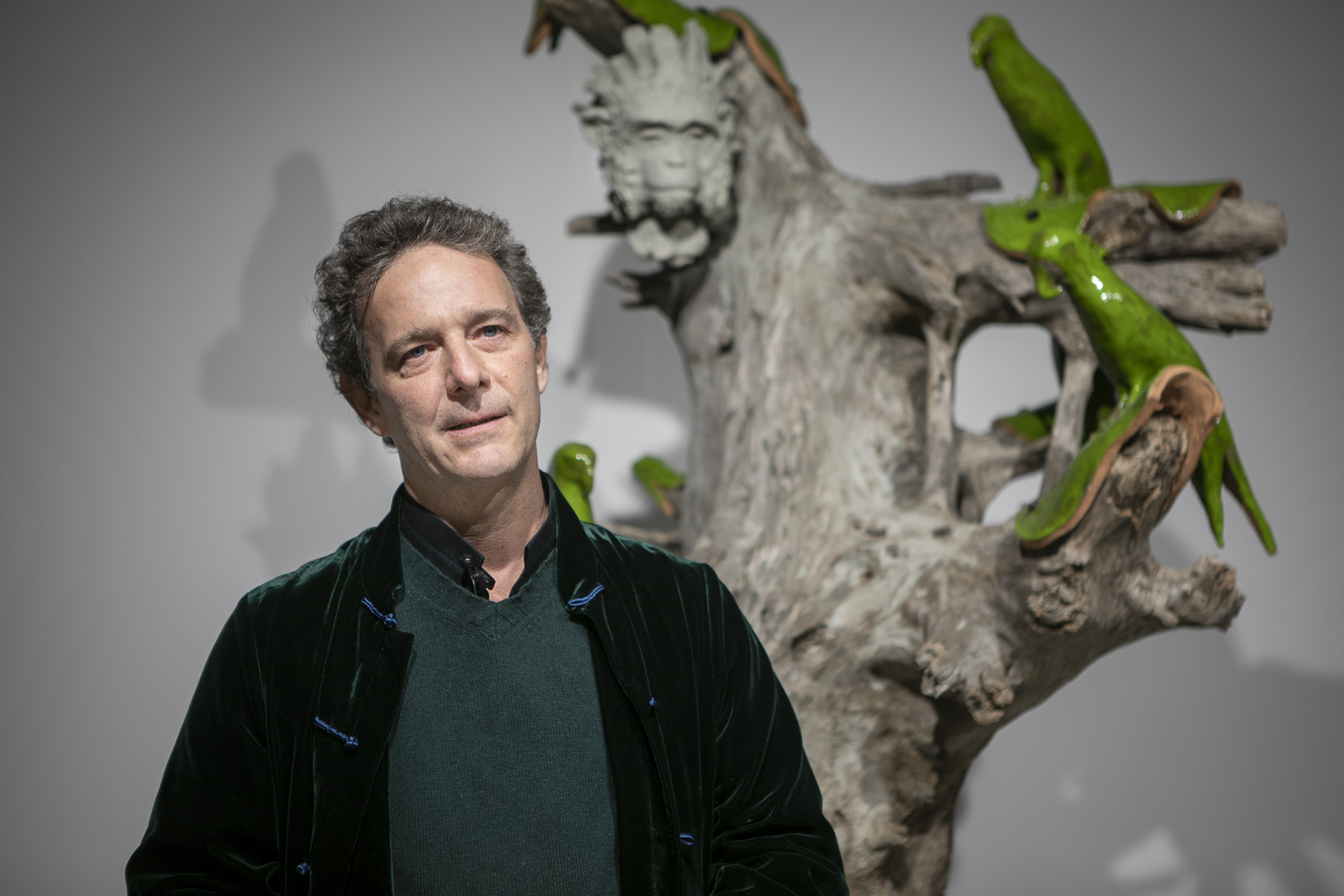
Benedetto Pietromarchi: building a bestiary for a changing world
Birds, roots, marine creatures and impossible animals inhabit Benedetto Pietromarchi’s sculpture, yet nature is never treated as something stable to be reproduced. Trained in classical sculpture and architecture, after fifteen years in London the artist found in the Maremma landscape a territory from which to extract materials, images and new mythologies. From terracotta to contemporary bestiaries, his work explores a world in which animal, vegetal, mineral and artificial forms seem increasingly difficult to separate.
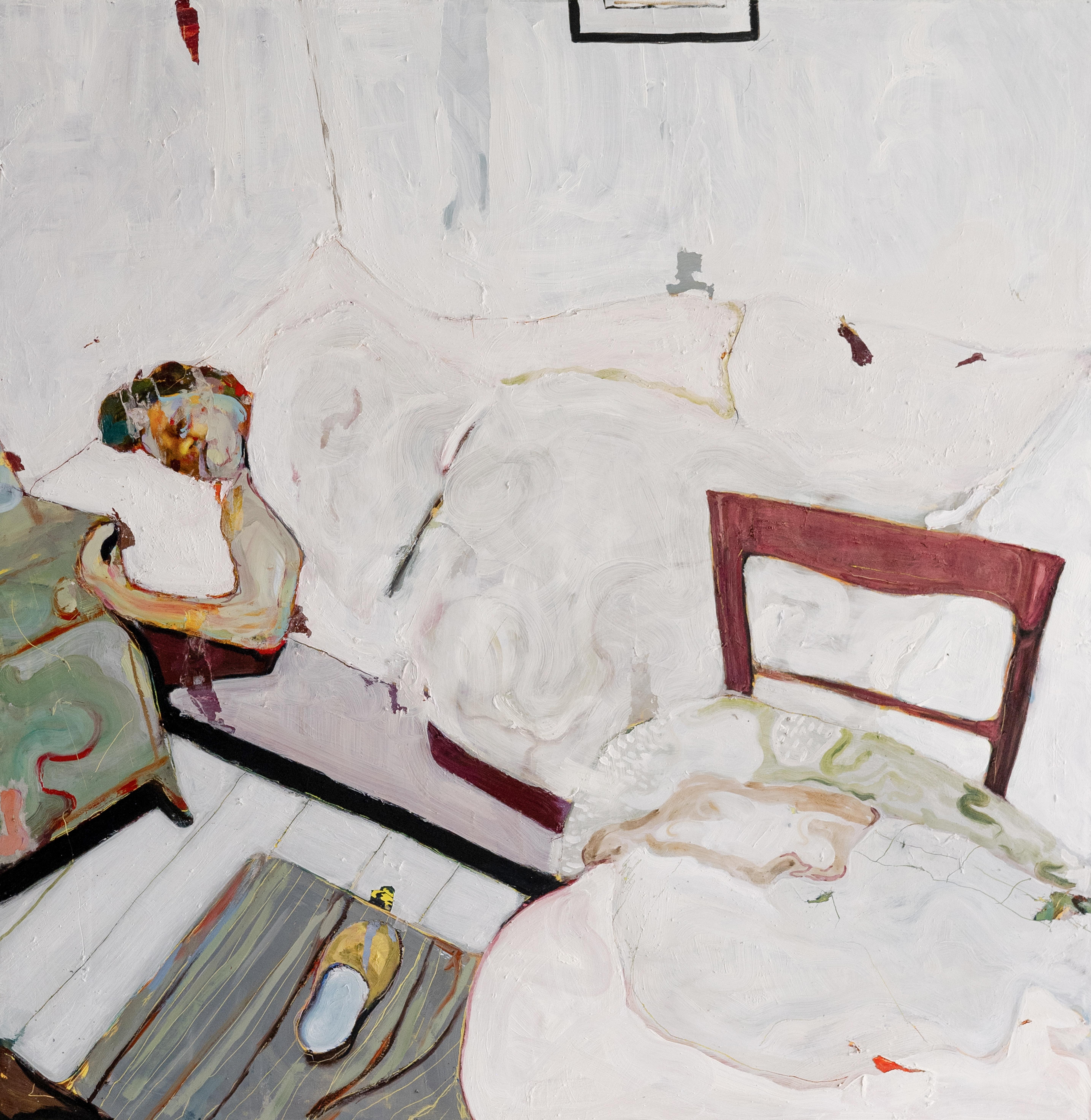
Giuseppe Gallace: painting what is missing
Domestic interiors, figures seemingly about to appear or disappear, suspended colours and details that interrupt the logic of a scene. Giuseppe Gallace creates paintings in which what is missing matters as much as what is represented. In 2025, Darte presented Fragmenta, his solo exhibition in the Sacristy of San Francesco della Scarpa in Lecce: eight oil paintings exploring a practice that does not tell complete stories, but leaves viewers to imagine what happened before and what might happen next.
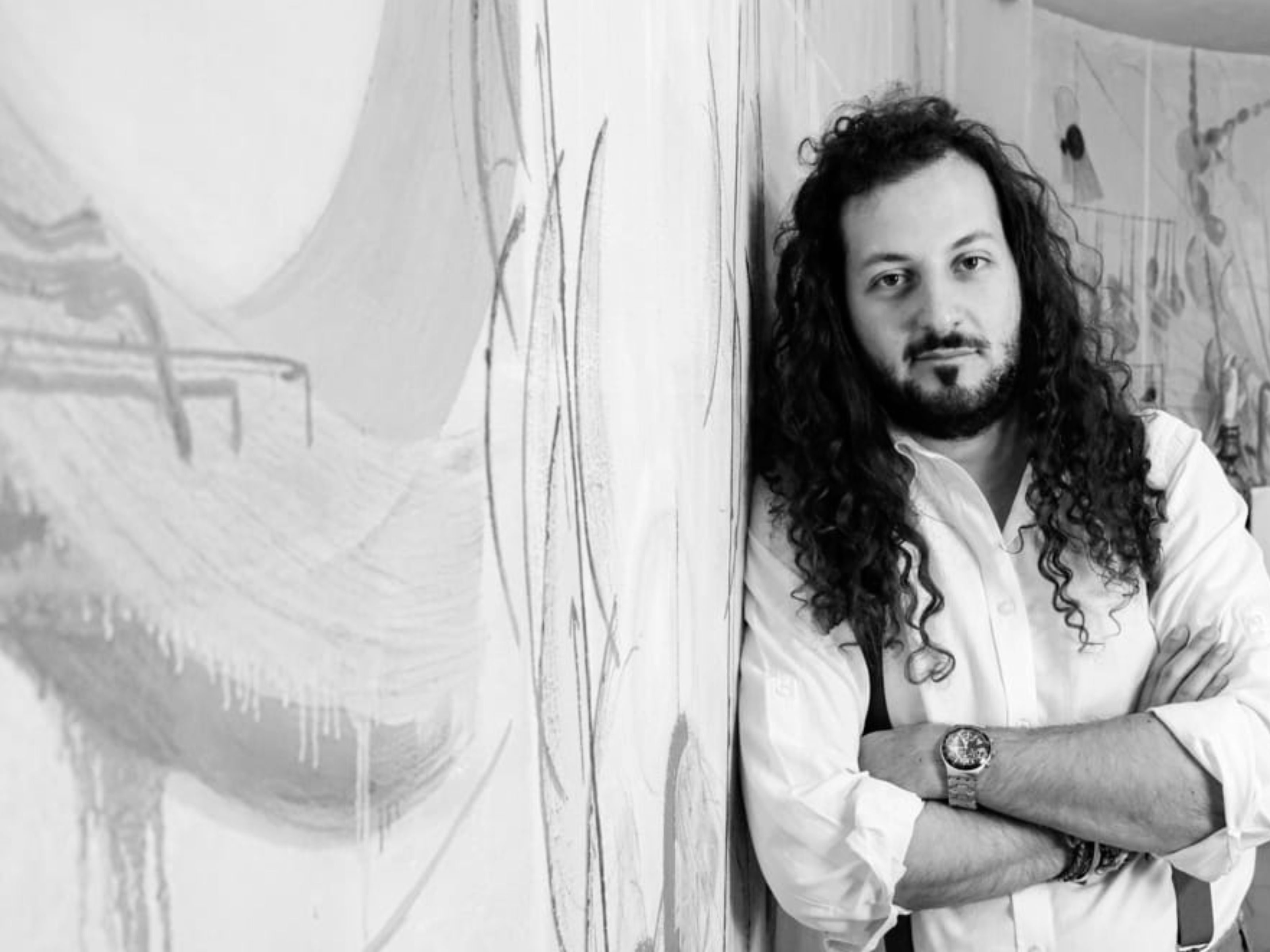
Giampaolo Parrilla: painting after the crisis of images
News photography, propaganda, social media, surveillance, war imagery and AI-generated content now coexist within the same visual space. Giampaolo Parrilla uses painting to slow this flow down and examine the way images construct what we understand as reality. In 2026, Darte curated his solo exhibition Redemption Machines at Fondazione Palmieri in Lecce, connecting this research with the history of a place shaped by protection, discipline and control.