
Giampaolo Parrilla: painting after the crisis of images
News photography, propaganda, social media, surveillance, war imagery and AI-generated content now coexist within the same visual space. Giampaolo Parrilla uses painting to slow this flow down and examine the way images construct what we understand as reality. In 2026, Darte curated his solo exhibition Redemption Machines at Fondazione Palmieri in Lecce, connecting this research with the history of a place shaped by protection, discipline and control.
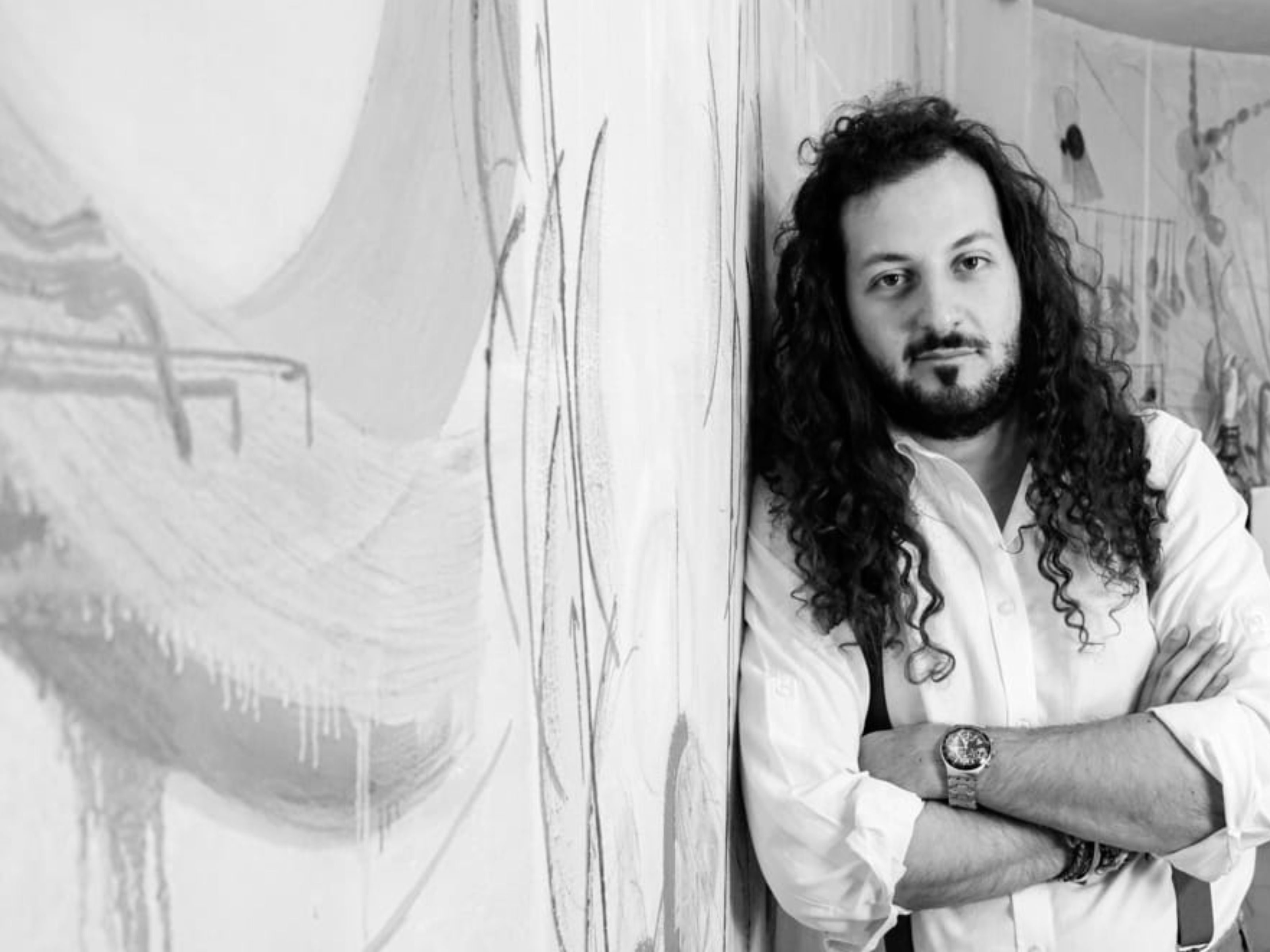
“Painting is a theoretical tool capable of slowing down, questioning, and recomposing the visual processes that characterize the present.”
— Giampaolo Parrilla, research statement
When seeing no longer means knowing
We have never had access to so many images, and at the same time it may never have been so difficult to understand what we are actually looking at. A journalistic photograph, propaganda footage, a surveillance image, a meme, AI-generated content and direct testimony can appear on the same screen within seconds of one another, sharing almost identical forms of distribution and consumption. In the recent research of Giampaolo Parrilla, born in Bologna in 1997, this condition is described as a genuine cognitive crisis of the contemporary image: the issue no longer concerns the reliability of a single photograph, but an entire visual ecosystem in which document, simulation, propaganda, entertainment and identity construction continually overlap. For Parrilla, the image is therefore not a neutral element that simply records events. It can orient memory, produce consensus, construct political imaginaries and help determine how a community interprets a conflict, a body or an identity. This represents an important shift because it moves the question beyond the traditional problem of representational truth: the issue is no longer simply whether an image is true or false, but what it is capable of making us think while we are looking at it.
Painting as a form of friction
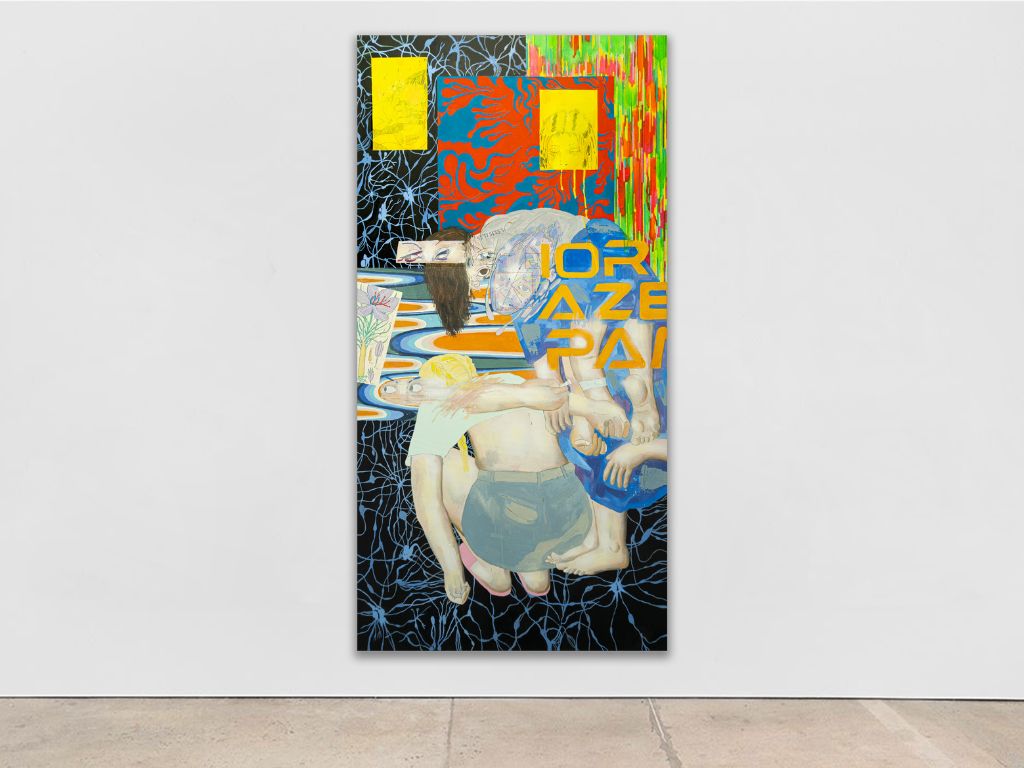
Parrilla constructs his archive from material drawn from international conflicts, social networks, journalistic sources, military technologies, surveillance systems, digital platforms and online communities. These images are collected, compared and then subjected to processes of selection, layering, alteration and painterly recontextualisation. In his research statement, the artist gives painting a precise function: interrupting the speed of the digital flow and returning images to a space in which they can once again be critically observed. This may be the most interesting paradox within his practice. Painting, one of the oldest technologies for producing images, is being used at a historical moment when the problem is no longer a lack of images but their excess. Parrilla does not attempt to compete with photography or the speed of the smartphone; instead, he uses the slowness of painting as a form of friction. An image that might occupy our attention for only a few moments within a feed is isolated, enlarged, transformed and returned to the viewer under entirely different conditions, making it harder to consume without questioning where it came from and how it was constructed. Painting does not automatically make an image more truthful, but it can give it something the digital environment continually removes: enough time to become problematic.
The body within geopolitics
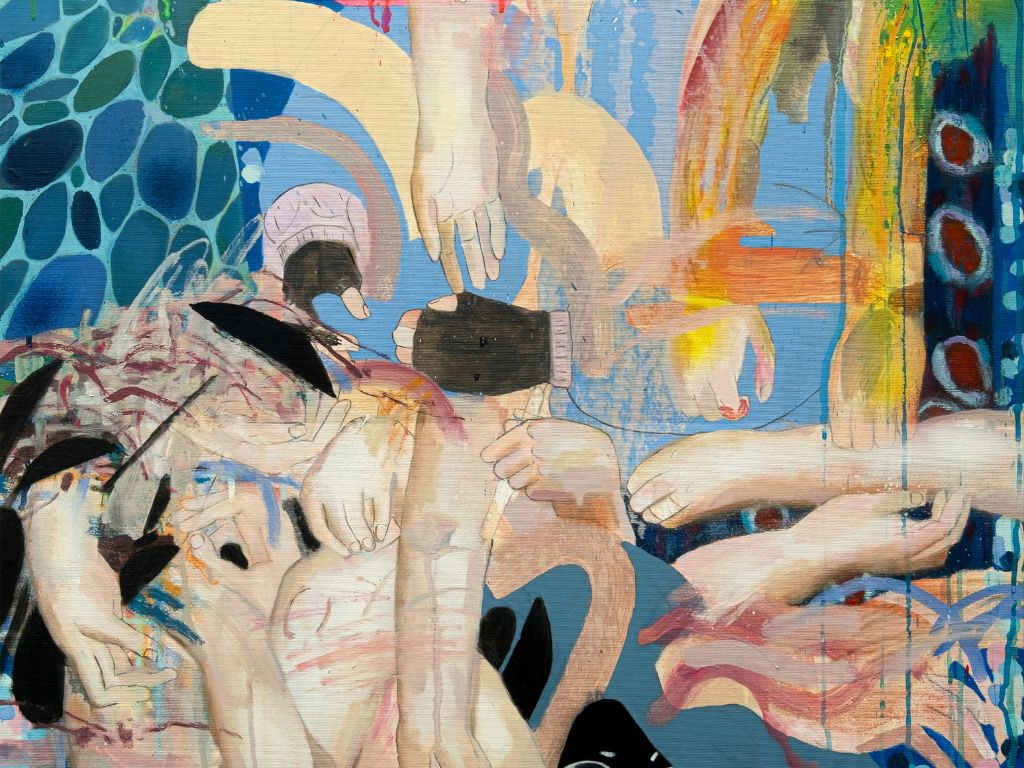
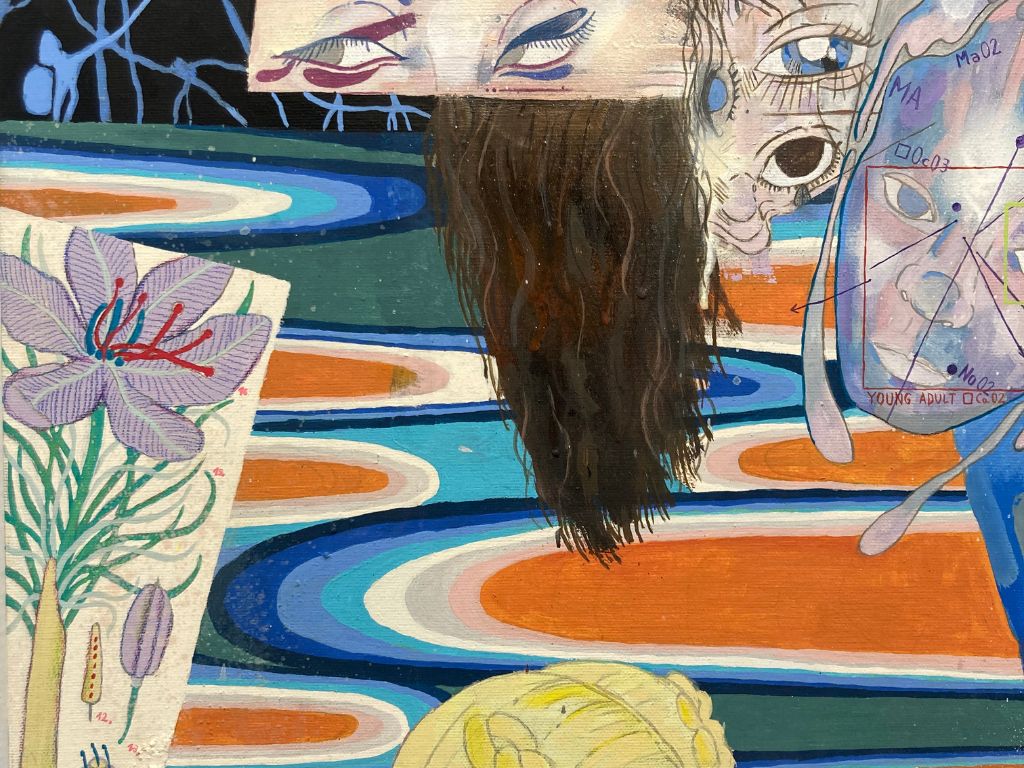
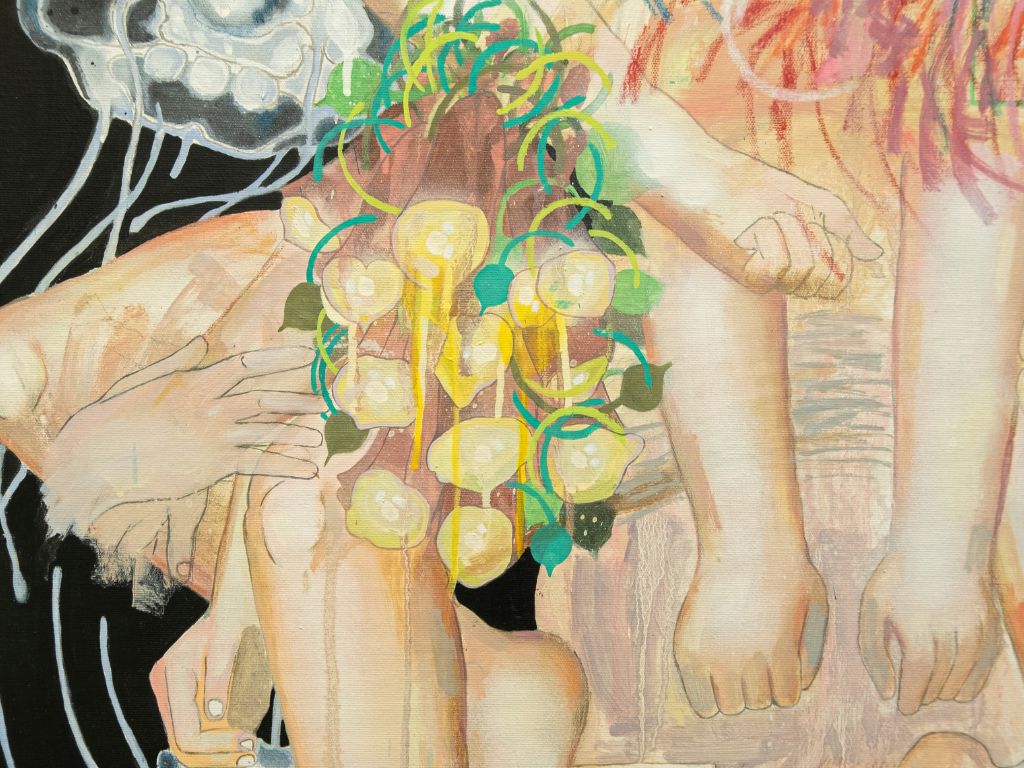
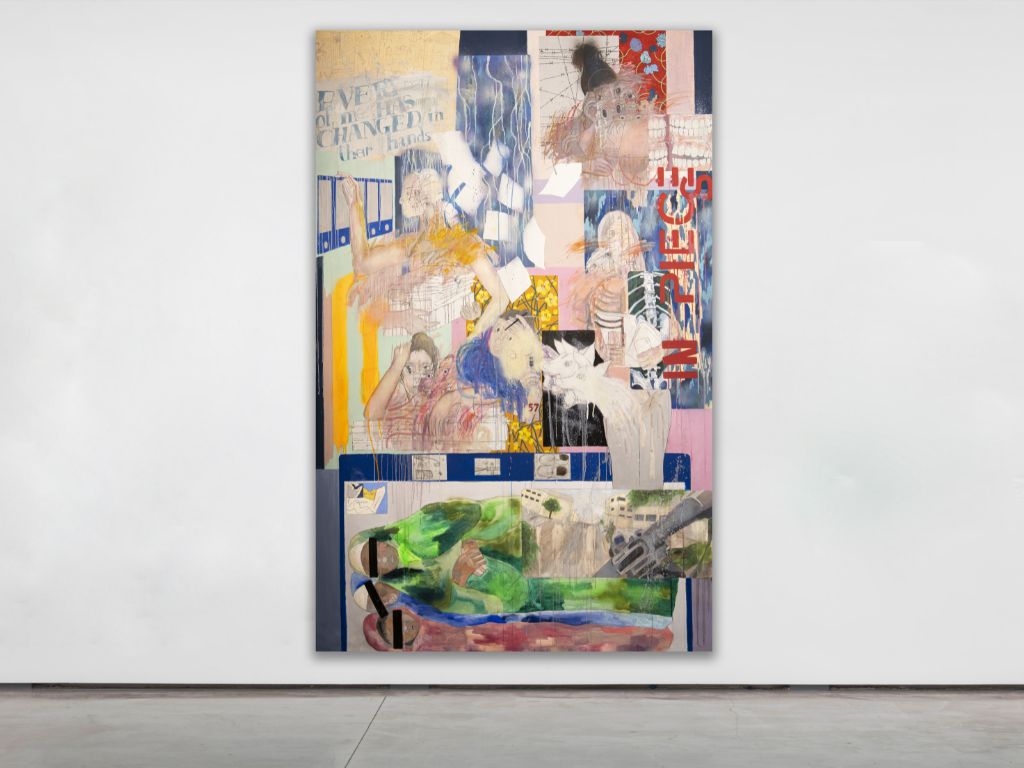
The body has long occupied a central position in Parrilla’s research, although it is rarely treated as an isolated presence. Floris Art Gallery describes his large-format paintings as an investigation into the fragility and fragmentation of the contemporary body intertwined with the geopolitics of conflict, drawing on sources ranging from war maps and first-person footage to the new visual perspectives generated by AI-guided weapons systems. Figures are frequently developed from video stills and photographic enlargements, then cropped, numbered or reassembled on canvas, while his stated painterly references include the physicality of Rubens, First World War soldier-artists and Alice Neel’s anthropological portraiture. This concern was also visible at ArtVerona in 2024, where Floris Art Gallery presented Parrilla in a duo show with Teo Martino. Inside Art described his work there as a form of painting that reprocessed global news, propaganda, conflict imagery, maps, weapons systems and NGO material, also noting its relationship with testimonies from women in Ukraine, Syria, Afghanistan, Sudan and Somalia. Within this framework, the body becomes neither simply victim nor symbol. It is the point at which abstract processes such as war, technology, control and power stop being concepts and begin producing physical consequences. The fragmentation running through Parrilla’s paintings can therefore also be understood as a translation of the way we encounter such bodies every day: through fragments of video, isolated photographs and images detached from the contexts that produced them.
Redemption Machines: when the site changes the painting
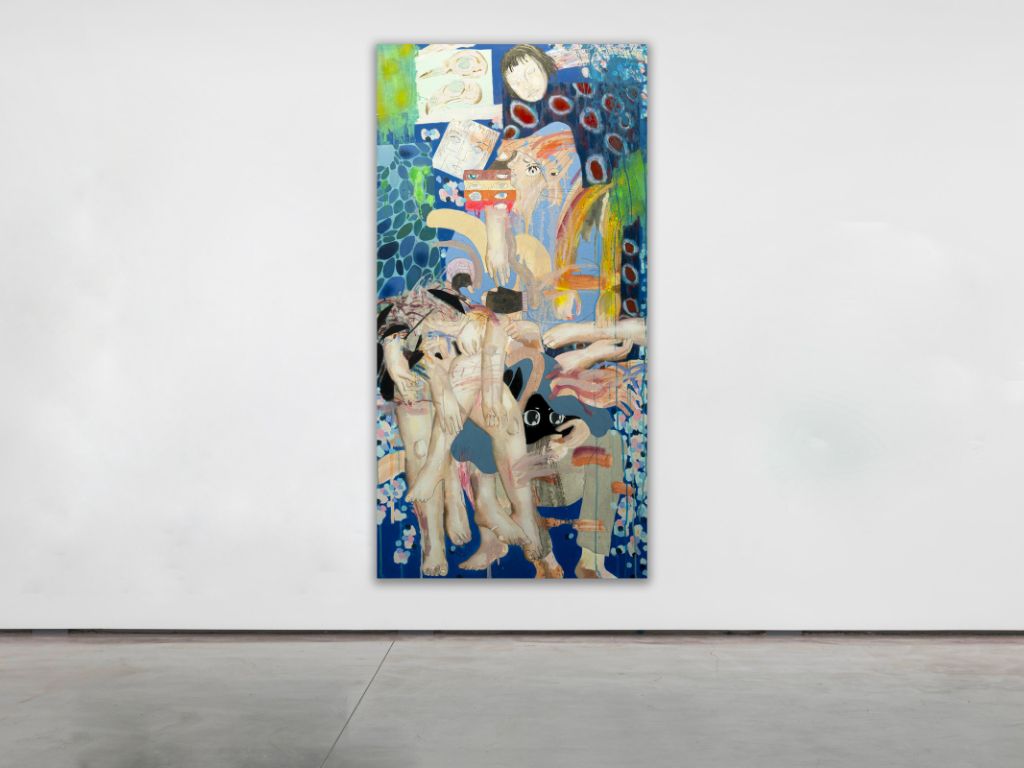
In 2026, this research encountered a context in Lecce that significantly altered the way it could be read. For Lecce Art Week, Darte curated Parrilla’s solo exhibition Redemption Machines at Fondazione Palmieri, with Andrea Tapparini as curator, developing the project within the former Church of San Sebastiano, a sixteenth-century building historically connected to the nearby Conservatorio delle Pentite. The exhibition brought together fourteen new paintings and used the memory of the site to develop a reflection on the relationship between the body, institutions, control and the possibility of redemption. The Conservatorio delle Pentite sheltered marginalised women, unmarried mothers and former prostitutes, offering protection and reintegration within a system simultaneously based on care and moral and spiritual discipline. The contradiction within this history became central to the curatorial framework: an institution can protect an individual while at the same time determining the conditions through which that individual must transform in order to be readmitted into society. Fondazione Palmieri therefore functioned as more than a prestigious setting for the paintings. The building’s history entered into the meaning of the works, placing Parrilla’s contemporary bodies in dialogue with a site where the female body had historically been subject to care, judgement, discipline and transformation. It is precisely this overlap that makes Redemption Machines more than an exhibition that could simply be transferred unchanged into any white cube.
Does protection also mean control?
The exhibition developed this ambiguity without reducing it to a simple opposition between oppressive institution and free individual. Within the project material, the body is understood as a political territory upon which systems of care, surveillance, control and identity transformation operate simultaneously; the question therefore concerns not only what institutions prohibit, but also the way they produce categories through which an individual can be recognised, protected or reintegrated. From this perspective, the history of the Conservatorio enters into a surprising relationship with the present. The forms have changed, yet we continue to live within systems that observe, classify and organise bodies: from healthcare and social institutions to surveillance technologies, algorithms and the images through which we construct public identities. Redemption Machines does not suggest that these realities are equivalent, but uses historical distance to reveal a subtler continuity: protection and control can belong to the same apparatus. When a system claims to care for a body, who determines the form that body must assume before it can finally be considered saved? Within Fondazione Palmieri, the question acquired particular force because it was articulated not only by the paintings but by the history of the space in which they were installed.
Bodies that change meaning
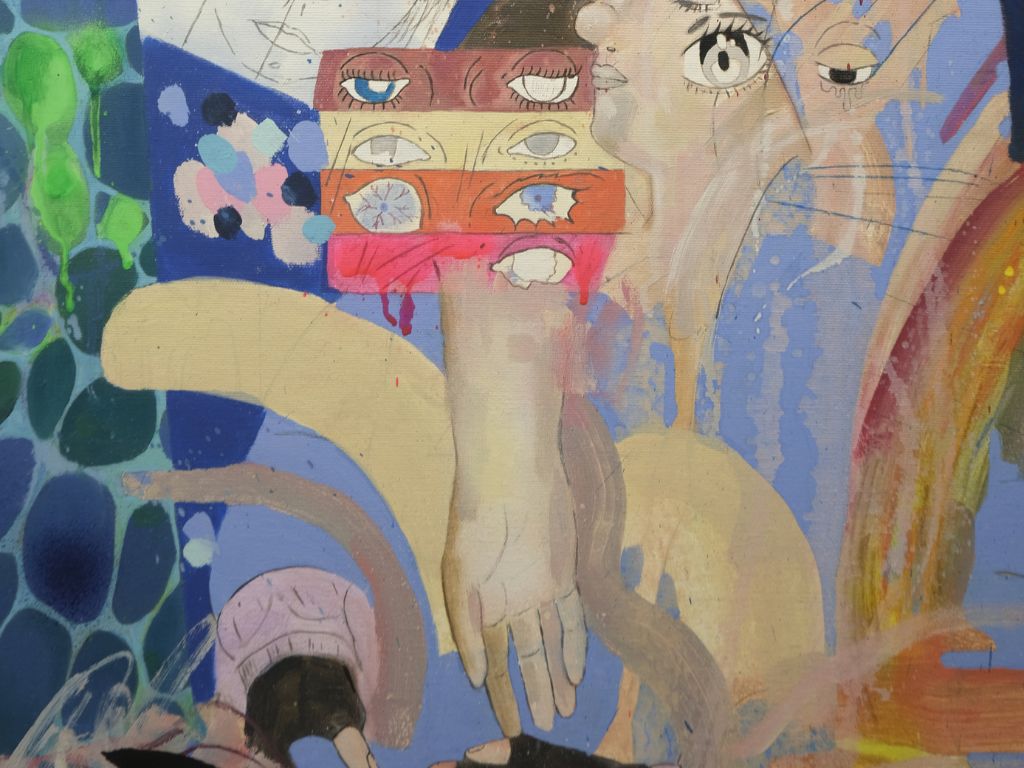
Within Redemption Machines, the relationship between body and interpretation was further complicated through references to Christian mysticism. The exhibition material invoked figures including Saint Catherine of Siena and Saint Angela of Foligno, women whose religious experiences involved visions, ecstasy, ascetic practices and a radical relationship with the physical body. Within the project, these figures were not treated simply as iconographic references but as examples of bodies difficult to contain within the social categories of their own time. The issue becomes particularly interesting because a bodily posture does not possess a universal meaning. A bent, immobile, abandoned or physically extreme body may be interpreted as ecstasy, illness, fragility, deviance or suffering depending on the period and the system of images surrounding it. Parrilla’s painting frequently operates within precisely this unstable territory, where what we see is not sufficient to determine conclusively what we are looking at. It is the same problem that runs through his research into contemporary images, translated into the history of the body: there is not only what an image shows, but also the cultural, political and symbolic network that teaches us how to interpret it.
A trajectory across studios, galleries and fairs
Parrilla trained at the Academy of Fine Arts in Bologna, graduating in 2019, and subsequently developed a trajectory spanning solo exhibitions, residencies, awards and art fairs. Floris Art Gallery documents the solo exhibitions La Crisi come Crisalide in 2019 and Florescere in 2023, alongside residencies between Italy, Amsterdam and Montevideo; in 2021 he was also a finalist for the Combat Prize. Art fairs have developed in parallel with this trajectory. In 2024, Floris Art Gallery presented him at ArtVerona in a duo show with Teo Martino, while his wider path includes contexts such as Affordable Art Fair Milan, Unfair Milano, WopArt in Lugano and Context Art Miami. These experiences are also useful for understanding his practice without forcing it into a false opposition between research and market: his painting develops within a system in which the gallery, art fair, personal research and curatorial project can represent different moments of the same trajectory. The Lecce solo exhibition marks a further step in this respect because it did not simply display an existing group of paintings, but used a place and its memory to alter the way those paintings could be read. It is in this movement from the canvas towards context that Parrilla’s work currently seems to find some of its most interesting possibilities.
Painting means slowing down enough to doubt
Giampaolo Parrilla’s research belongs to a paradox that now concerns everyone, not only those working within art. We have access to an almost unlimited quantity of images, yet this abundance has not necessarily produced a greater ability to understand them; on the contrary, the speed at which they are generated, modified, distributed and forgotten increasingly destabilises the distinction between testimony and simulation, experience and representation. In his statement, Parrilla describes painting as a tool capable of slowing and recomposing these visual processes, turning the painted surface into a space in which the very conditions through which we see today can be analysed. This may be the deepest continuity between his research into contemporary images and Redemption Machines. In the first case, painting interrupts the digital flow; in the second, it also interrupts the automatic reading of the body, placing contemporary images in dialogue with a building shaped by a history of discipline, protection and transformation. In both cases, the painting offers no definitive answer but creates a distance between what we see and the first interpretation we might instinctively assign to it. In a present that constantly asks us to look, react and move on to the next image, perhaps painting’s most radical function is not to show us something new, but to prevent us, for a few minutes, from stopping too soon when looking at what is already in front of us.
Keep reading
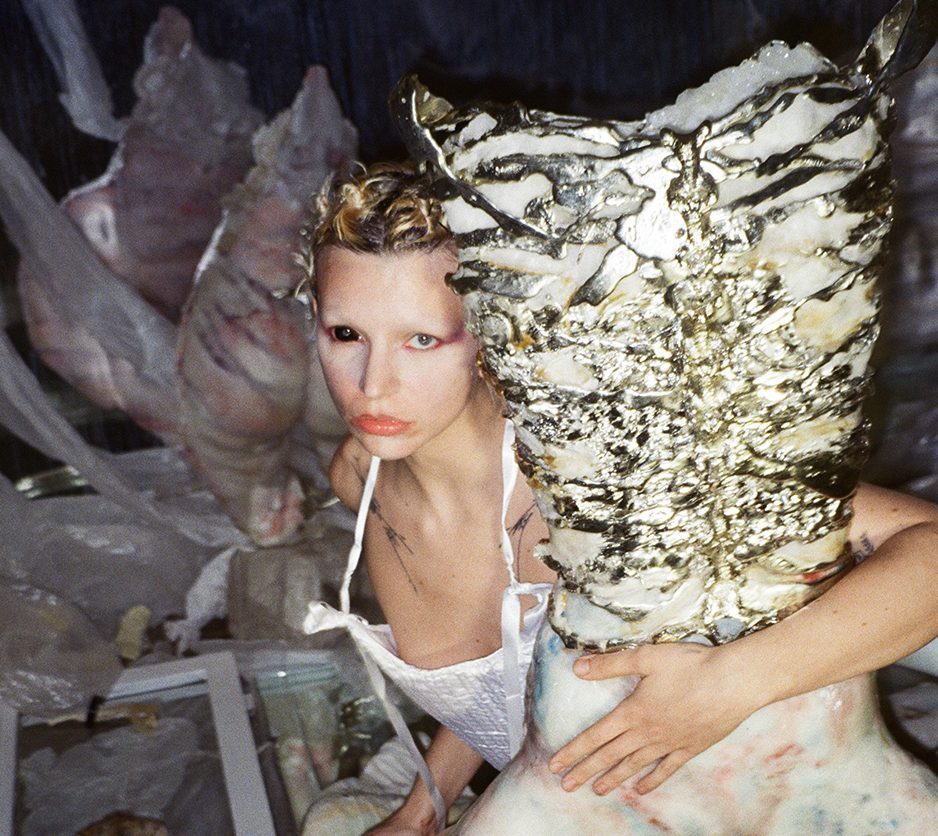
Ambra Castagnetti: how much of us truly belongs only to us?
Snakes, bound bodies, wax, orchids, avatars and digital apparitions. Ambra Castagnetti creates a world in which the human, the animal and the technological continually cease to exist as separate categories. From the Venice Biennale to MAMBO in Bogotá, her practice begins with a question that concerns us all: if our bodies are shaped by relationships, environment, desire and technology, how much of what we call “I” truly belongs only to us?
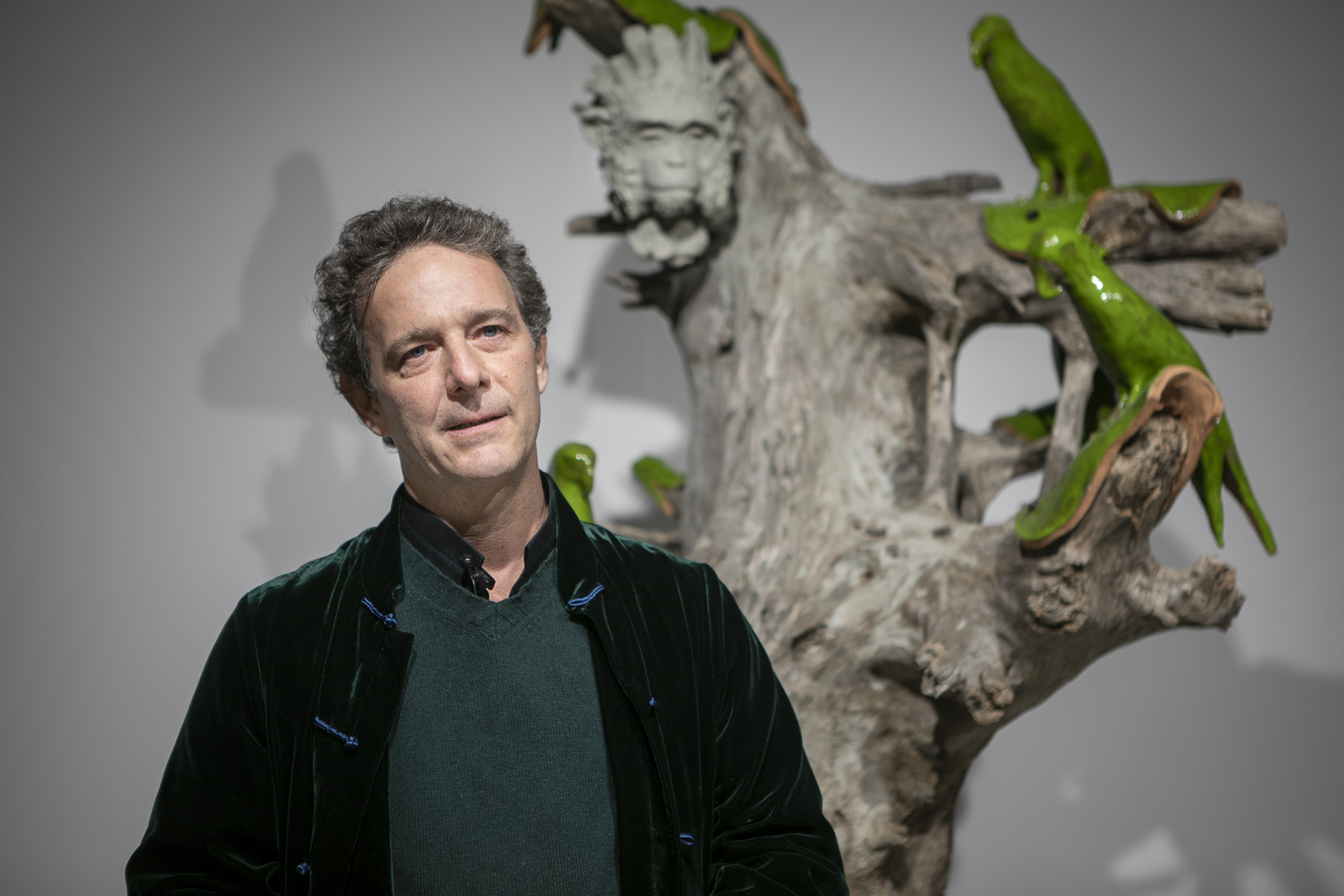
Benedetto Pietromarchi: building a bestiary for a changing world
Birds, roots, marine creatures and impossible animals inhabit Benedetto Pietromarchi’s sculpture, yet nature is never treated as something stable to be reproduced. Trained in classical sculpture and architecture, after fifteen years in London the artist found in the Maremma landscape a territory from which to extract materials, images and new mythologies. From terracotta to contemporary bestiaries, his work explores a world in which animal, vegetal, mineral and artificial forms seem increasingly difficult to separate.
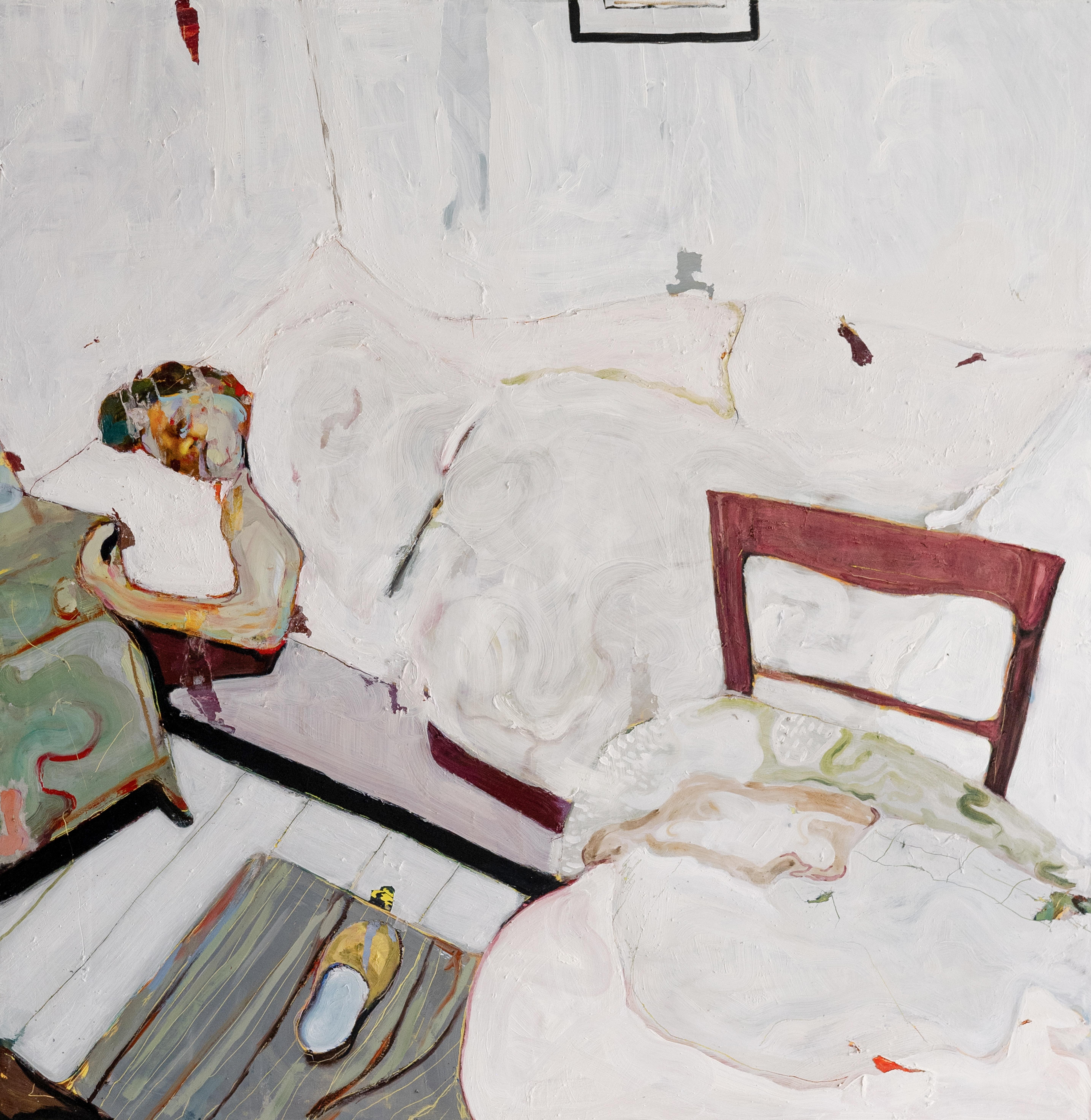
Giuseppe Gallace: painting what is missing
Domestic interiors, figures seemingly about to appear or disappear, suspended colours and details that interrupt the logic of a scene. Giuseppe Gallace creates paintings in which what is missing matters as much as what is represented. In 2025, Darte presented Fragmenta, his solo exhibition in the Sacristy of San Francesco della Scarpa in Lecce: eight oil paintings exploring a practice that does not tell complete stories, but leaves viewers to imagine what happened before and what might happen next.