
Yayoi Kusama: disappearing into infinity
Polka dots, nets, mirrors, pumpkins, and rooms without end. Behind one of contemporary art’s most recognisable visual languages, Yayoi Kusama has spent more than seven decades exploring the dissolution of the self. But what happens when art created to make the individual disappear becomes instantly recognisable to millions?
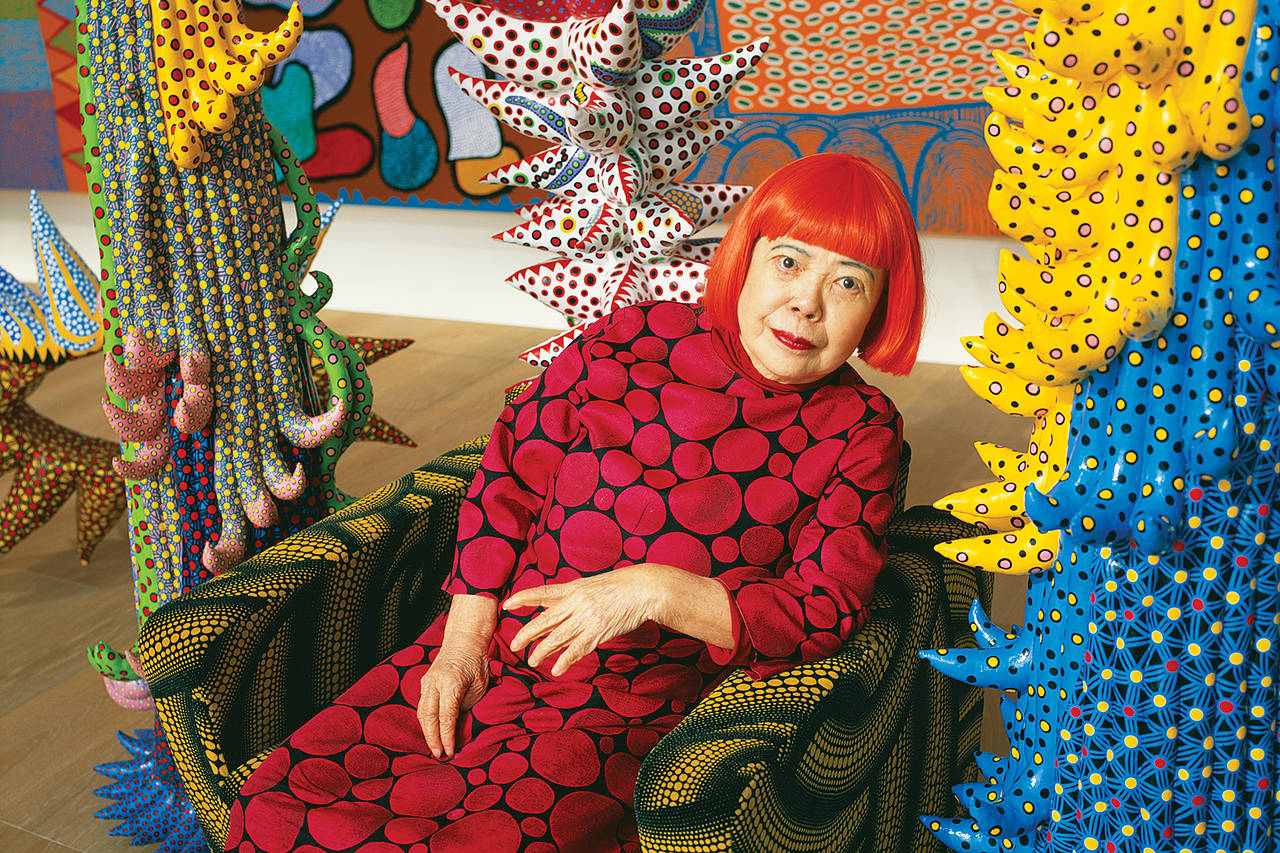
“Polka dots are a way to infinity.”
— Yayoi Kusama, quoted by Tate
A dot is never just a dot
It is difficult to think of a contemporary artistic language more immediately recognisable than Yayoi Kusama’s. A field of polka dots, a yellow pumpkin covered in black spots, or a room multiplied by mirrors is often enough. Yet stopping at the surface would mean missing almost everything. Born in Matsumoto in 1929 and initially trained in the traditional Japanese style of Nihonga, Kusama transformed repetition into a way of questioning something much larger than the image itself: the boundary between the individual and the world. She moved to New York in 1958, drawn by the experimental postwar art scene, and the following year began producing her monumental Infinity Nets, canvases covered by thousands of repeated loops until the limits of the surface almost disappear.
Repeating until you disappear
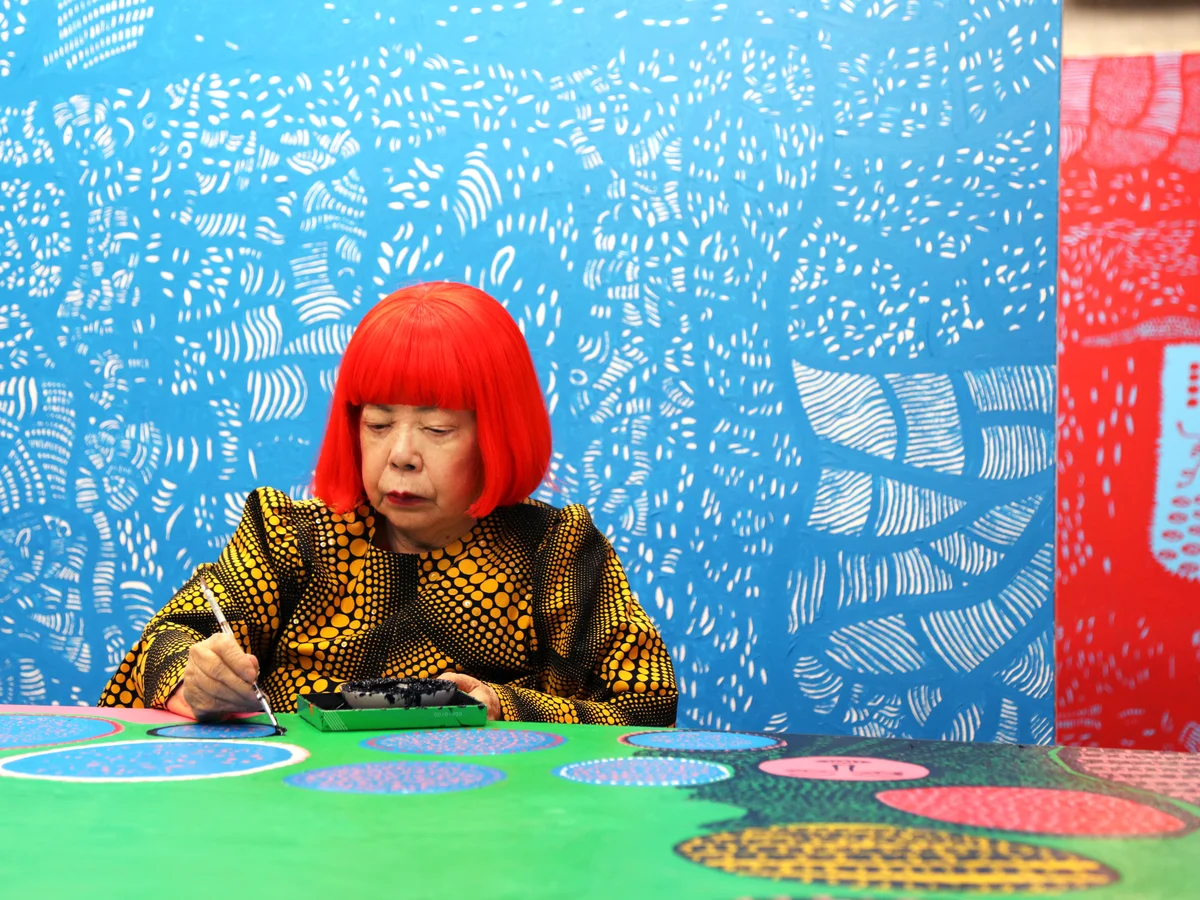
For Kusama, repetition was never simply a pattern. During the 1960s it progressively invaded objects, bodies, and entire environments. Her soft Accumulation sculptures emerged, while from 1967 she staged happenings in which participants were covered with polka dots and her visual universe entered locations including Central Park, the Museum of Modern Art, and even the New York Stock Exchange.
Kusama uses the idea of self-obliteration: symbolically dissolving the boundaries of the self through repetition until body and environment become part of the same visual field. Tate records one of her clearest formulations: polka dots are a way to infinity. Where do we end, and where does everything around us begin?
When painting becomes a place
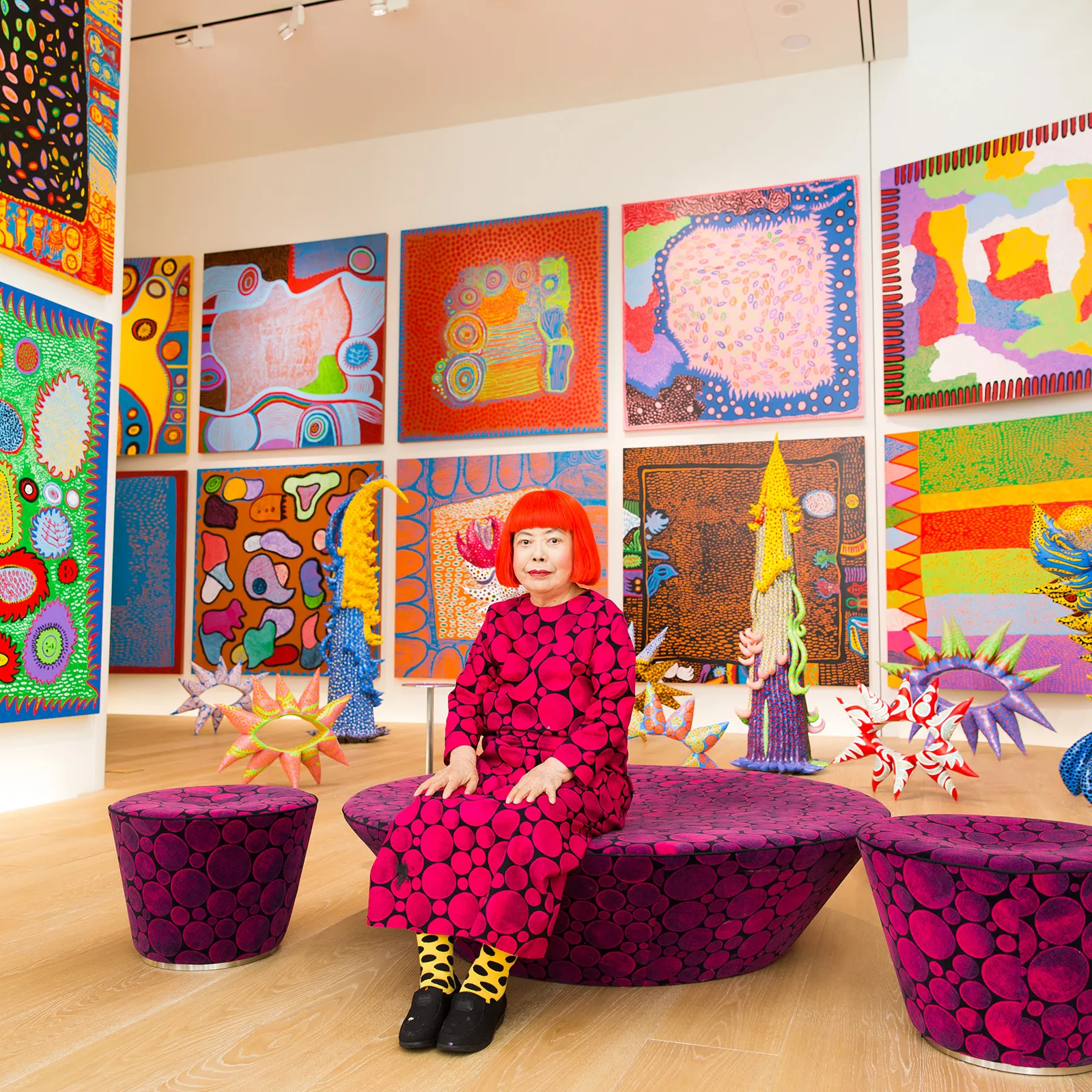
In 1965, this research reached a decisive turning point with Infinity Mirror Room—Phalli’s Field. Mirrors allowed Kusama to physically realise what the Infinity Nets had already attempted on canvas: repetition with no visible endpoint. The visitor no longer remains in front of the artwork. They enter it and see their own image multiplied alongside everything else. The Smithsonian’s Hirshhorn Museum identifies this first Infinity Mirror Room as a breakthrough precisely because repetition became a perceptual experience.
The artist who wanted to disappear became an icon
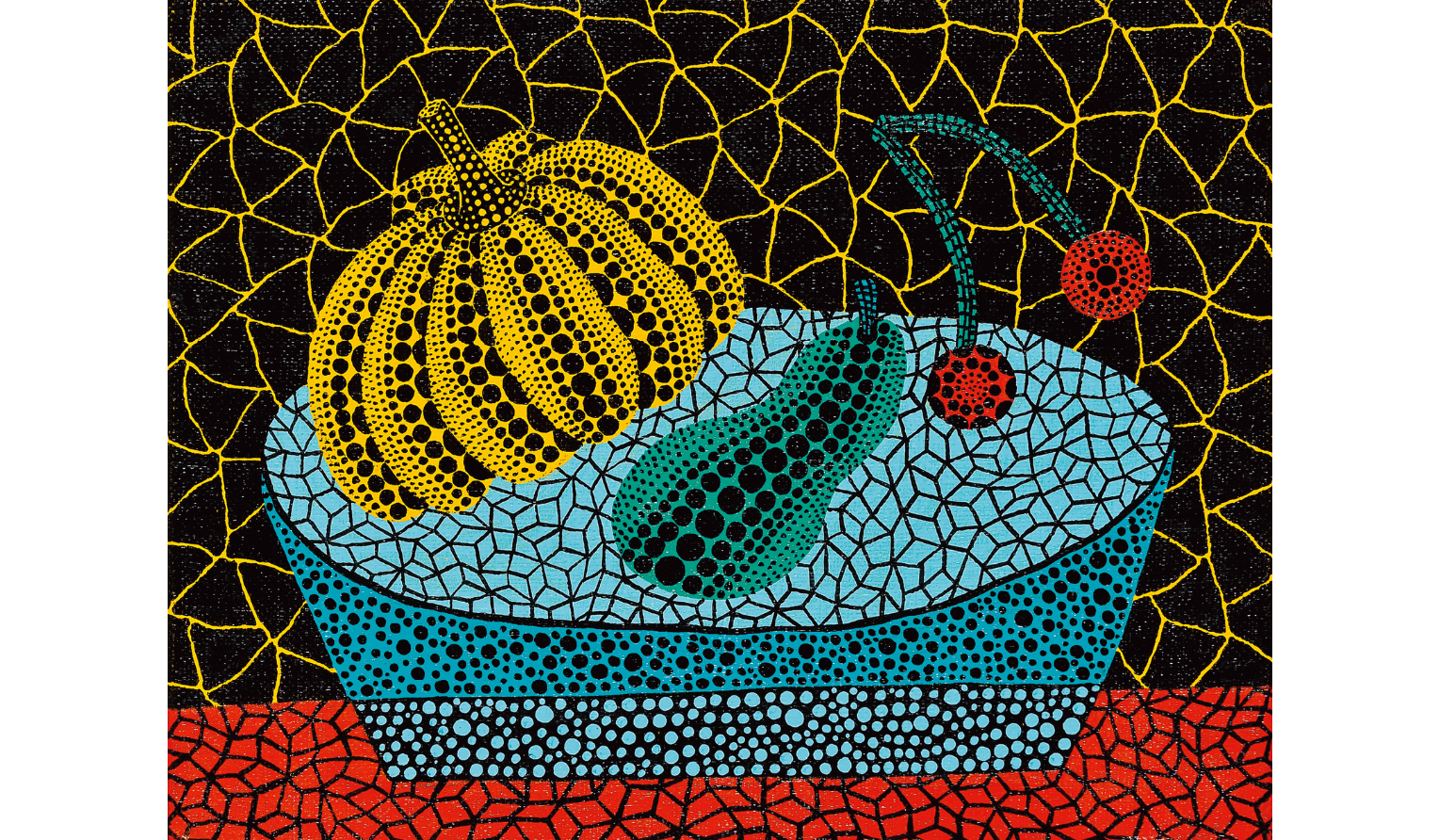
Here lies one of the most fascinating paradoxes in Kusama’s story. A language built around the dissolution of individuality became an unmistakable signature. In 1993, she represented Japan at the Venice Biennale with a mirrored environment filled with pumpkins; in the decades that followed, pumpkins, polka dots, and Infinity Mirror Rooms entered global visual culture.
The scale of her popularity is now both institutional and popular in the broadest sense. The major National Gallery of Victoria retrospective in Melbourne, open from December 2024 to April 2025 and featuring around 200 works, attracted more than 570,000 visitors and set a new attendance record for the museum. Can art created to dissolve the ego survive becoming a global icon?
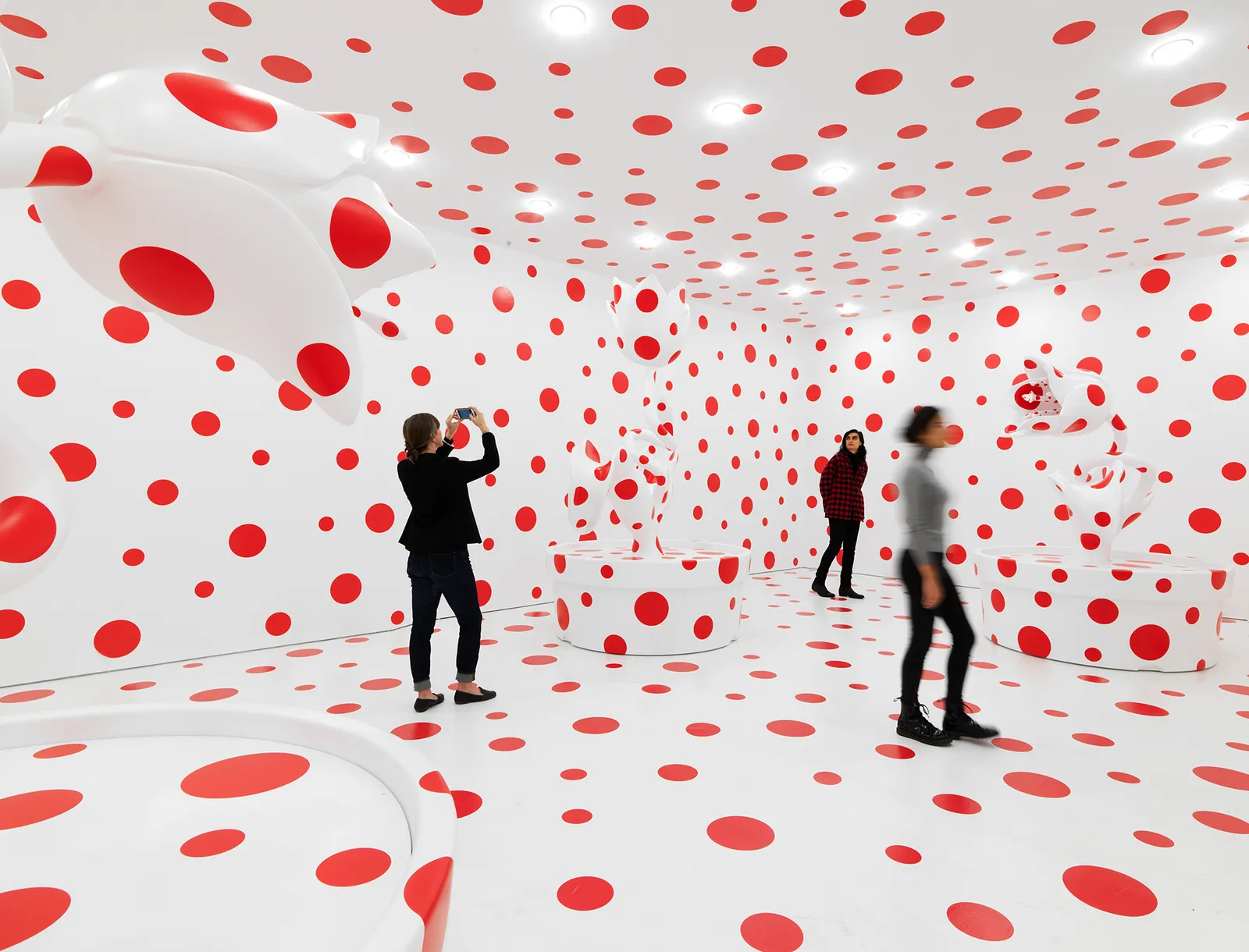
Beyond the Instagram phenomenon
The Infinity Mirror Rooms seem almost perfectly designed for the smartphone era: immersive, immediately photographable, recognisable within seconds. Yet they were created decades before social media. Reducing them to their photogenic appeal would therefore mean reading the past backwards. When Kusama constructed her first mirrored room in 1965, she was searching for a physical form for ideas already present in her paintings: infinity, repetition, obsession, and the dissolution of individual boundaries.
The fact that millions of people now want to photograph themselves inside an artwork conceived around the dissolution of the self adds another layer to the question. We enter infinity, and the first thing we still look for is our own image.
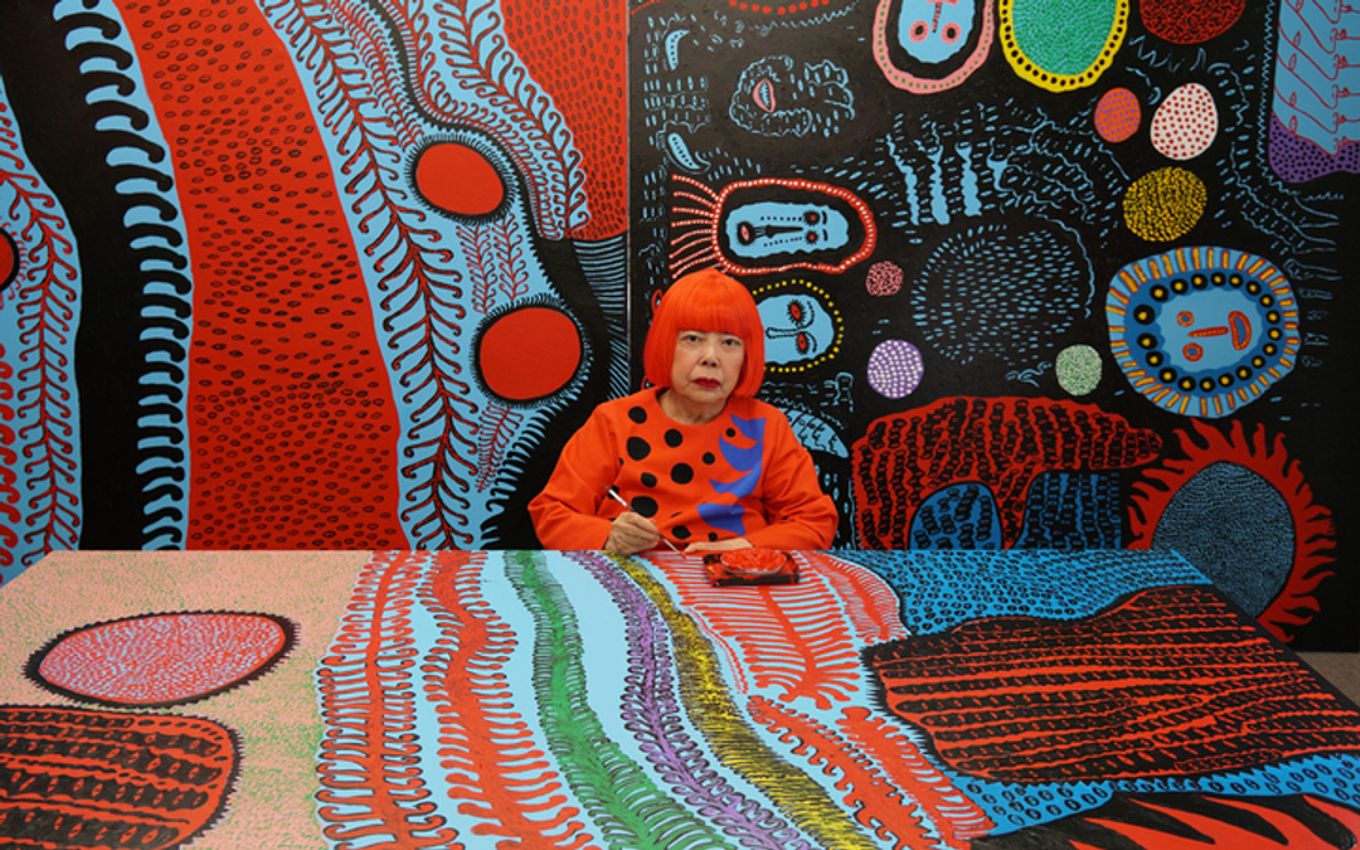
Infinity is still a human question
After returning to Japan in 1973, Kusama continued working across painting, sculpture, installation, literature, and poetry. In 2009 she began My Eternal Soul, a series that reached roughly 900 paintings by 2021; that same year she started Every Day I Pray for Love. Her official website describes the continuity of her practice through nature, love, life, death, and infinity.
Perhaps this persistence explains why her work has moved through such different eras without belonging completely to any one of them. Behind the familiar image of the polka dot remains an ancient question: what does it mean to be an individual within something immeasurably larger? Kusama has spent a lifetime answering by filling canvases, bodies, and rooms until their boundaries disappear. And yet, when we stand before the mirrors, we still search for ourselves.
Keep reading
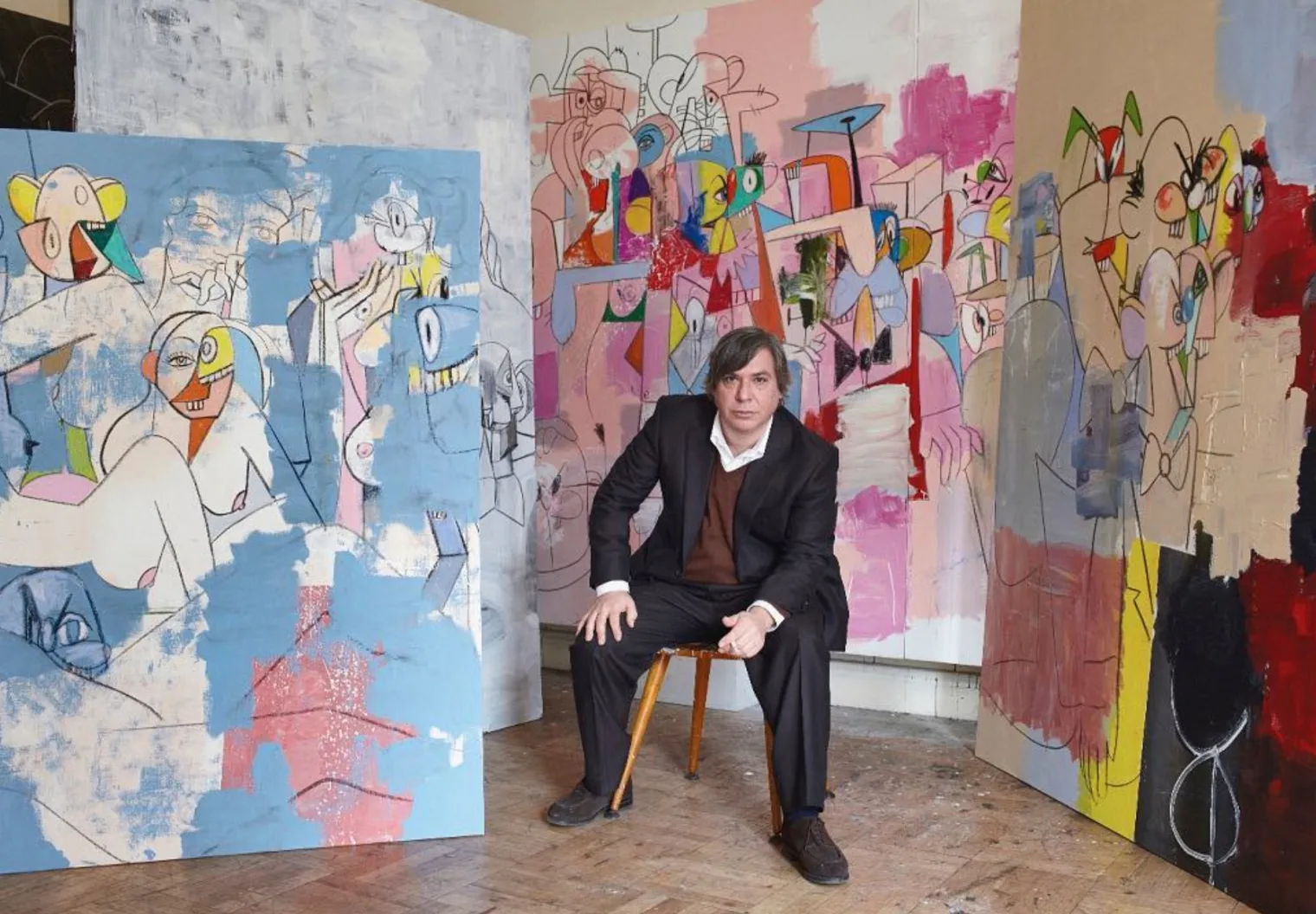
George Condo: how many people can live inside one face?
Misaligned eyes, mouths crowded with teeth, distorted aristocrats, clowns, Picasso, Old Masters and hip-hop covers. For more than forty years, George Condo has painted impossible faces to describe something profoundly real: a person can be joyful, violent, vulnerable, arrogant and terrified almost at the same time. From the Venice Biennale to collaborations with Kanye West and Travis Scott, his painting has moved between museums and popular culture without choosing between them. Perhaps a face is not meant to show us who we are, but all the people we might be at once.
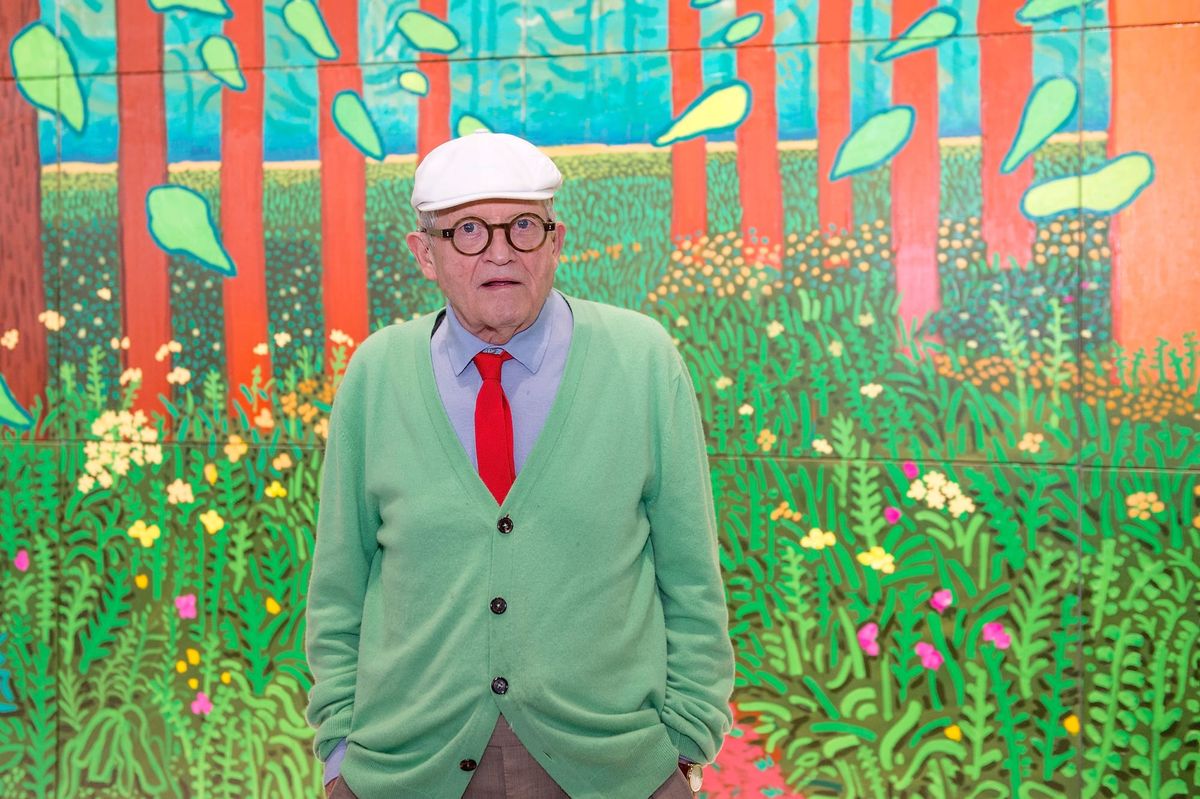
David Hockney: learning to see the world all over again
From Californian swimming pools to photographic collages, portraits and iPad drawings, David Hockney moved through almost seven decades of art without ever stopping his experimentation. Behind every new tool, however, remained the same question: how can we see what is in front of us more clearly?
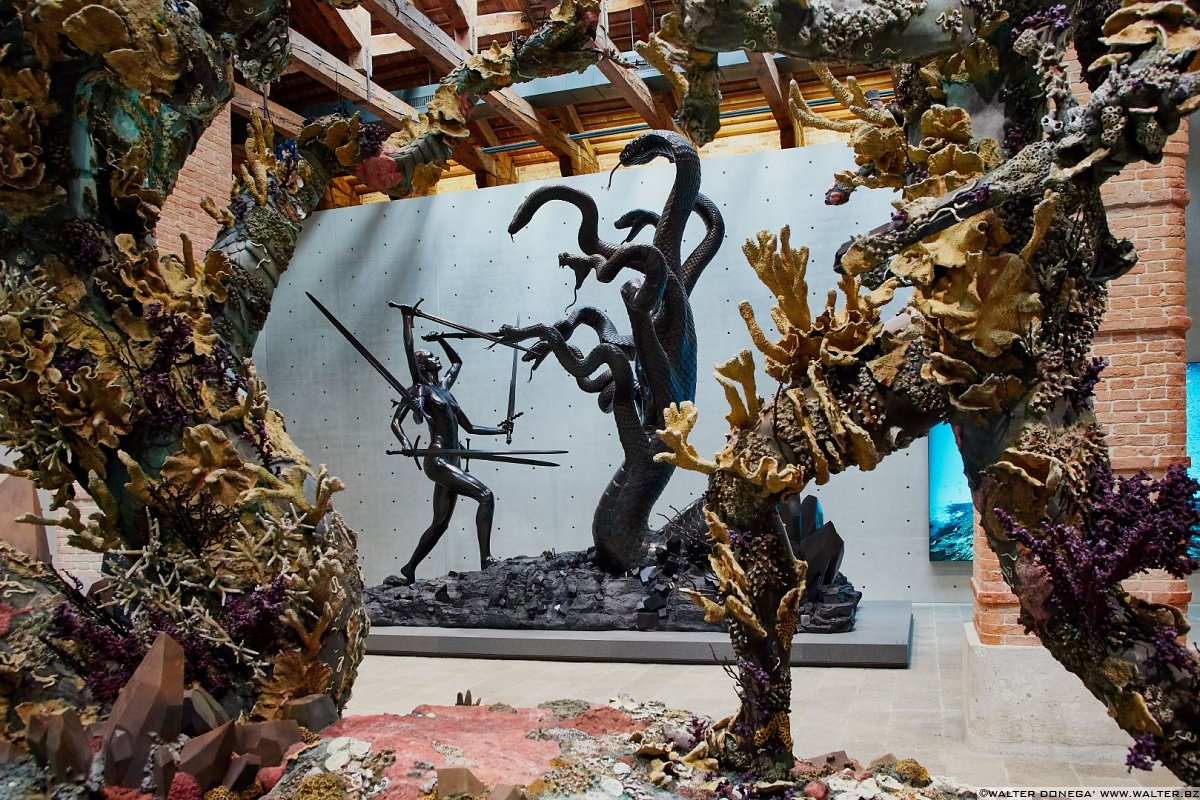
Damien Hirst: the art that refused to be ignored
A shark suspended in formaldehyde, divided animals, pills, butterflies, and millions of pounds moving directly from the studio to the auction house. Damien Hirst turned death, beauty, the market, and spectacle into parts of the same language. But how much of his importance lies in the artworks, and how much in the system he built around them?