
George Condo: how many people can live inside one face?
Misaligned eyes, mouths crowded with teeth, distorted aristocrats, clowns, Picasso, Old Masters and hip-hop covers. For more than forty years, George Condo has painted impossible faces to describe something profoundly real: a person can be joyful, violent, vulnerable, arrogant and terrified almost at the same time. From the Venice Biennale to collaborations with Kanye West and Travis Scott, his painting has moved between museums and popular culture without choosing between them. Perhaps a face is not meant to show us who we are, but all the people we might be at once.
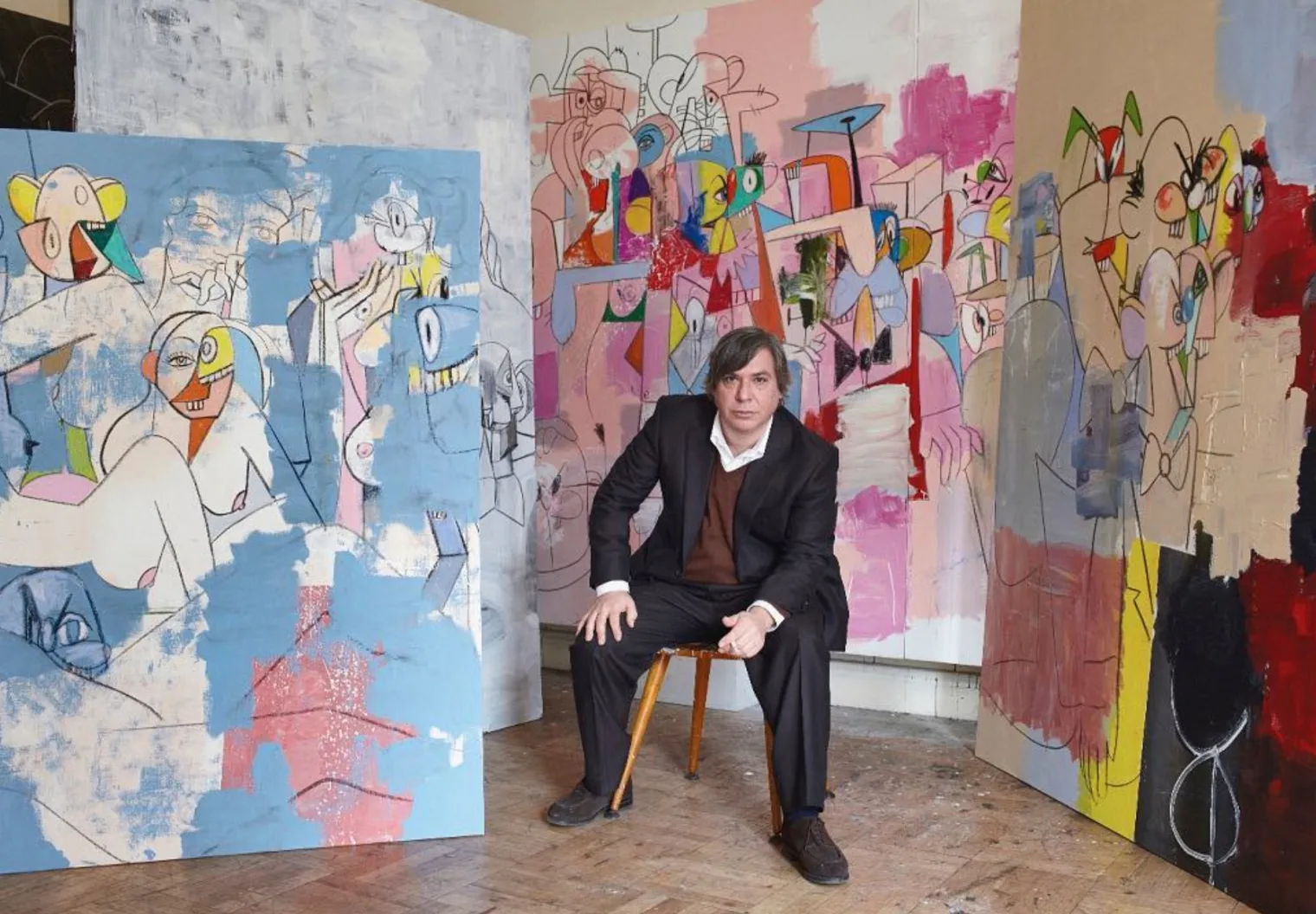
“Dismantling one reality and constructing another from the same parts.”
— George Condo, on his definition of Artificial Realism, La Biennale di Venezia
A face does not contain a single emotion
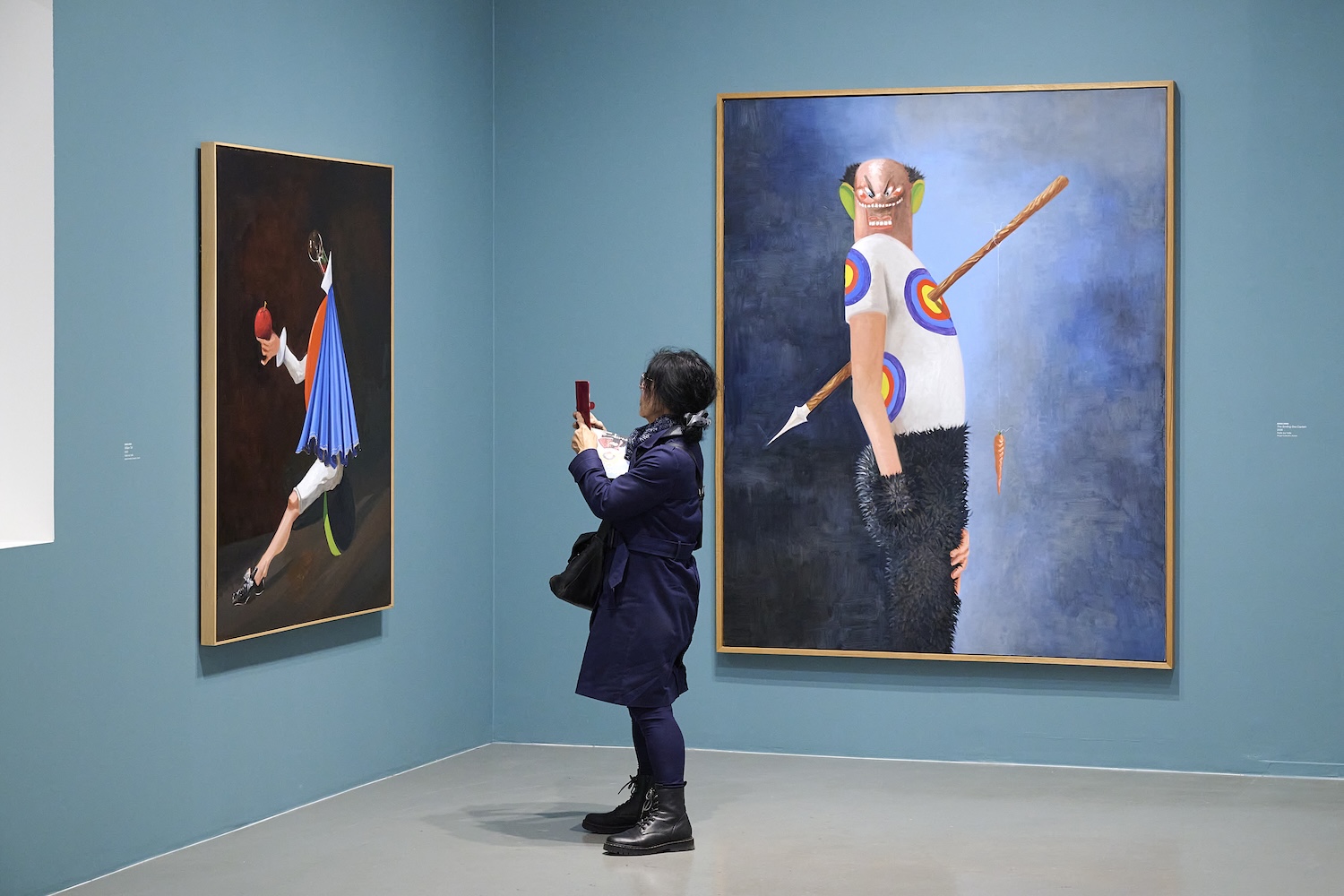
The faces painted by George Condo often seem to contain something that has gone wrong: eyes can belong to different perspectives, mouths open into exaggerated smiles, noses shift position, teeth multiply, and an apparently comic expression can suddenly become unsettling. Yet this distortion does not come from a desire to represent unreal people. Condo begins from almost the opposite idea: perhaps the traditional portrait, which attempts to compress an individual into a single coherent expression, is less realistic than we imagine. The artist calls this method Psychological Cubism. If Cubism could present an object from several perspectives at once, Condo applies a similar principle to the mind, allowing incompatible psychological states to inhabit a single face: calm and fear, desire and disgust, control and madness. Sprüth Magers describes his paintings precisely through this simultaneity of emotional states, while Hauser & Wirth notes that many of his portraits depict invented characters through which the complexity of the psyche can be explored. This may be why those monstrous faces feel strangely familiar. They do not necessarily resemble anyone we know, but they can resemble the way it feels when several versions of ourselves attempt to occupy the same moment.
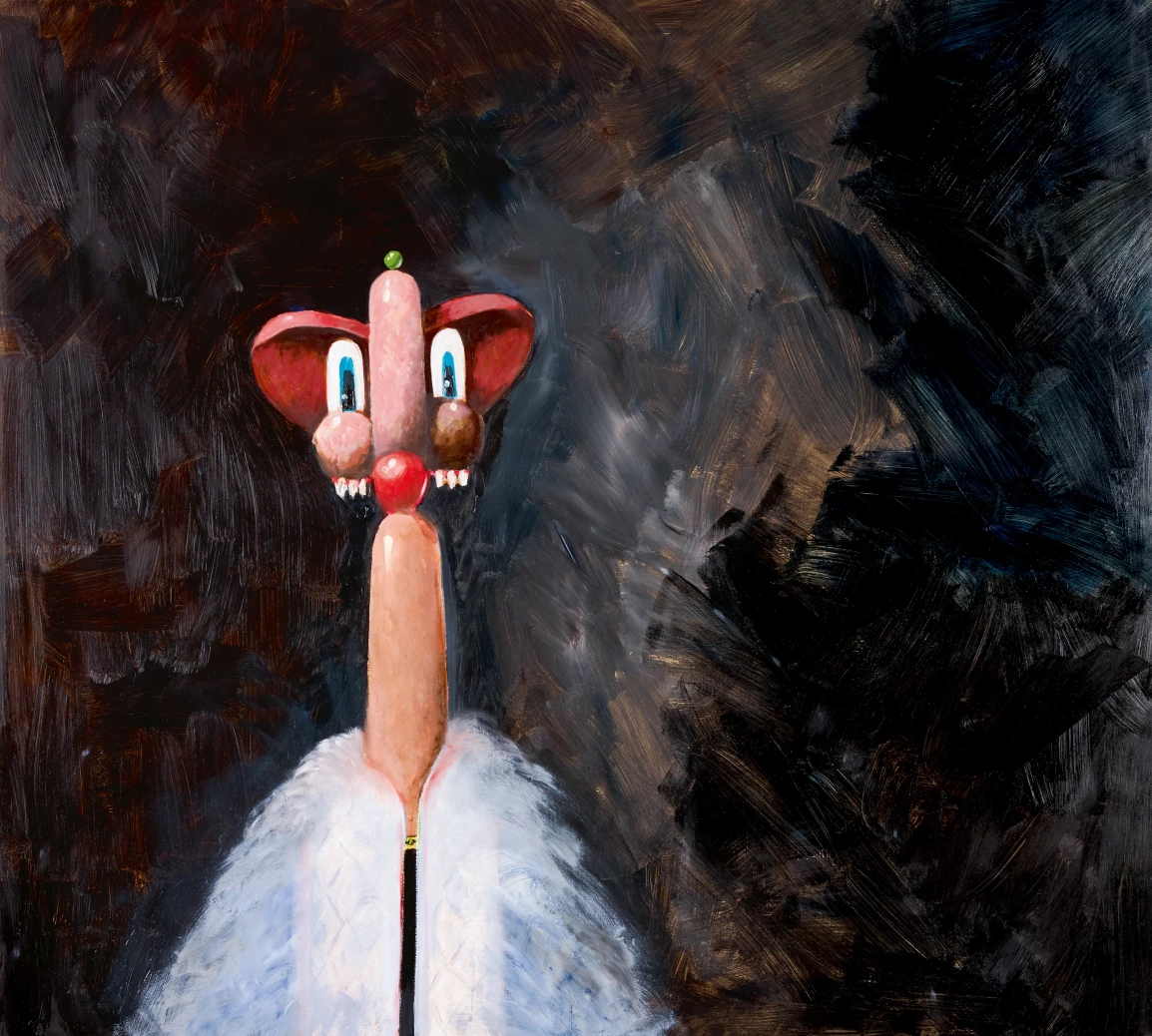
Picasso, Rembrandt and a completely wrong smile
Understanding Condo requires moving through a great deal of art history, but not because his paintings function as scholarly exercises filled with references waiting to be identified. Born in New Hampshire in 1957, he studied Art History and Music Theory before moving to New York, where he also worked as a printer for Andy Warhol. During the 1980s, he began making what he provocatively called “fake Old Masters”: images constructed with the technical authority of historical painting but contaminated by characters, distortions and situations that no Old Master would likely have placed on canvas. Rembrandt, Caravaggio, Velázquez, Picasso, de Kooning, Surrealism and Pop Art can all seem to coexist within his work, yet Sprüth Magers makes an important distinction: Condo does not treat art history as a collection of images to copy. He absorbs languages, techniques and structures from different periods and uses them to construct a world that remains unmistakably his own. Perhaps this is how his painting manages to remain contemporary without constantly needing to look new. Condo treats art history almost like a language: centuries-old words can still be used to construct a sentence that has never existed before. A face can therefore contain something of Picasso, carry the gravity of an Old Master portrait and simultaneously resemble a deranged cartoon character. The past remains recognisable; it has simply stopped behaving.
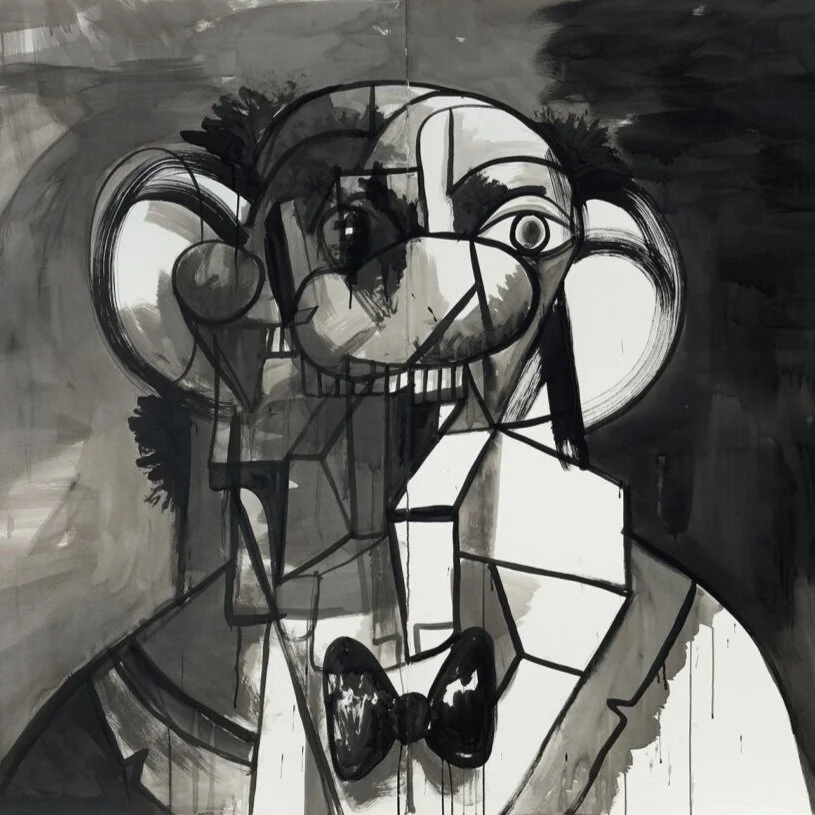
Why are we attracted to the most disturbing faces?
Beauty in Condo’s painting rarely arrives without something capable of damaging it. An elegant character may carry a terrifying smile, an aristocratic figure can turn into a grotesque creature, and an apparently refined composition can suddenly contain violence, hysteria or desire. Sprüth Magers describes a world in which beauty and horror move together, while comedy and tragedy continually cease to function as opposites. This tension runs through much of his practice because Condo appears relatively uninterested in deciding whether his characters should please us. Some are ridiculous, others aggressive, others vulnerable; very often all of these conditions accumulate within the same figure. The result disrupts one of our deepest habits when reading faces: we immediately try to determine who is in front of us, whether they can be trusted, whether they are happy, sad, dangerous or reassuring. Condo removes that possibility because his character may be all of these things at once. Distortion therefore becomes more than an aesthetic language; it begins to function almost as a model of personality. How strange would our faces become if they could simultaneously reveal everything we think, desire, fear and attempt to hide?
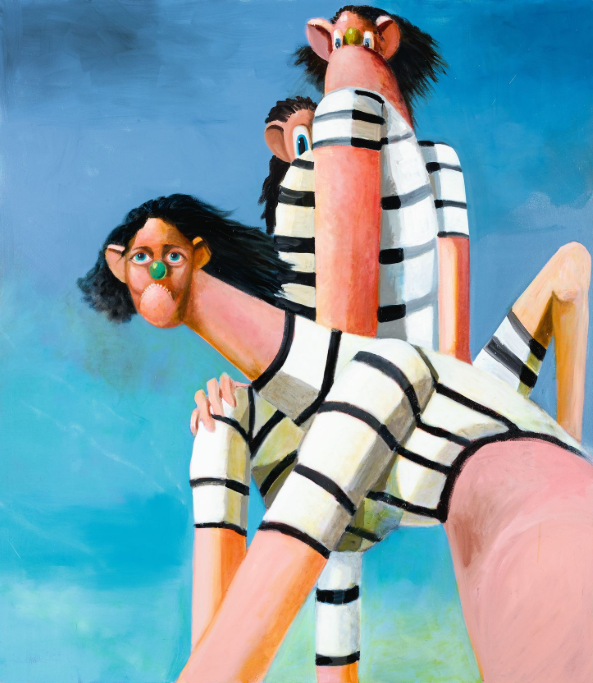
At the Biennale, the face becomes an entire society
In 2019, George Condo participated in the 58th Venice Biennale, May You Live in Interesting Times, curated by Ralph Rugoff. The Biennale traces his trajectory from the psychotic characters and fake Old Masters of the 1980s to his concept of Artificial Realism, which Condo describes as dismantling one reality and constructing another from the same parts. Following his return to New York in the 1990s, these distortions also became a way of looking at an American society shaped by ambition, hysteria, paranoia and despair. At that point, the face no longer describes only an individual psychology. It can become the place where the contradictions of an entire era accumulate: the desire for success and fear of failure, narcissism and insecurity, the need to be seen and the terror of judgement. It is significant that Condo continued to develop these images while the face itself became one of the most produced and distributed objects in digital culture, multiplied through selfies, profiles, filters and social media. According to CULTURED, the 2019 Biennale also marked the beginning of a relationship that would move this research beyond the traditional boundaries of art: Travis Scott wrote a text for Condo’s Venice presentation, addressing his paranoid visions of the social-media age and the deterioration of American values. One year later, the two would reverse roles.
When Kanye West and Travis Scott enter the history of painting
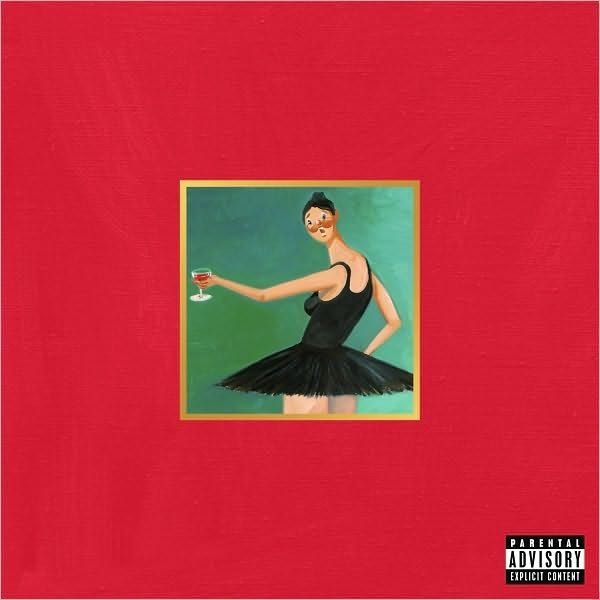
Condo’s relationship with hip-hop, however, began much earlier. In 2010, Kanye West entered his studio and asked him to develop the visual identity for My Beautiful Dark Twisted Fantasy. The New Yorker recounts how they listened to the music together and how Condo produced eight or nine paintings over the following days: distorted portraits of West, a ballerina, a crowned and decapitated head and, ultimately, the celebrated image of the rapper with a winged creature. Several works became covers and visual variants for the project, bringing Condo’s painterly language before an audience vastly larger than that of a gallery or museum. Ten years later came Travis Scott. In September 2020, Scott announced FRANCHISE, featuring Young Thug and M.I.A., choosing an abstract portrait painted by Condo as its artwork. Pitchfork documented the collaboration at the time of release, while Scott himself publicly credited the artwork to the artist. Four years later, in a joint conversation for CULTURED, Condo and Scott remembered FRANCHISE as a genuine collaborative experience between painting and music, emerging from the relationship that had begun around the Venice Biennale. What matters is not simply that an important painter designed covers for two extraordinarily famous rappers. These collaborations make the old separation between “high culture” and popular culture increasingly difficult to sustain. The same visual language can appear at the Venice Biennale, MoMA, Tate or Centre Pompidou and then become the face of a Kanye West album or a Travis Scott single without ceasing to function as painting. Condo does not appear to move between two separate worlds; he treats them as parts of the same visual culture.
Perhaps we are all more contradictory than our portrait
After more than forty years of practice, George Condo has become one of the defining figures of contemporary American painting, with work held by institutions including MoMA, Tate and Centre Pompidou, and a trajectory that has moved through museums, the Venice Biennale, international galleries, music and popular culture. Yet the recognisability of his characters has never eliminated the contradiction from which the work seems to begin: the more a face is distorted, the more capable it may become of describing something we recognise. Perhaps this is because in real life we are far less coherent than the images we construct of ourselves. We can be generous and jealous, confident and terrified, in love and angry with the same person, desperate for attention while simultaneously wanting to disappear. A photograph selects an instant; a conventional portrait tends to search for a personality. Condo attempts to place all of these states inside the same space. This is what connects an imaginary character painted like an Old Master aristocrat to the cover of My Beautiful Dark Twisted Fantasy, a face at the Venice Biennale and the one created for FRANCHISE. The identity of the person represented may ultimately matter less than something that exists before the name. Perhaps we do not have a single face to show the world. We have many versions of ourselves continually trying to use the same one.
Keep reading
Yayoi Kusama: disappearing into infinity
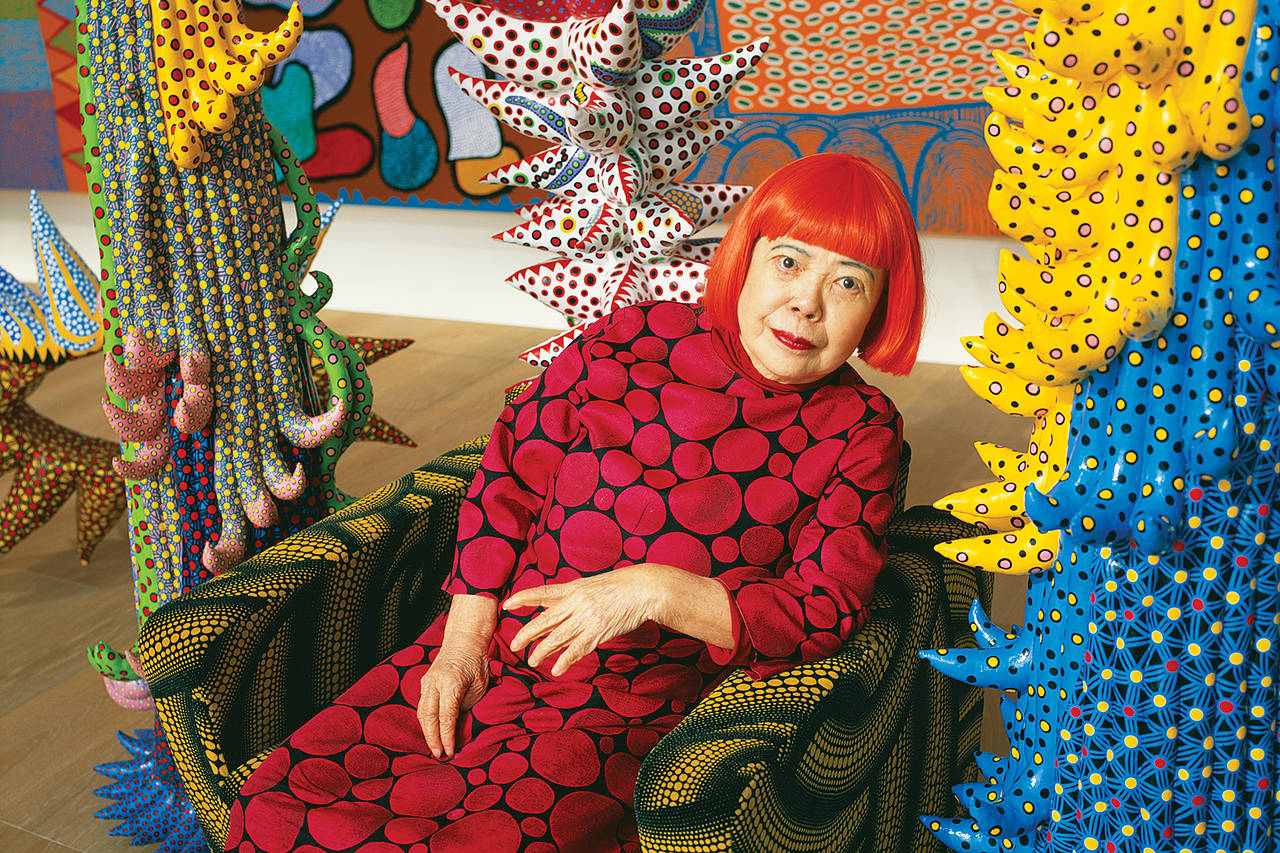
Polka dots, nets, mirrors, pumpkins, and rooms without end. Behind one of contemporary art’s most recognisable visual languages, Yayoi Kusama has spent more than seven decades exploring the dissolution of the self. But what happens when art created to make the individual disappear becomes instantly recognisable to millions?
David Hockney: learning to see the world all over again
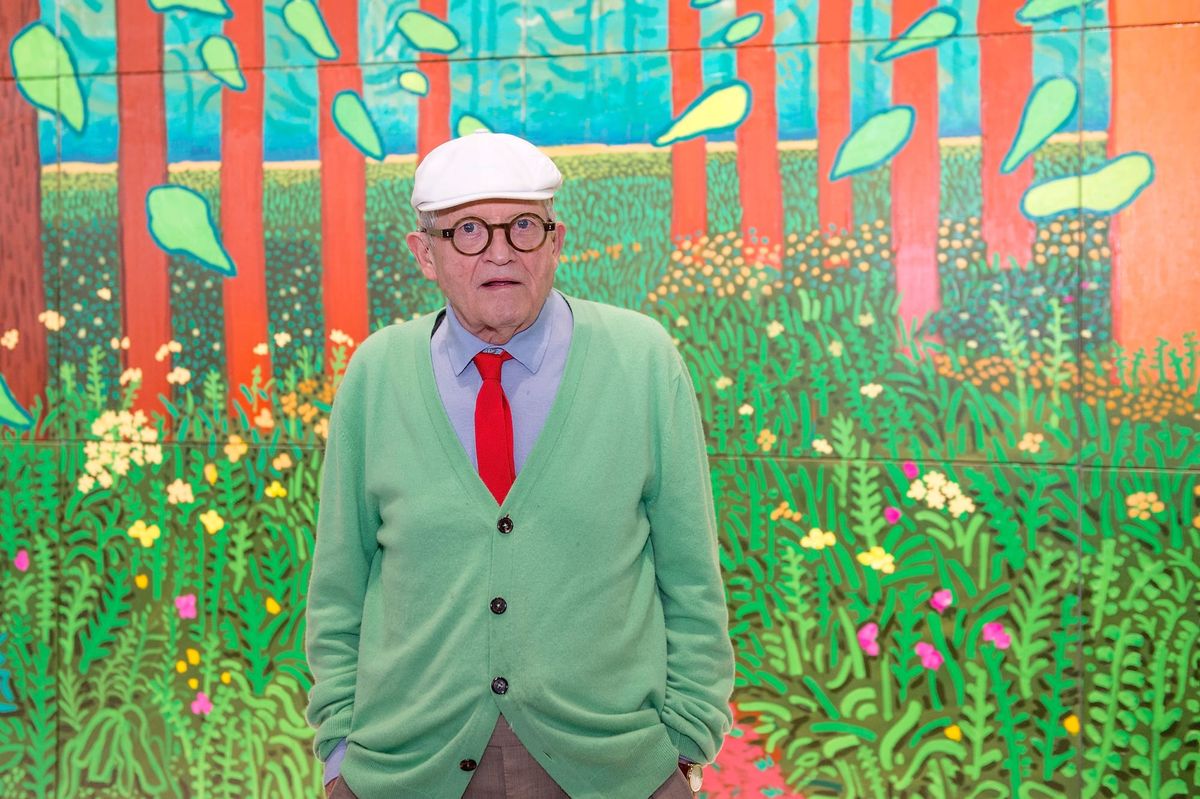
From Californian swimming pools to photographic collages, portraits and iPad drawings, David Hockney moved through almost seven decades of art without ever stopping his experimentation. Behind every new tool, however, remained the same question: how can we see what is in front of us more clearly?
Damien Hirst: the art that refused to be ignored
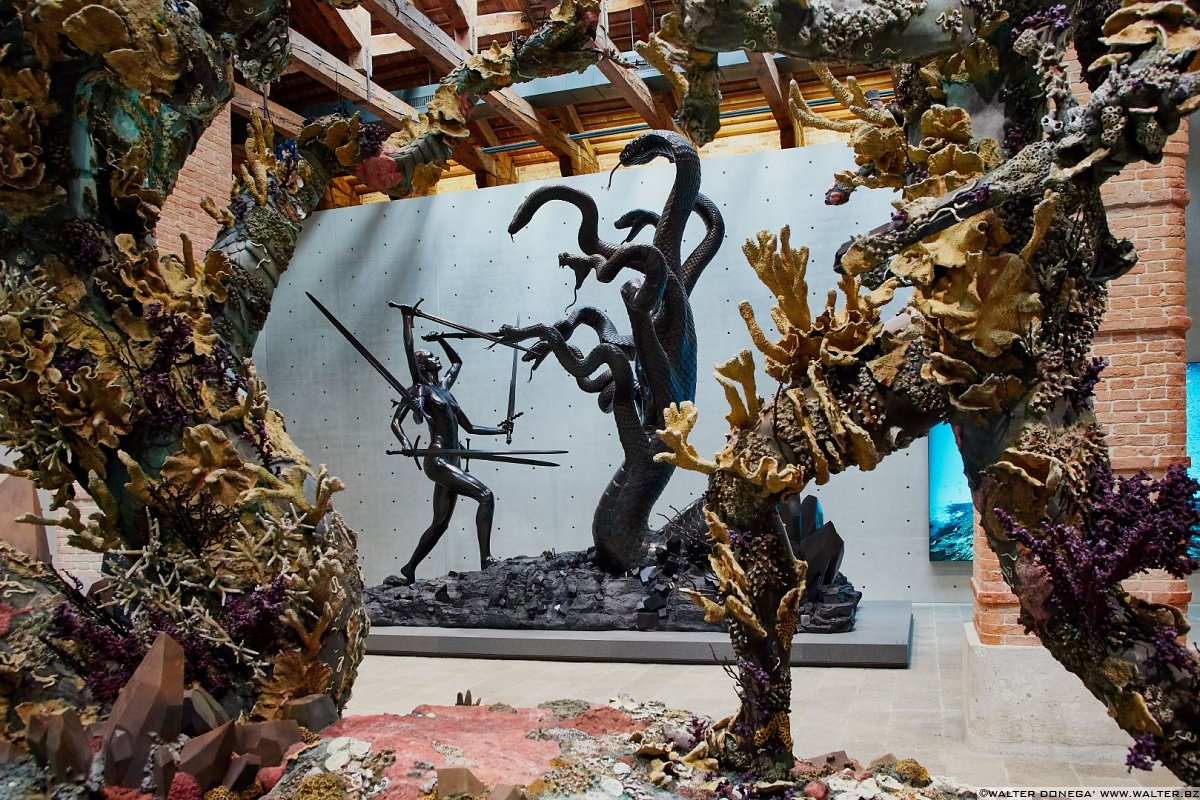
A shark suspended in formaldehyde, divided animals, pills, butterflies, and millions of pounds moving directly from the studio to the auction house. Damien Hirst turned death, beauty, the market, and spectacle into parts of the same language. But how much of his importance lies in the artworks, and how much in the system he built around them?