
Damien Hirst: the art that refused to be ignored
A shark suspended in formaldehyde, divided animals, pills, butterflies, and millions of pounds moving directly from the studio to the auction house. Damien Hirst turned death, beauty, the market, and spectacle into parts of the same language. But how much of his importance lies in the artworks, and how much in the system he built around them?
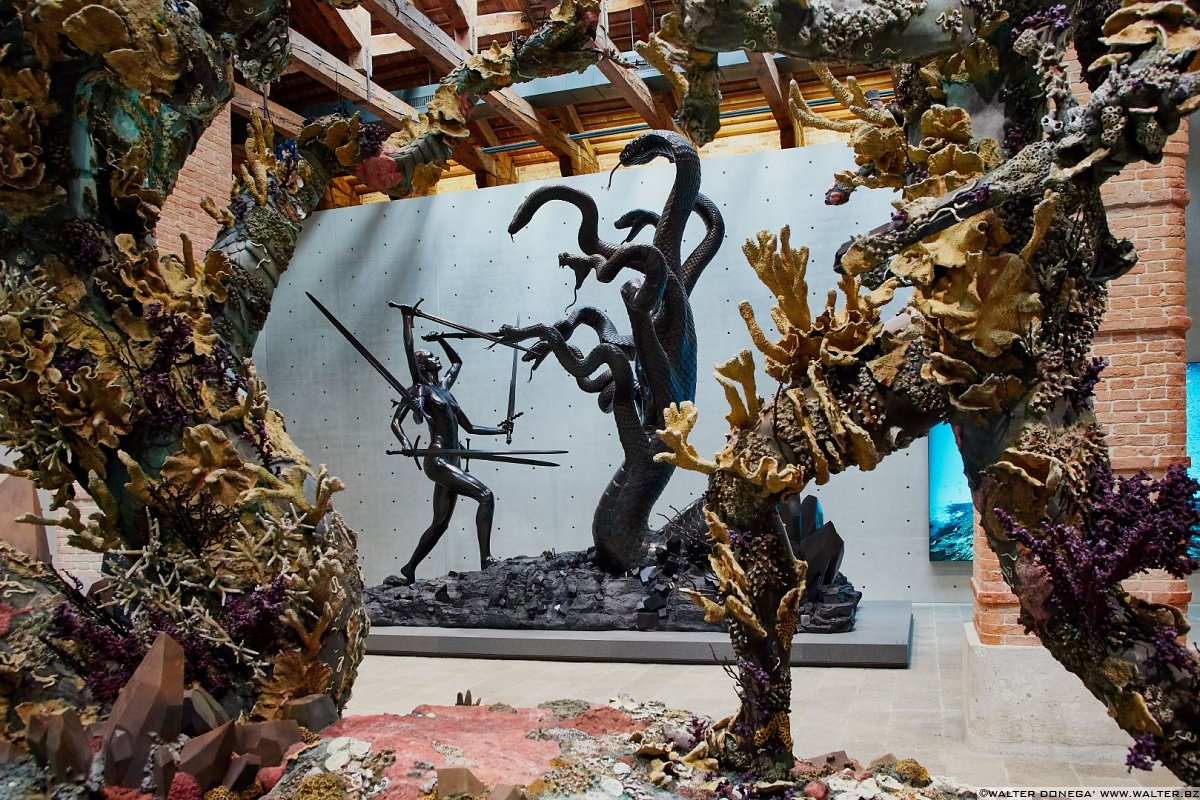
“I didn’t want to make art you could ignore.”
— Damien Hirst, interview with CBS Sunday Morning, 2019
A shark that gave you no choice
A large tiger shark appears to move towards the viewer, yet it is completely still. Dead, suspended inside a glass tank filled with formaldehyde. In 1991, Damien Hirst created The Physical Impossibility of Death in the Mind of Someone Living, an image that would come to define British art in the 1990s. No knowledge of art history is required to react to it. Before understanding the work, the body registers something: fear, attraction, disgust, curiosity. Hirst had identified a principle that would run through his entire career: the artwork had to impose itself before the viewer could even decide whether to like it.
Before the artist-star came the artist-organiser
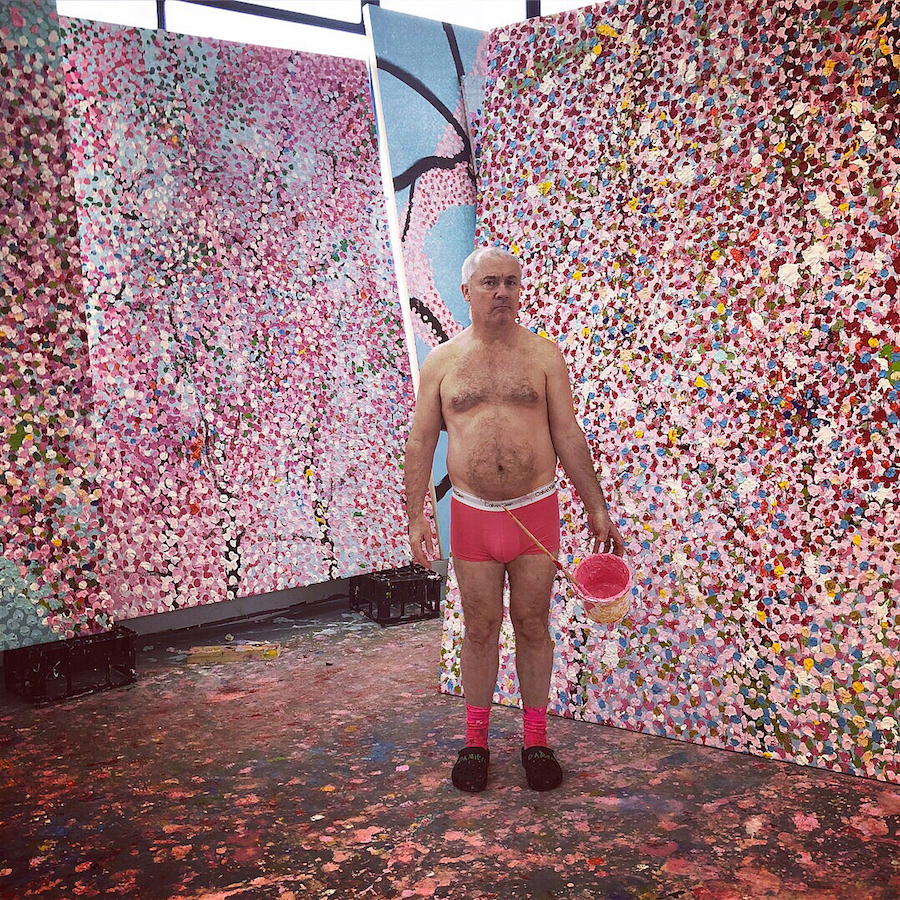
Hirst’s story, however, does not begin with the shark. In 1988, while studying at Goldsmiths College in London, he organised Freeze, a three-part exhibition bringing together his work and that of fellow students. It would become one of the foundational moments of the generation later identified as the Young British Artists. Hirst was not simply waiting for someone to invite him to exhibit: he was constructing the context in which the work could be seen. A defining aspect of his practice was already emerging. An artist does not have to be only the person producing an object; they can also become someone capable of organising attention, relationships, and space around it.
Looking at death without touching it
Death soon became one of the central materials of Hirst’s practice. In 1993, Mother and Child (Divided) longitudinally separated a cow and calf, preserving them inside four transparent vitrines. Two years later, the work became the focal point of Hirst’s Turner Prize presentation, which he won in 1995. The process is brutal yet almost clinical: something we normally try to keep at a distance becomes perfectly visible, ordered, and preserved. Science, religion, and the fear of mortality overlap without offering any definitive answer.
Repeating to build a system
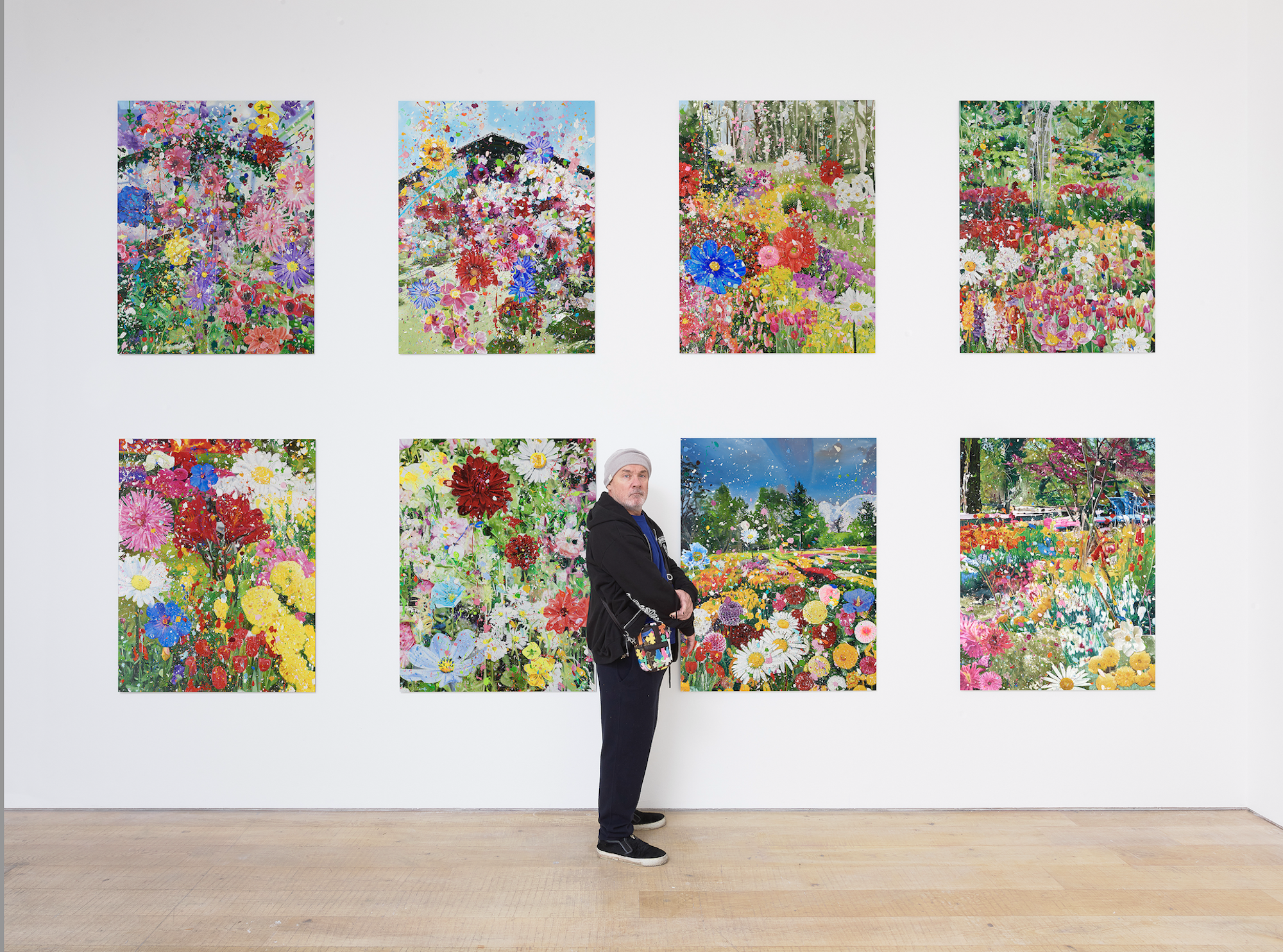
Alongside the animals preserved in formaldehyde exists an apparently opposite Hirst: one of ordered grids, colour, and repetition. The Spot Paintings, begun in the 1980s, turn coloured circles on pale backgrounds into a potentially infinite system. Gagosian records more than a thousand of them, and in 2012 presented over three hundred simultaneously across its then eleven locations. The almost pharmaceutical order returns in medicine cabinets, pills, and vitrines. Hirst is drawn to systems because they promise control within a world that ultimately offers none.
Who actually has to make an artwork?
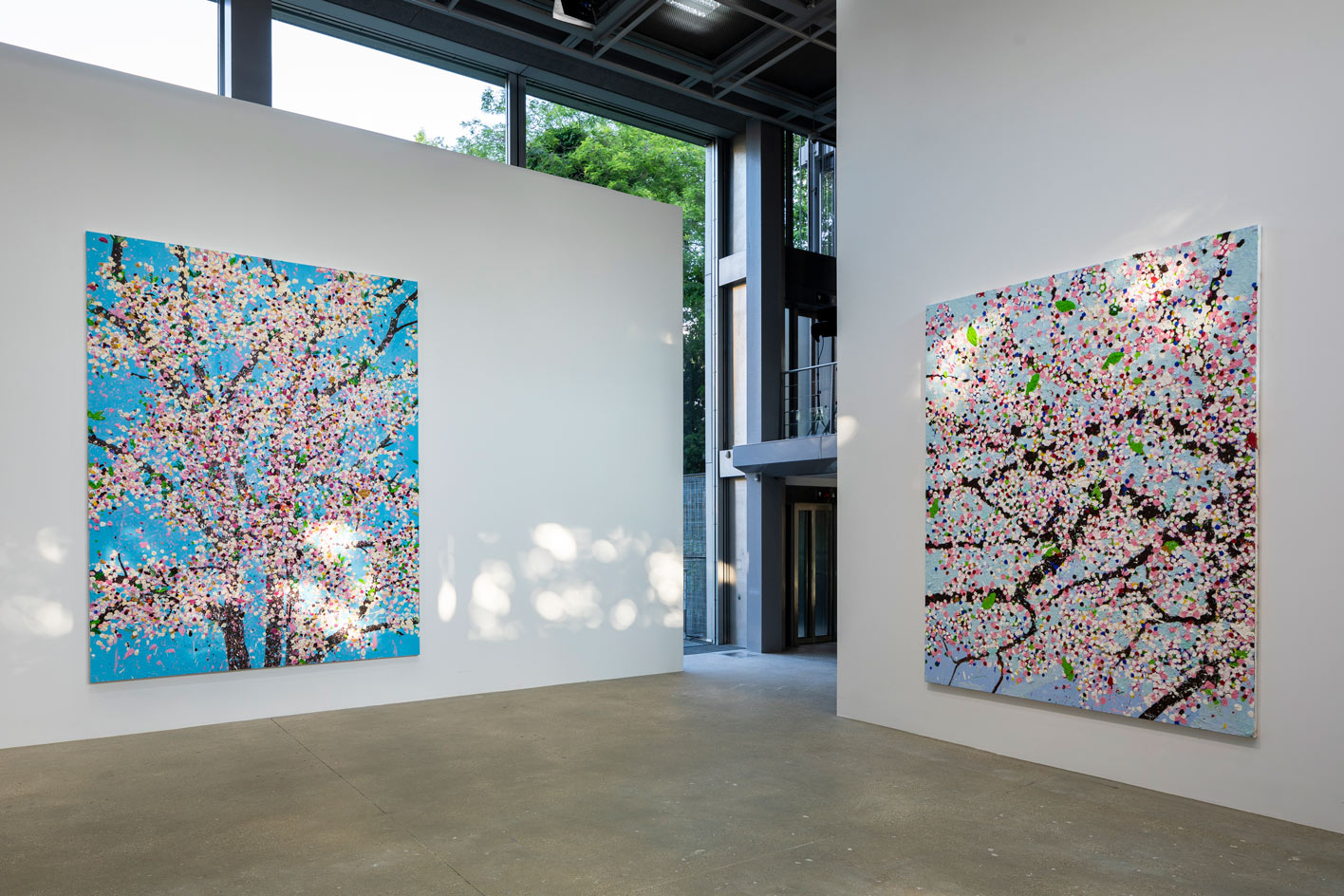
Hirst extended this logic to production itself. Some of his works are made with the involvement of studio staff and assistants. Speaking to CBS in 2019, he explained that what matters to him is not necessarily that every physical gesture is performed by his own hands, but that the final result corresponds precisely to his intention. It is a position with deep precedents in conceptual art and workshop traditions, but in Hirst’s case it reaches an almost industrial scale. The artist becomes author, director, and guarantor of a production system.
When the market becomes material too
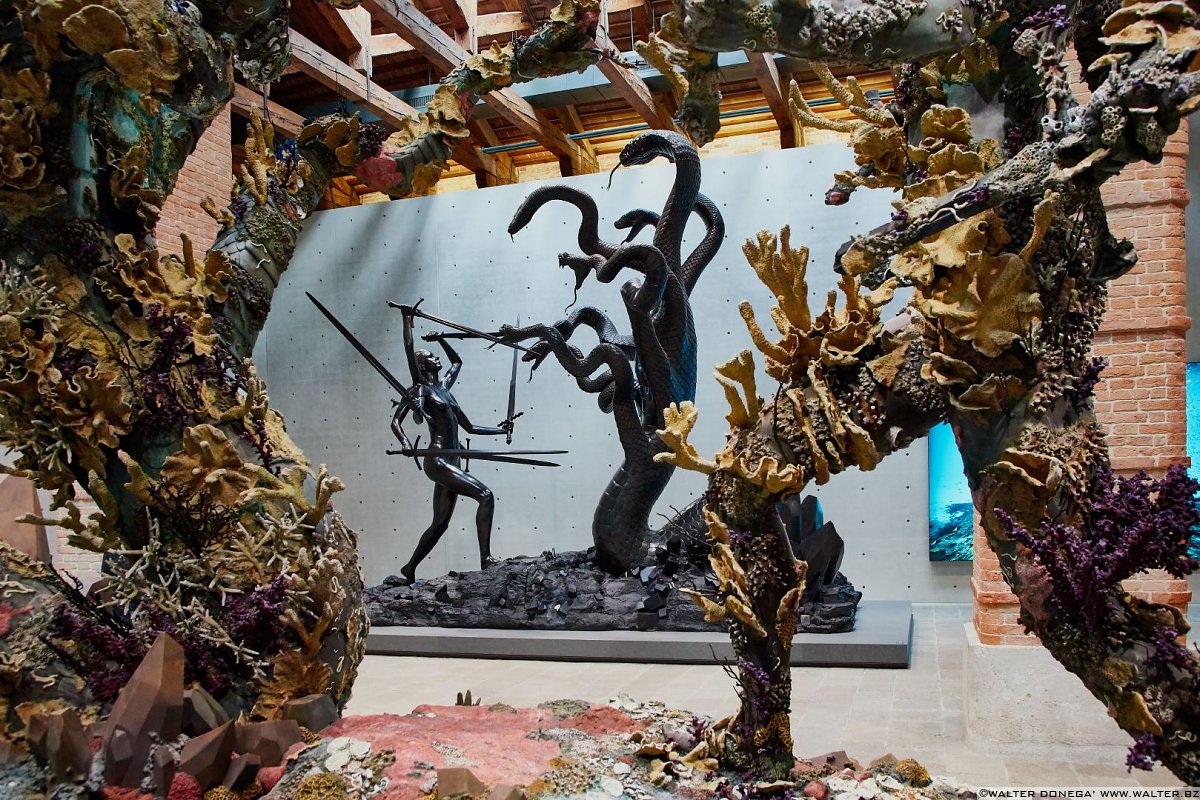
In September 2008, Hirst made a move that made it almost impossible to separate his artistic history from the history of the market. With Beautiful Inside My Head Forever, 223 new works moved directly from his studio to Sotheby’s, bypassing the conventional gallery route for that sale. Across three sessions, the auction total reached £111.6 million. For an auction house traditionally focused on the secondary market, this represented a structural shift: a living artist was using auction as a primary platform for an entire body of new work.
The gesture was economic, but also symbolic. Hirst demonstrated that an artist could intervene not only in the creation of the artwork, but in the mechanisms through which it entered the market. When the market is deliberately manipulated by the artist, does it remain merely the context of the artwork—or does it become part of the artwork itself?
From the studio to infrastructure
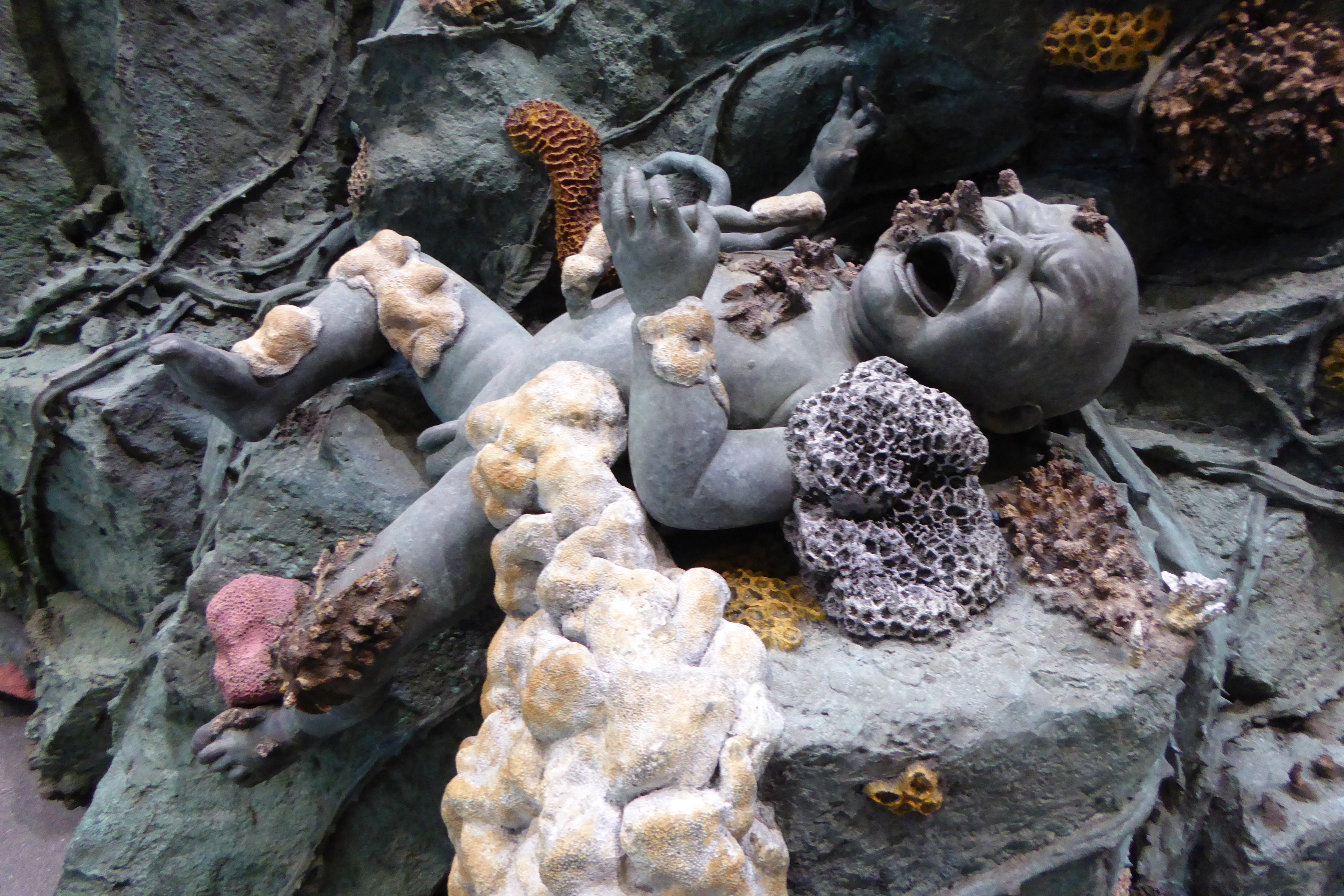
The same ability to build structures reappeared in 2015 with the opening of Newport Street Gallery in London, created from Hirst’s long-term ambition to share part of his collection with the public. The transition is significant: the student who organised Freeze eventually became the creator of an exhibition space. By then, he was simultaneously an artist, collector, commissioner, cultural entrepreneur, and builder of production systems. Not all of these dimensions are equivalent to the artistic quality of individual works, but they are essential to understanding the kind of figure Hirst helped make possible.
After the shock, the question remains
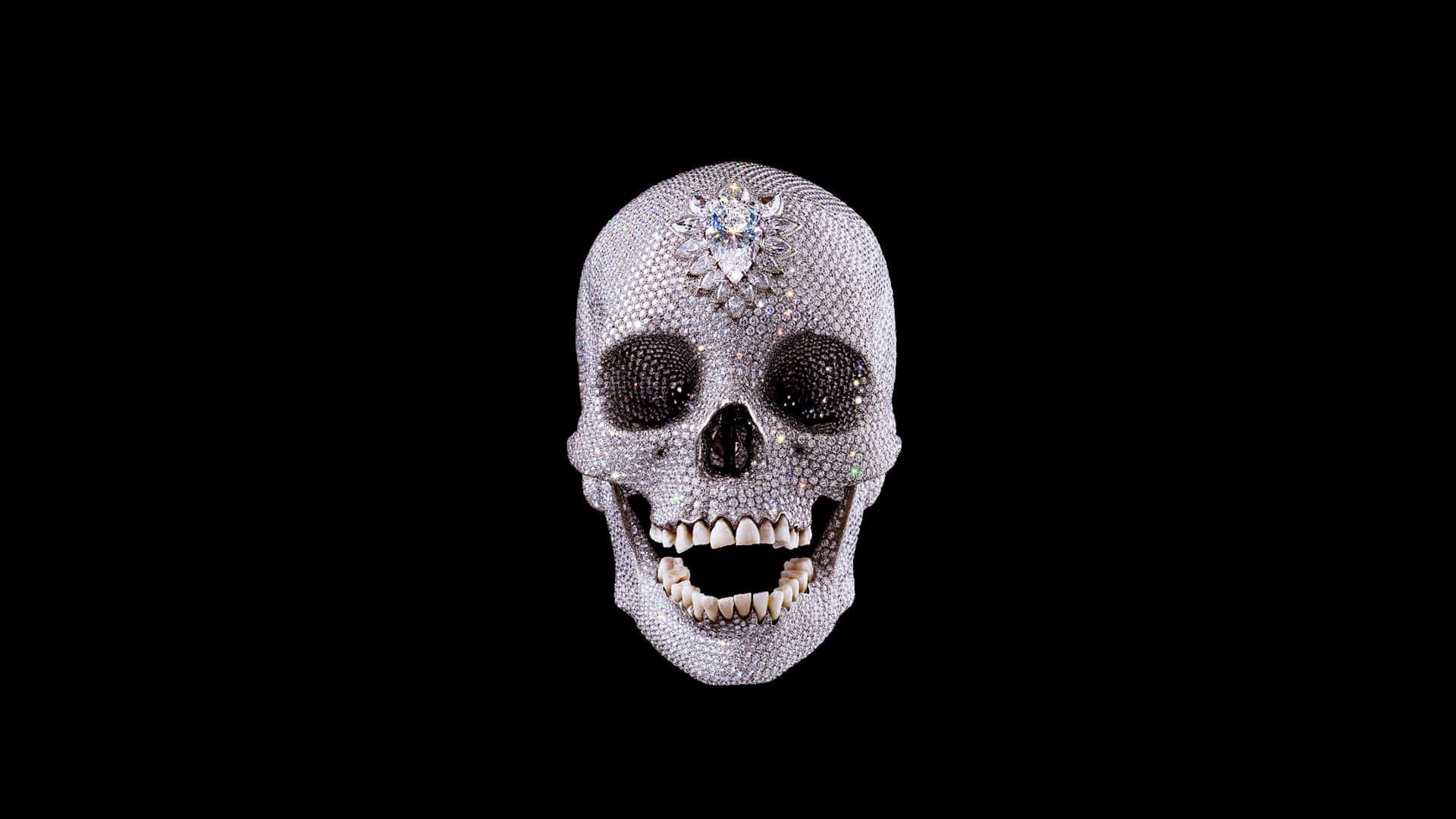
Reducing Damien Hirst to provocation would now be too simple. Shock was a tool, not necessarily the final content. Behind the shark, butterflies, pills, and divided animals, a small group of questions return obsessively: death, the need to believe, the desire to control what cannot be controlled, and the relationship between beauty and fear. Gagosian similarly frames his practice through tensions between art and beauty, religion and science, life and death.
But Hirst also leaves another legacy, one that is harder to separate from the artworks themselves. He demonstrated how far an artist could go in constructing a context rather than simply entering one: organising exhibitions, directing production, working with major galleries, intervening directly in the market, and creating an exhibition space. How much of Damien Hirst’s importance belongs to the artworks, and how much to the cultural machine he built around them? Perhaps the answer does not require us to choose. In his case, the artworks and the system surrounding them gradually became part of the same story. That is also why, almost four decades after Freeze, the argument is still alive.
Keep reading
George Condo: how many people can live inside one face?
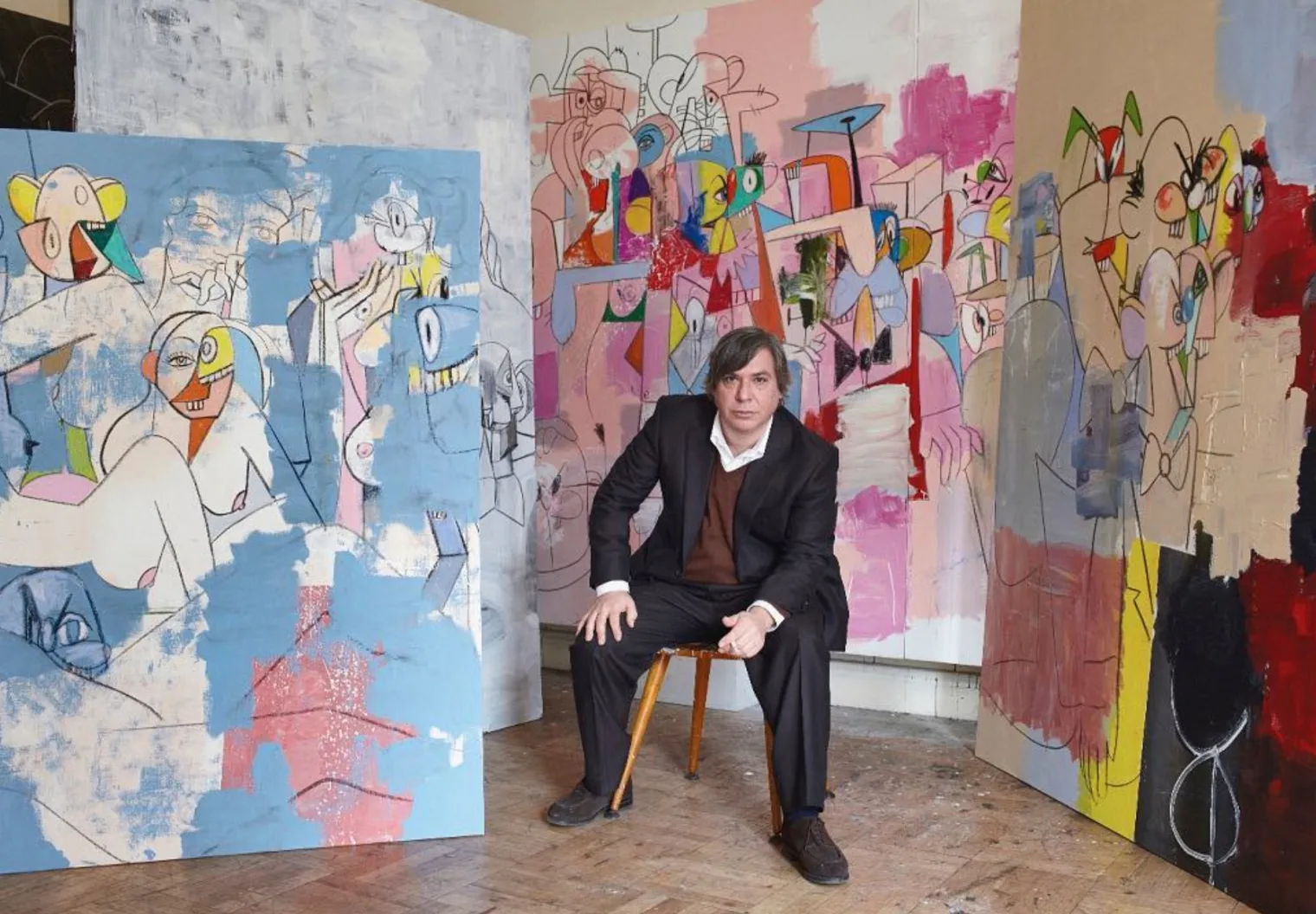
Misaligned eyes, mouths crowded with teeth, distorted aristocrats, clowns, Picasso, Old Masters and hip-hop covers. For more than forty years, George Condo has painted impossible faces to describe something profoundly real: a person can be joyful, violent, vulnerable, arrogant and terrified almost at the same time. From the Venice Biennale to collaborations with Kanye West and Travis Scott, his painting has moved between museums and popular culture without choosing between them. Perhaps a face is not meant to show us who we are, but all the people we might be at once.
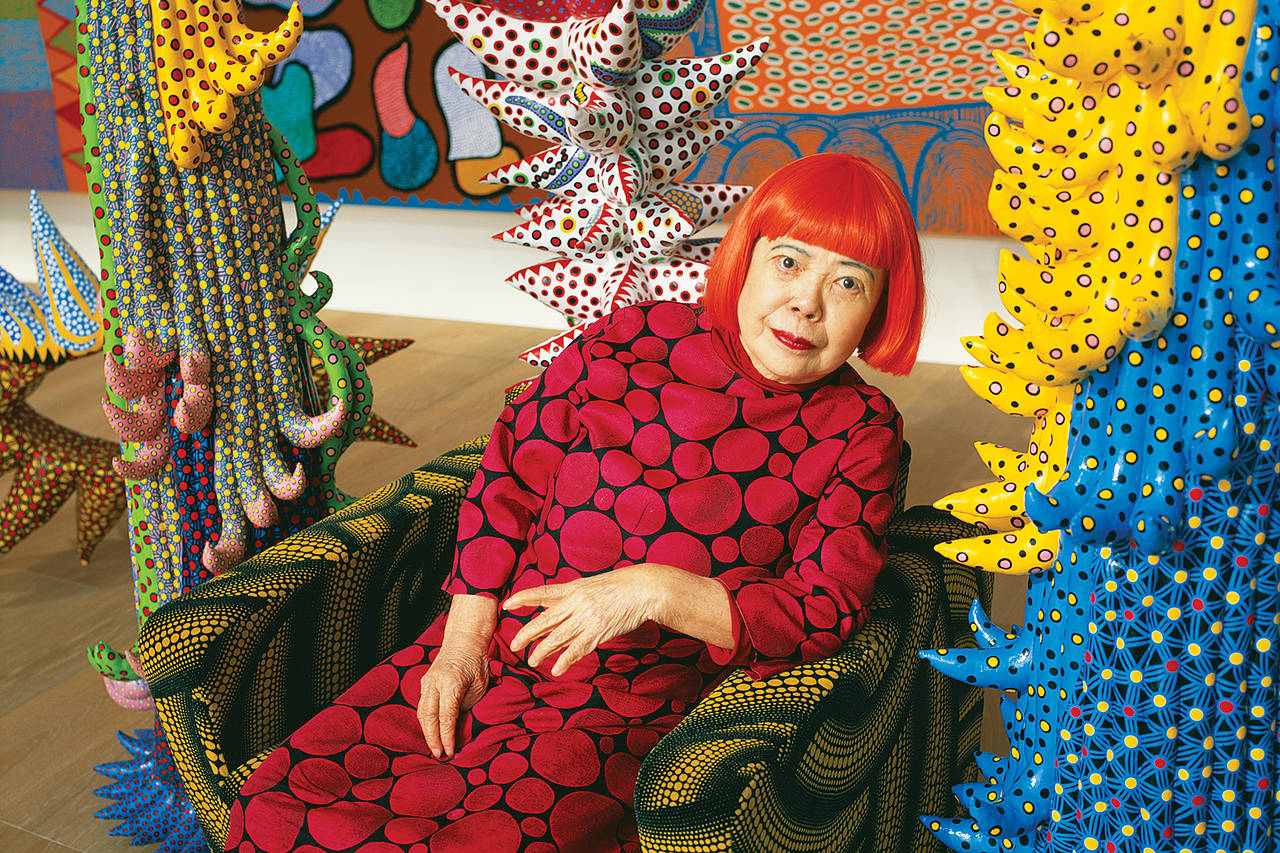
Yayoi Kusama: disappearing into infinity
Polka dots, nets, mirrors, pumpkins, and rooms without end. Behind one of contemporary art’s most recognisable visual languages, Yayoi Kusama has spent more than seven decades exploring the dissolution of the self. But what happens when art created to make the individual disappear becomes instantly recognisable to millions?
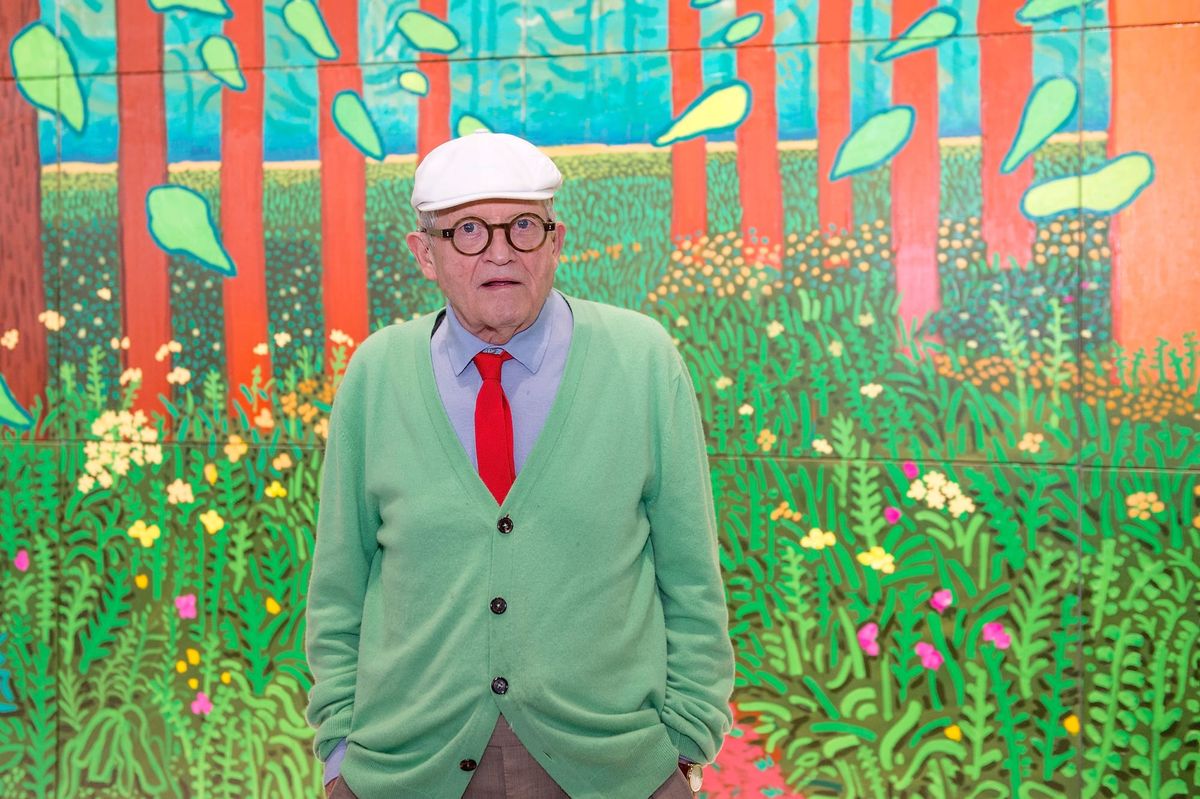
David Hockney: learning to see the world all over again
From Californian swimming pools to photographic collages, portraits and iPad drawings, David Hockney moved through almost seven decades of art without ever stopping his experimentation. Behind every new tool, however, remained the same question: how can we see what is in front of us more clearly?