
Oh de Laval: desire before judgement
Distorted bodies, Venetian pink, sex, humour, and sudden eruptions of violence. Oh de Laval creates apparently playful scenes to explore desire, morality, and human behaviour. But who really decides where pleasure ends and transgression begins?
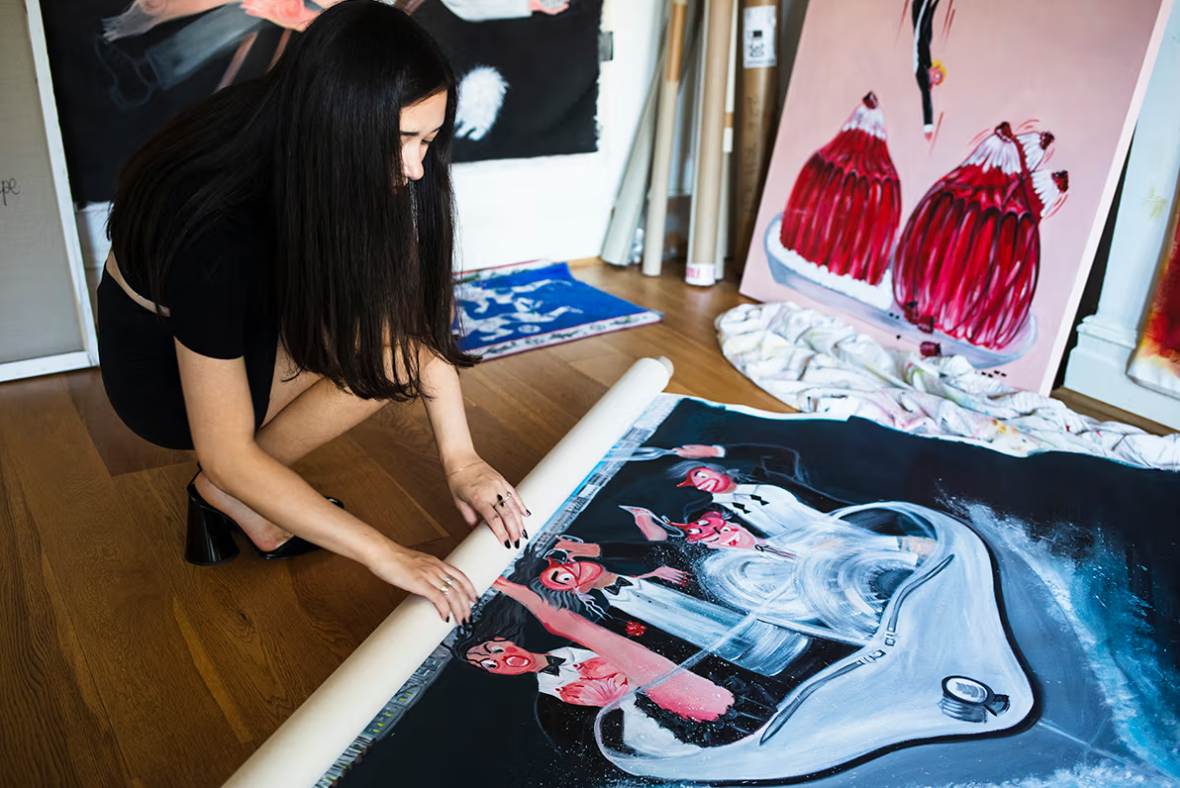
“People look at art through themselves and they see only who they are.”
— Oh de Laval, interview with COEVAL Magazine
A beautiful scene. Until you look closer
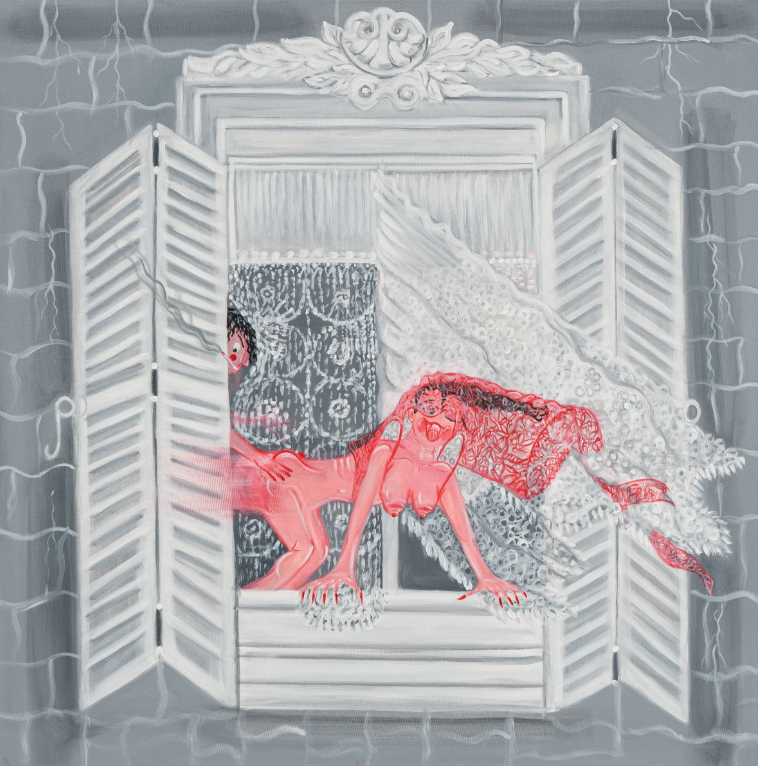
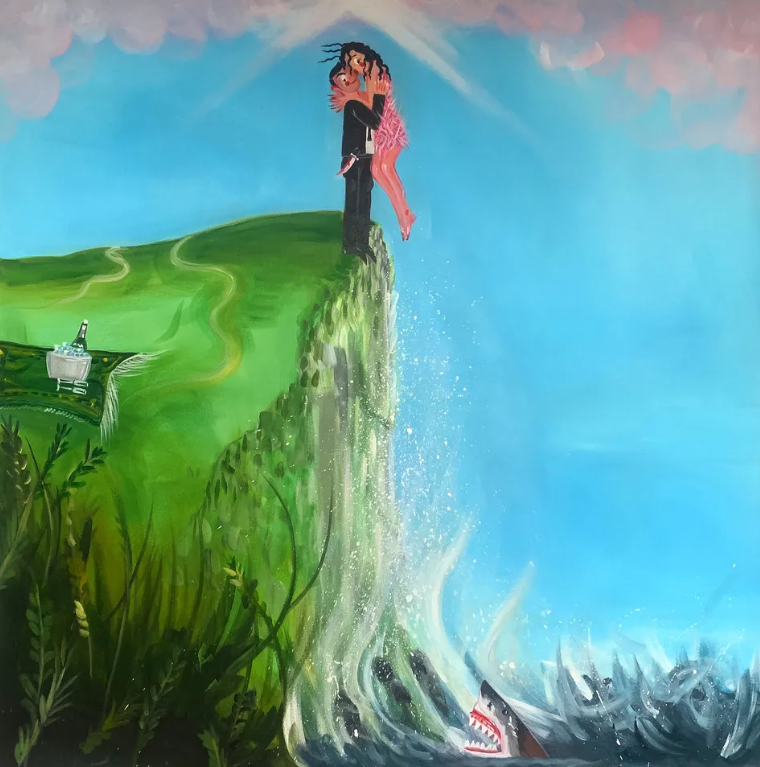
Oh de Laval’s paintings often operate like small visual traps. Elegant interiors, gardens, balconies, clothes, animals, and a luminous pink that has become almost a signature draw us in. Then something breaks the balance: a sexual gesture, a wound, an exaggerated smile, a body folded into an improbable position. What appeared romantic from a distance becomes ambiguous. Born in Warsaw in 1990 to a Polish-Thai family and now based in Paris, de Laval has developed an immediately recognisable figurative language around precisely this collision between seduction and discomfort.
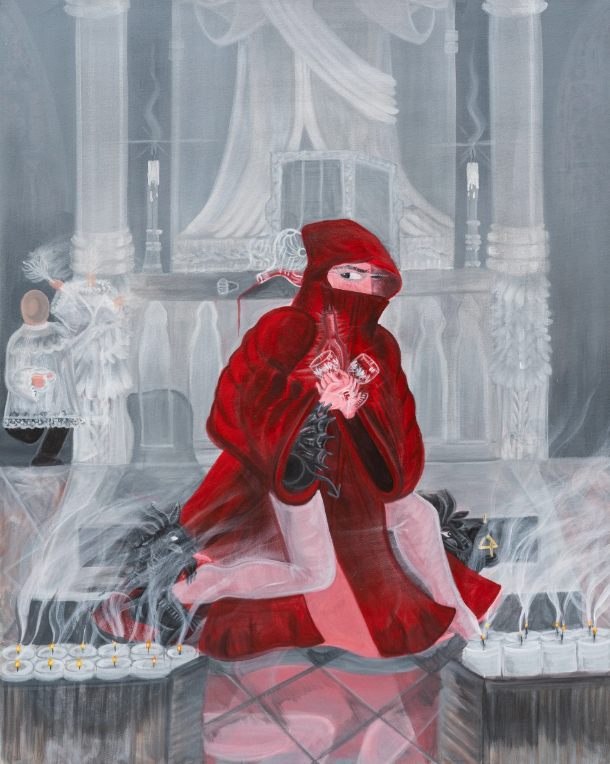
The problem is not sex. It is judgement
Sexuality, desire, and impulse run through much of her practice, but to see them only as provocation would be to remain on the surface. De Laval is primarily interested in human decisions and the consequences they produce. Her background in sociology enters the paintings directly: individual behaviour is constantly placed against social rules, expectations, and conventions. Her interest in Émile Durkheim and the social role of deviance also helps explain why nobody in these paintings appears entirely innocent or guilty. Who decides, then, which desires are acceptable and which become transgressive?
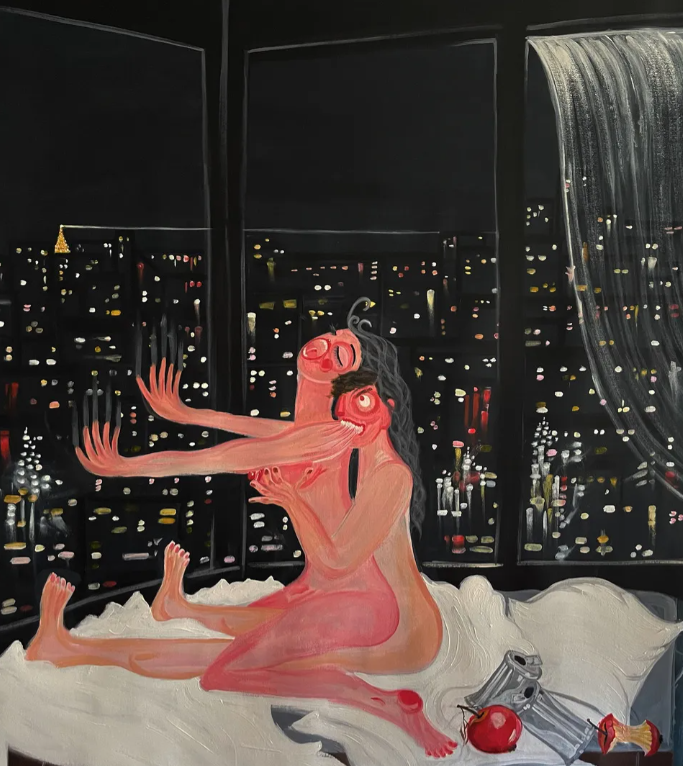
A theatre populated by our contradictions
De Laval’s figures are not realistic characters. Their bodies stretch, their faces distort, and their movements can feel almost cartoon-like. The artist often considers them extensions of herself, but also puppets through which emotions and social questions can be staged. This distinction matters: the painting is not trying to tell a story with a fixed moral. Instead, it creates a theatre where love, anger, lust, fear, and tenderness can appear simultaneously. The viewer receives no instructions and must decide who the victims are, who the perpetrators are, and even whether those categories still make sense.
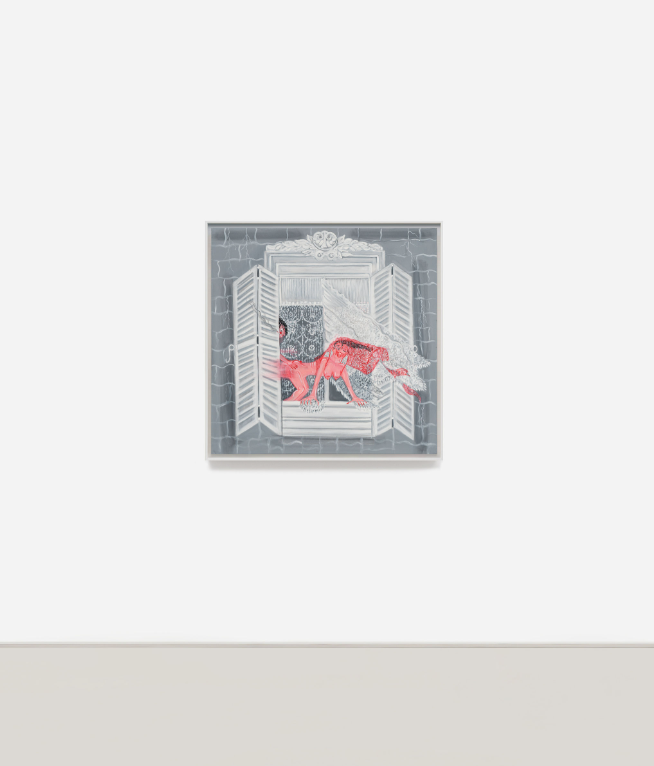
Pleasure is not wellness
With Take Your Pleasure Seriously, presented by Galerie Marguo in Paris in 2023, de Laval made this position particularly explicit. Pleasure in her work has little to do with the contemporary idea of wellness packaged through rituals, products, and personal optimisation. It is something less stable: it can mean freedom, risk, euphoria, and loss of control. In the exhibition’s large central triptych, a motorcycle chase became a cinematic image of speed, danger, and desire. To take pleasure seriously therefore meant acknowledging what can also be irrational or even self-destructive within it.
What happened to secrets?
In 2025, with I miss when people had secrets, the focus shifted from pleasure to privacy. In a present shaped by TikTok confessionals, oversharing, and intimacy turned into content, de Laval approached secrecy almost as an endangered condition. The exhibition also drew on the imagery of the Catholic Church—confession, sin, ritual, guilt—and during the opening the artist invited visitors to take part in an actual Confessional by sharing their secrets. The shift is subtle: what once had to remain hidden can now become something to publish. But if everything must be shown, can keeping something to ourselves become a form of freedom?

From Rococo to Kali Uchis
The visual strength of de Laval’s work also comes from references moving across very different territories. Cinema, illustration, pop culture, European painting, and Rococo imagery coexist with a distinctly contemporary sensibility. Her practice quickly moved beyond the conventional gallery space: in 2020 she created the artwork for Kali Uchis’s EP To Feel Alive, while her work has appeared in contexts ranging from Unit London to New York’s Museum of Sex and Art Collaboration Kyoto. It is easy to understand why these paintings circulate so effectively beyond the strictly artistic system: they possess the visual immediacy of pop culture without giving up the possibility of becoming uncomfortable.
Perhaps the painting is looking at us
It is easy to describe Oh de Laval’s work as erotic, provocative, or transgressive. It is harder to understand why certain images appear that way to us. The artist deliberately leaves that task to the viewer: she resists fully explaining her scenes because what each person recognises also depends on their own experience. This is where painting stops being simply a representation of desire and becomes a test of how we judge others. De Laval creates a world apparently freed from consequences in order to make the rules of our own world more visible. If a painting makes us uncomfortable, how much of that discomfort belongs to the image—and how much belongs to us?
Keep reading
Helen Beard: desire changes perspective
Saturated colours, tightly framed bodies, and images suspended between figuration and abstraction. Helen Beard uses painting to place female desire at the centre of the image, turning eroticism into a question of perspective, freedom, and representation.
Becky Tucker: what if the future looked like an archaeological artefact?
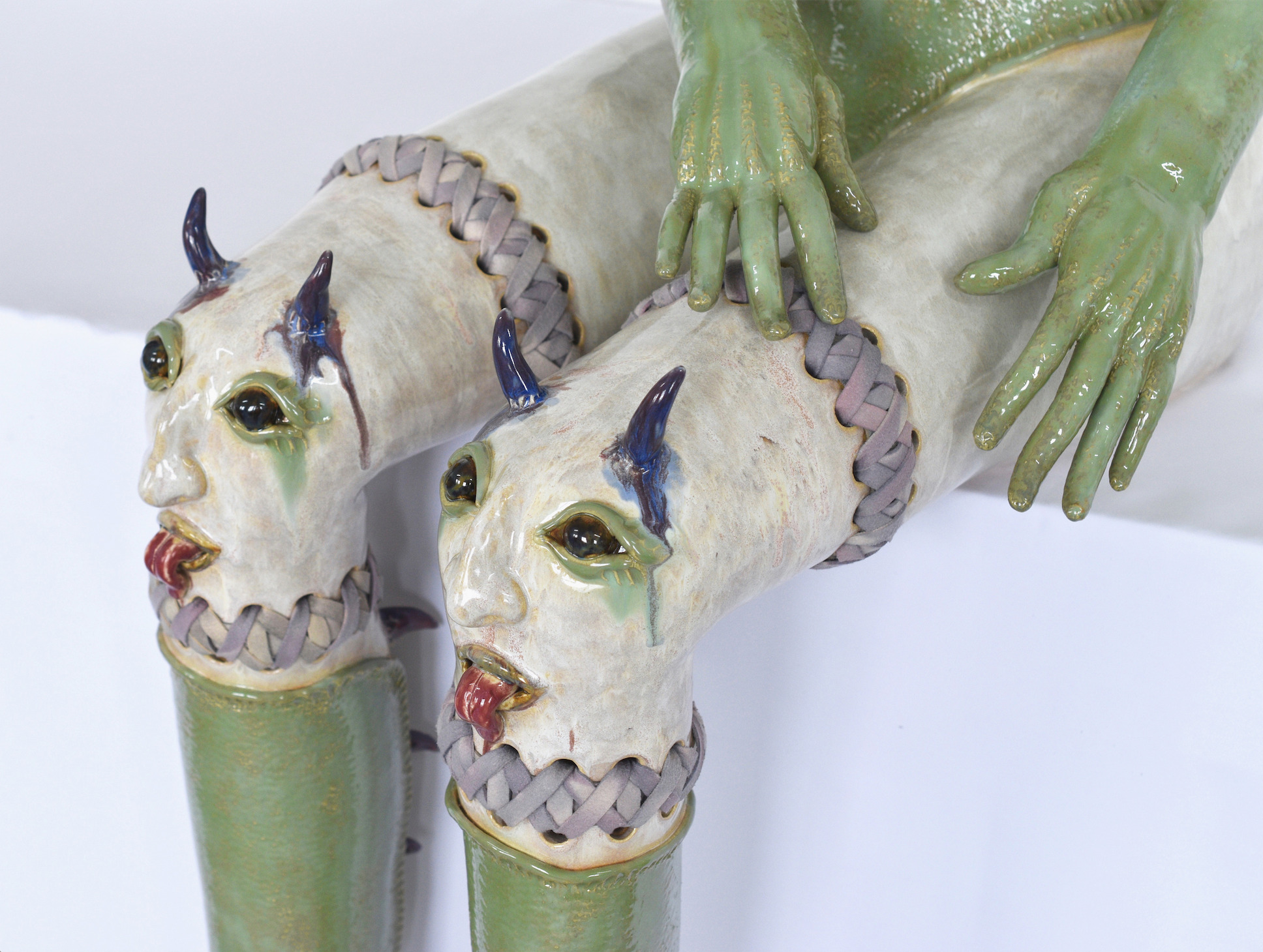
Pale creatures, impossible reptiles, armour, faces emerging from knees and ceramics that could be a hundred or three thousand years old. Becky Tucker creates objects deliberately difficult to place in time, bringing archaeology, mythology, horror and science fiction together. But if someone were to discover the remains of our civilisation one day, how much would they really understand about us?
Ben Crase: what happens when the cowboy no longer has to be tough?
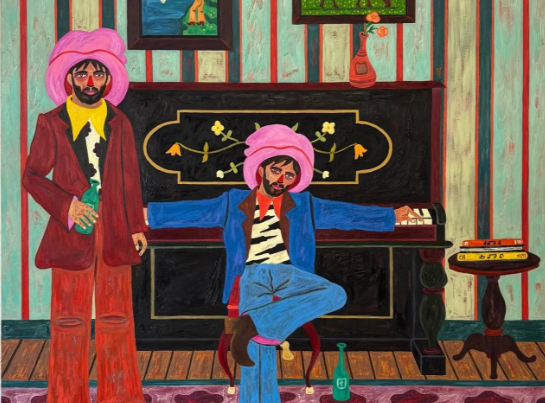
Pink hats, saloons, bears, big cats, chandeliers and men who look like brothers. Ben Crase takes one of the most enduring symbols of the American imagination—the cowboy—and moves him away from conquest, toughness and solitude to explore friendship, vulnerability and belonging. But how much can a myth change when we finally allow its men to be gentle?