
Helen Beard: desire changes perspective
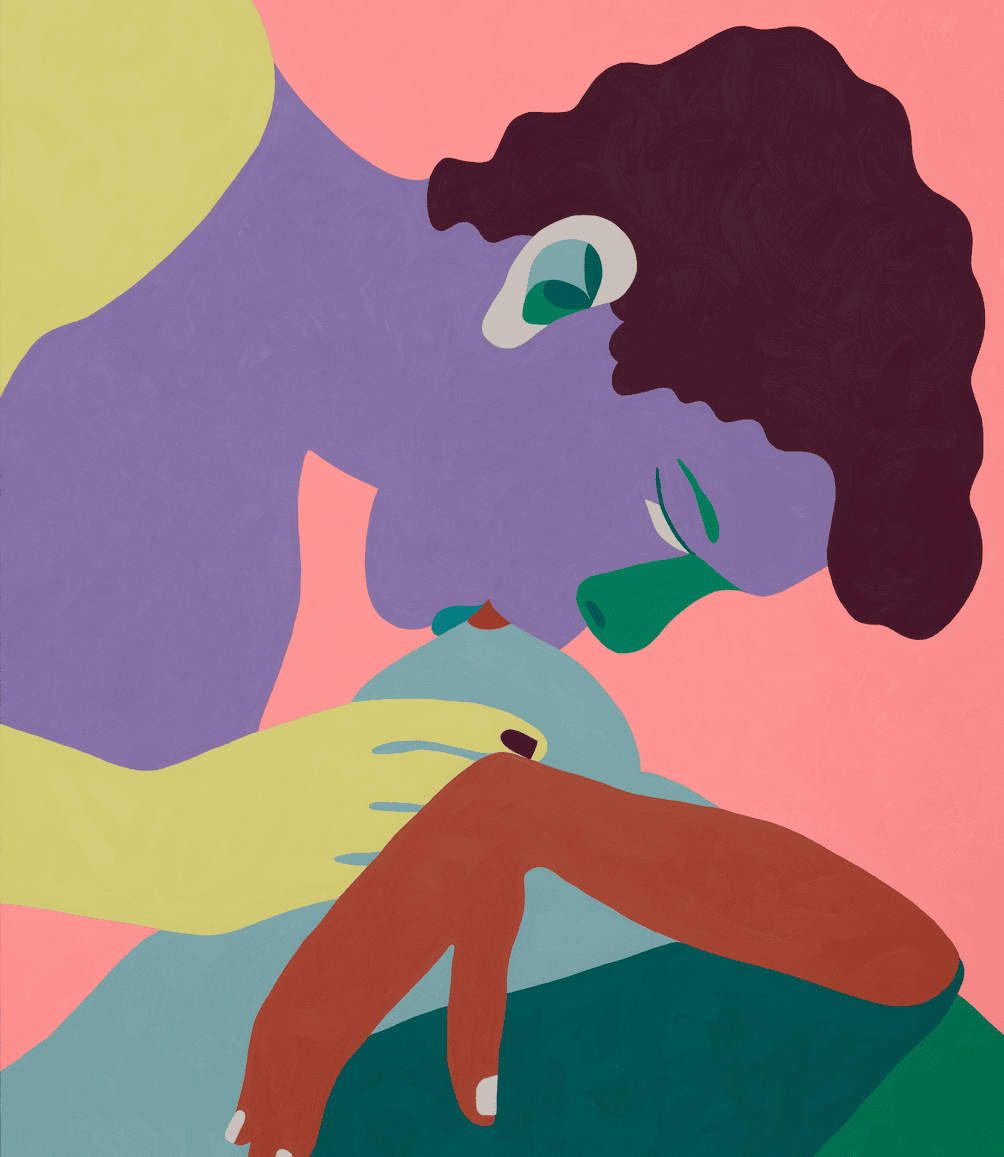
Saturated colours, tightly framed bodies, and images suspended between figuration and abstraction. Helen Beard uses painting to place female desire at the centre of the image, turning eroticism into a question of perspective, freedom, and representation.
“I wanted to express sex in a joyous way, without shame.”
— Helen Beard, interviewed by Art Plugged, 2022
Colour comes first
Seen from a distance, a Helen Beard painting may not immediately reveal its sexual subject. Pink, orange, electric blue, and green arrive first. Then the shapes begin to reorganise themselves, and what appeared almost abstract reveals bodies, hands, mouths, and intimate gestures. This delay in recognition is central to the work. Beard does not use colour to decorate an erotic image; she uses it to alter how that image is perceived. When True Colours presented her large-scale paintings at London’s Newport Street Gallery in 2018 alongside works by Sadie Laska and Boo Saville, Studio International highlighted precisely this tension between the immediate impact of colour and the gradual recognition of the subject.
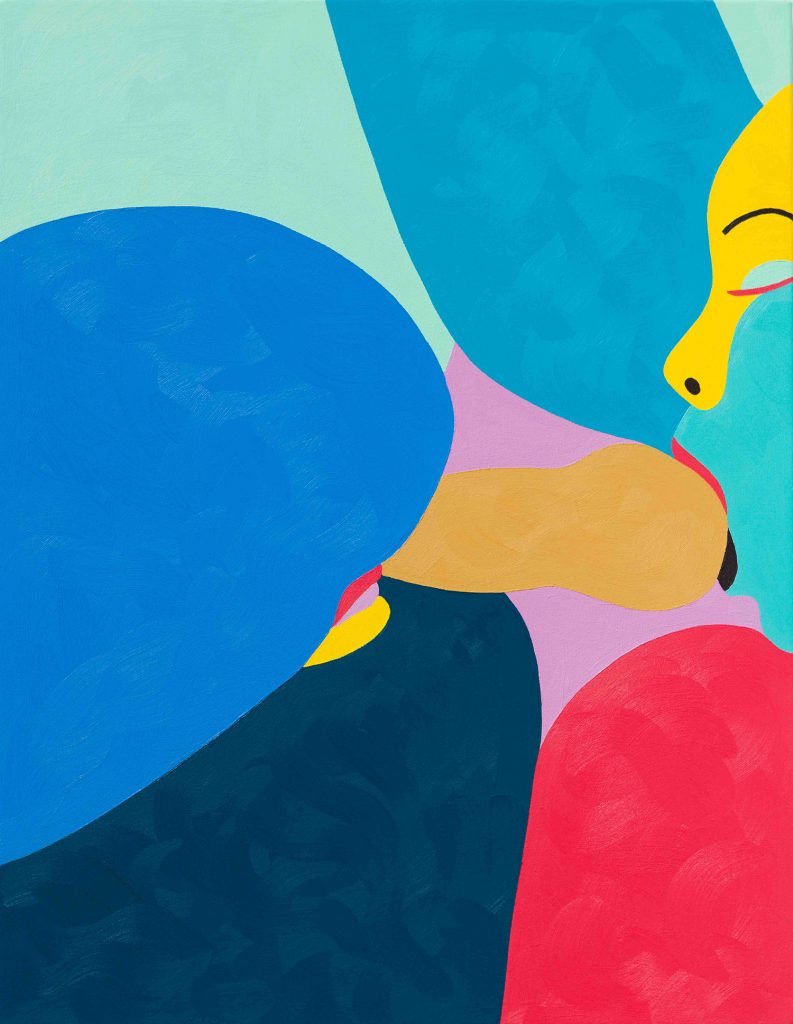
Who is looking at whom?
Desire is Beard’s subject, but perspective is the crucial question. For centuries, the female body has been one of the central subjects of Western art, far less frequently represented from the perspective of female pleasure and autonomy. Beard enters this history without avoiding explicit imagery. She also uses pornography as source material, but crops, enlarges, and transforms it until roles and identities become unstable. Bodies can merge to the point where they are difficult to distinguish. The question therefore shifts from simply what are we looking at to: from whose position are we looking? The artist has repeatedly described her desire to create a more open conversation around female sexuality and desire, subjects she considers too often treated as secondary.
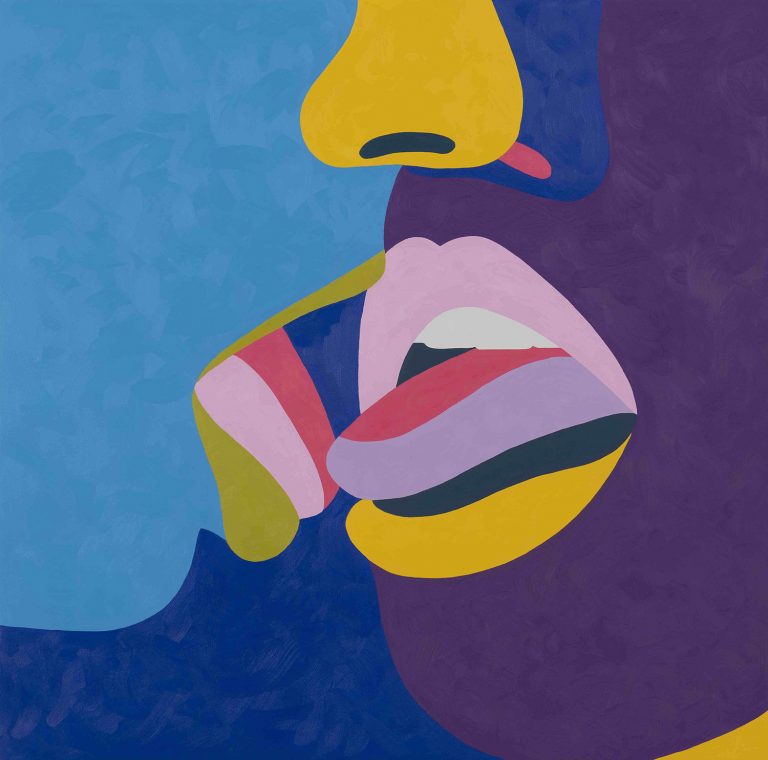
Painting through the logic of a camera
Before dedicating herself fully to art, Beard spent fifteen years working in the film industry as an assistant art director. That experience remains visible in her paintings. There are extreme close-ups, isolated details, shifts in scale, and compositions that seem to borrow the logic of a camera. At times, the body is brought so close that its anatomy almost disappears, becoming an arrangement of curves and fields of colour. Elsewhere, the frame opens and the scene becomes more legible. It is a cinematic vocabulary transferred to canvas, where cropping determines not only what is shown, but also what remains outside the frame.
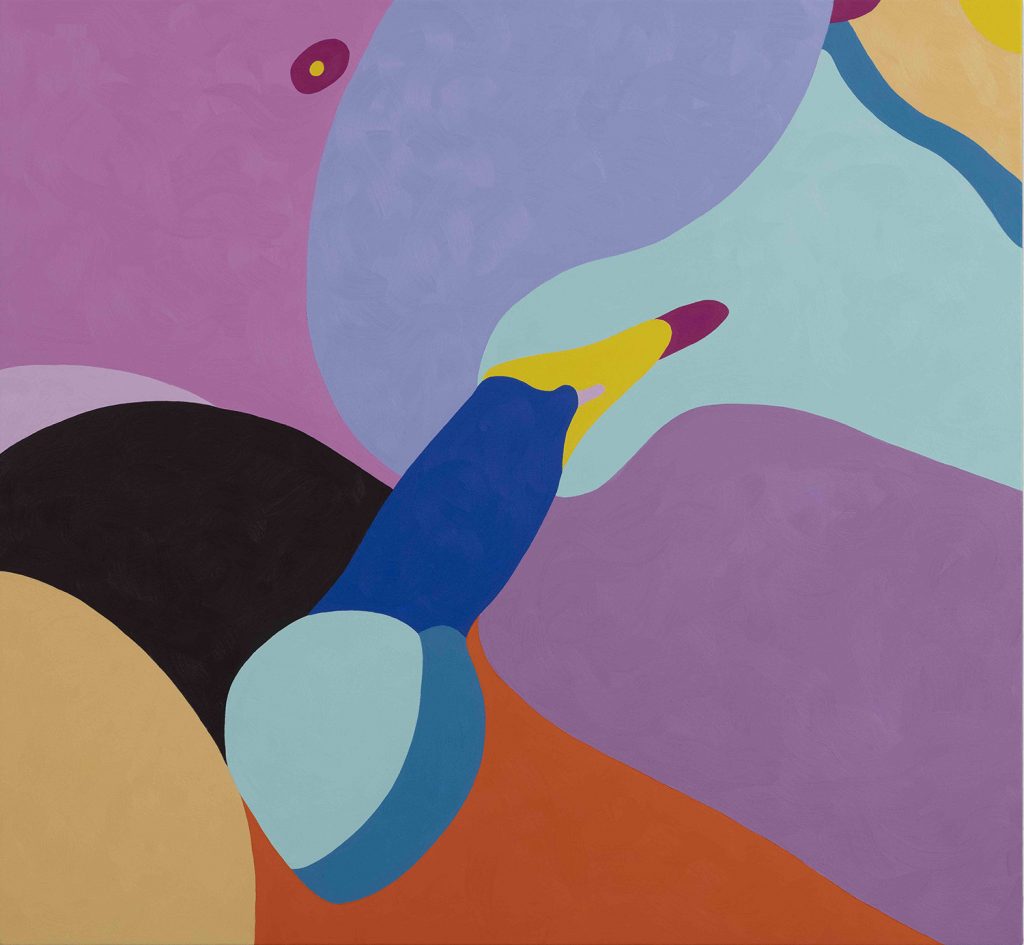
Pleasure can be political
Part of the strength of Beard’s work lies in rejecting the idea that critical art must necessarily become dark or severe. Her paintings can be explicit, yet they are often luminous, energetic, even playful. Pleasure is not treated as something requiring justification. This position becomes particularly relevant because representations of sexuality remain shaped by inequalities, censorship, and double standards. In 2022, Beard co-curated Sensitive Content at Unit London with Maria Elena Buszek and Alayo Akinkugbe, bringing together artists whose feminist, queer, or political work had encountered censorship. The conversation around the body therefore moved beyond the individual canvas to become a question about freedom of imagery and who is permitted to occupy public space.
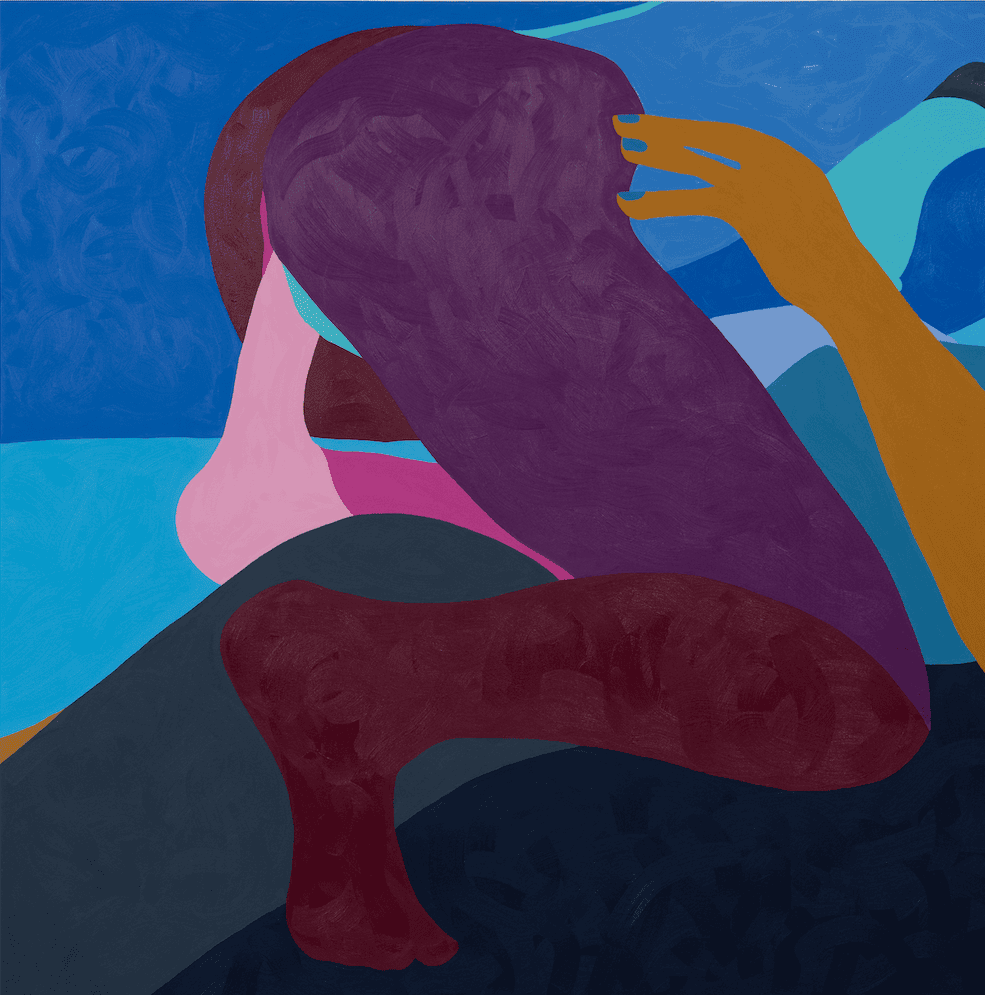
Beyond painting
Beard also works with collage, screenprinting, needlepoint, and sculpture. Moving between media makes clear how strongly her practice is connected to the physicality of images. In her needlepoints, a technique traditionally associated with domestic craft becomes a vehicle for sexually explicit imagery and language. In the 2019 work I Have Made My Bed, I Will Lie in It, a bed of nails activated by vibrators turns desire, danger, and humour into a physical object. Sexuality is therefore not simply represented: it continually moves between surface, material, touch, and space.
Making visible what was already there
Helen Beard’s paintings do not invent female desire. They make it difficult to ignore. That distinction may be the most important one. Her works take a subject as old as art history and change the position from which it is viewed. Colour attracts us, abstraction delays recognition, and framing destabilises hierarchies between bodies. By the time we understand the image, we realise that our own way of looking has become part of the work. This is where apparently immediate paintings acquire greater complexity: they do not simply ask us to accept what they show, but to consider which cultural habits still determine what we are prepared to see.
Keep reading
Becky Tucker: what if the future looked like an archaeological artefact?
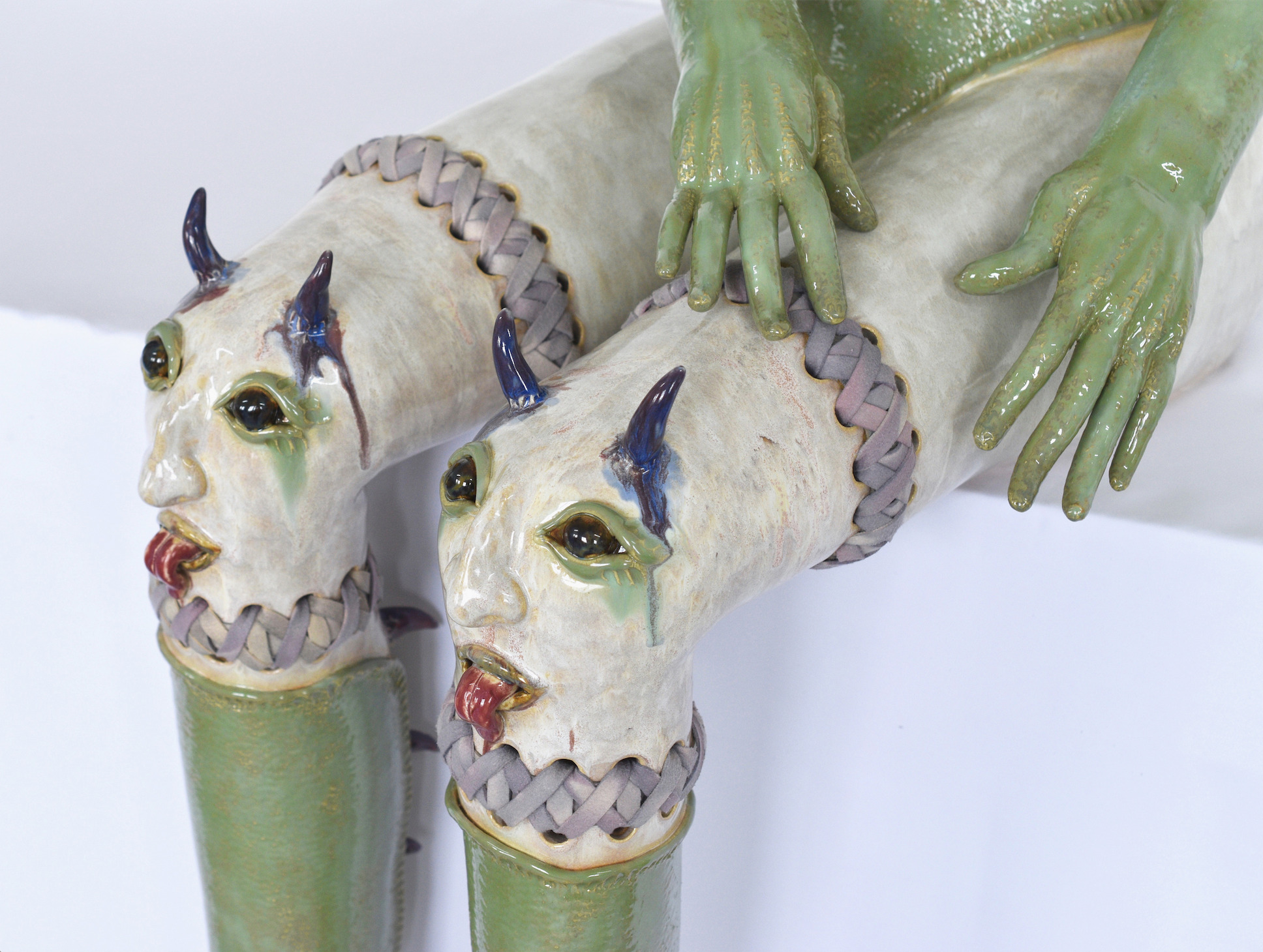
Pale creatures, impossible reptiles, armour, faces emerging from knees and ceramics that could be a hundred or three thousand years old. Becky Tucker creates objects deliberately difficult to place in time, bringing archaeology, mythology, horror and science fiction together. But if someone were to discover the remains of our civilisation one day, how much would they really understand about us?
Ben Crase: what happens when the cowboy no longer has to be tough?
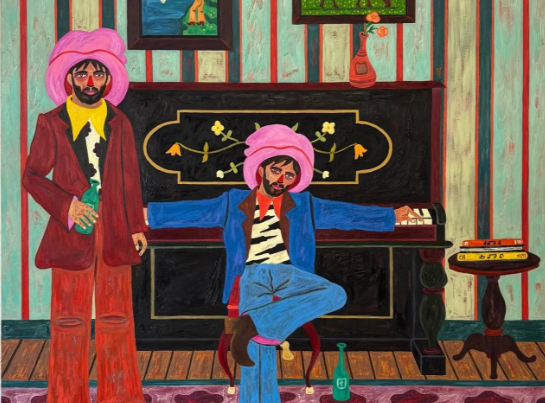
Pink hats, saloons, bears, big cats, chandeliers and men who look like brothers. Ben Crase takes one of the most enduring symbols of the American imagination—the cowboy—and moves him away from conquest, toughness and solitude to explore friendship, vulnerability and belonging. But how much can a myth change when we finally allow its men to be gentle?
Bobbi Essers: friendship deserves a large painting
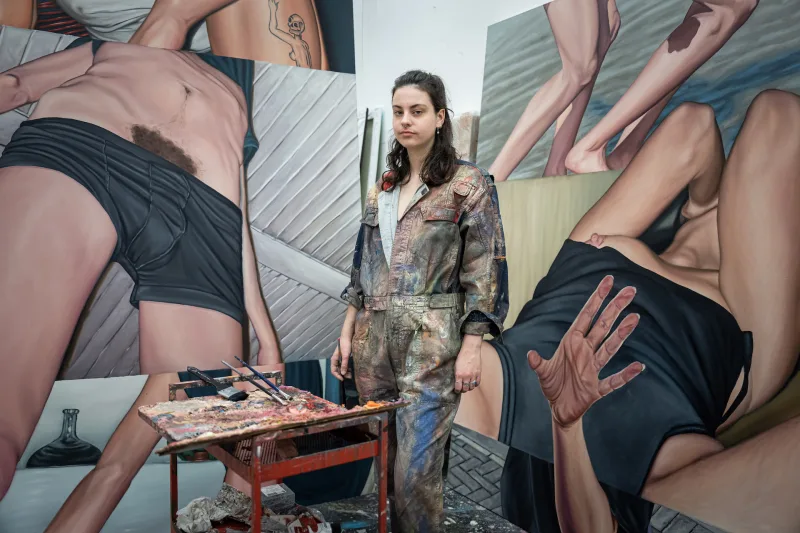
Embraces, hands, clothes, cars, and fragments of nights spent together. Bobbi Essers transforms analogue photographs of her friends into large-scale paintings in which faces often disappear. What remains at the centre is something art has depicted less often than we might think: the way friendship helps construct who we are.