
Hai-Hsin Huang: absurdity is already all around us
Disastrous weddings, art fairs, gyms, museums, unfamiliar dogs, and holiday crowds. Hai-Hsin Huang observes everyday life and transforms it into a slightly unsettling comedy, where anxiety, conformity, and vulnerability emerge beneath bright colours.
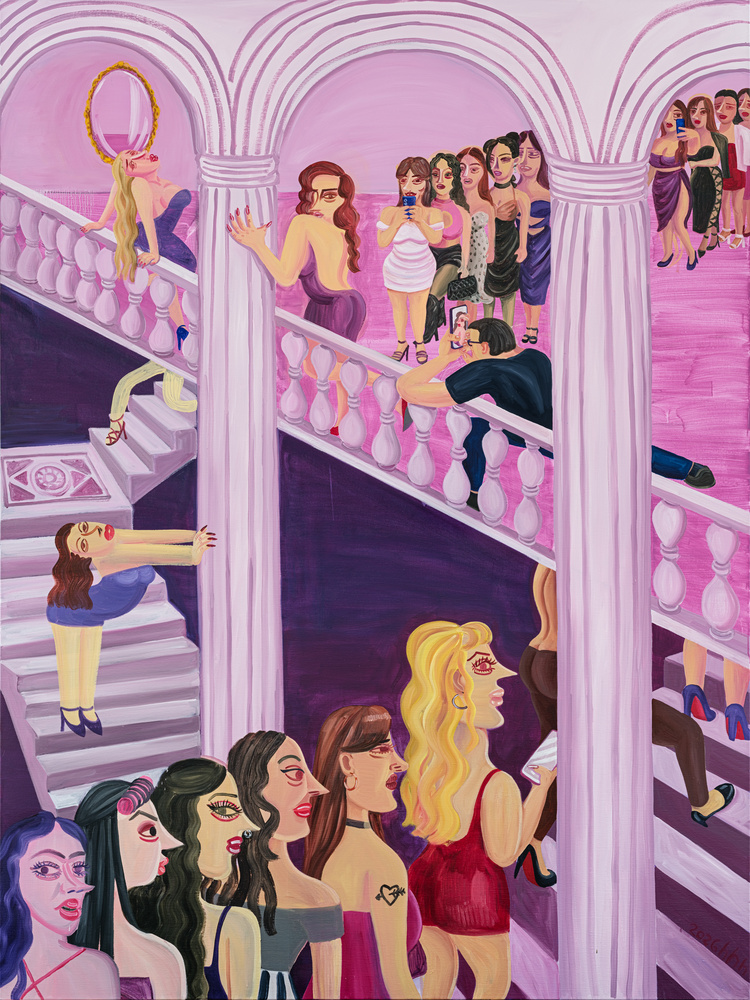
“I paint these people because I accept that they are also part of my reality.”
— Hai-Hsin Huang, interview with Vogue Taiwan, 2024
There is little need to invent
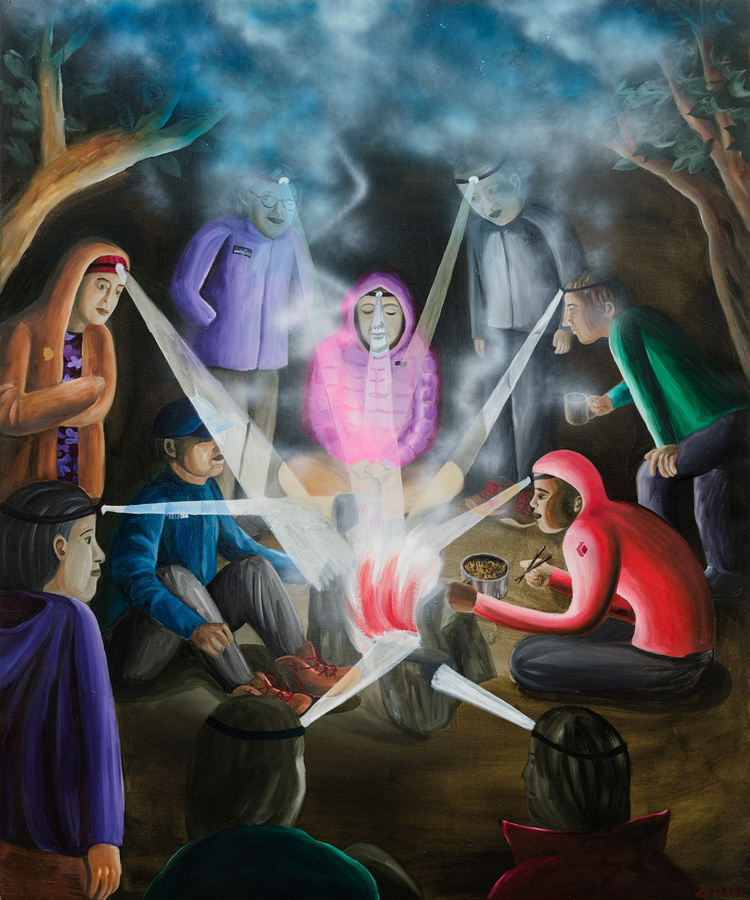
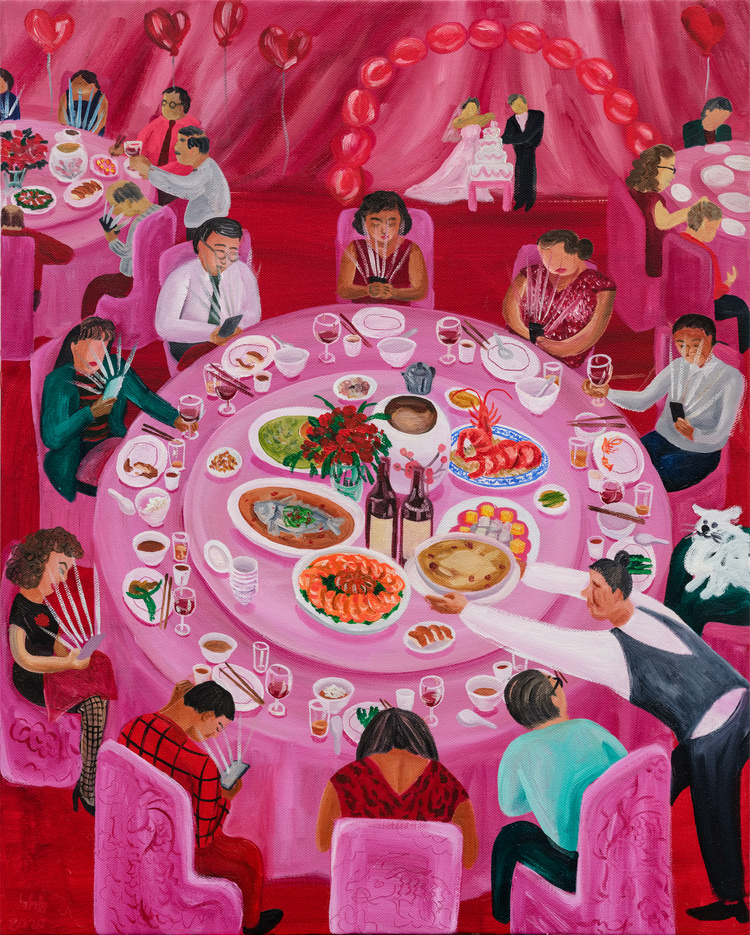
Strange things happen in Hai-Hsin Huang’s paintings, but they are rarely impossible. A bride appears close to losing control, crowds invade museums, dozens of people occupy a mountain to photograph themselves, someone exercises while someone else watches. These situations come from everyday life and are pushed only slightly beyond the limits of normality. That is where their humour begins. Born in Taipei in 1984 and working between Taipei and Brooklyn, Huang observes ordinary people, collective behaviour, and minor social incidents, turning them into colourful scenes where comedy, anxiety, and absurdity coexist.
We laugh because we recognise ourselves
Her humour does not work like a punchline. It is closer to a distorting mirror. Huang takes familiar behaviours—the need to perform, marriage as a social ritual, mass tourism, gym culture, art turned into spectacle—and observes them long enough for something ridiculous to emerge. Yet the distance between us and her characters remains minimal. We could be them. Descriptions of her work repeatedly emphasise this combination of childlike innocence and dark humour: the cruelty of the world remains visible, but becomes easier to approach.
The art world ends up in the painting too
Huang does not spare the art system to which she belongs. One of the series that helped define her practice began by observing visitors at New York’s Metropolitan Museum of Art; later, Art Basel transformed the fair itself into pictorial material, recording display, consumption, and audience behaviour. On her website, Museum Show and Art Basel appear alongside series devoted to weddings, parks, and domestic life: museums and fairs therefore become social spaces like any other.
And an inevitable question emerges: when we enter an exhibition, are we still looking at art—or are we also performing ourselves?
From tragedy to the gym
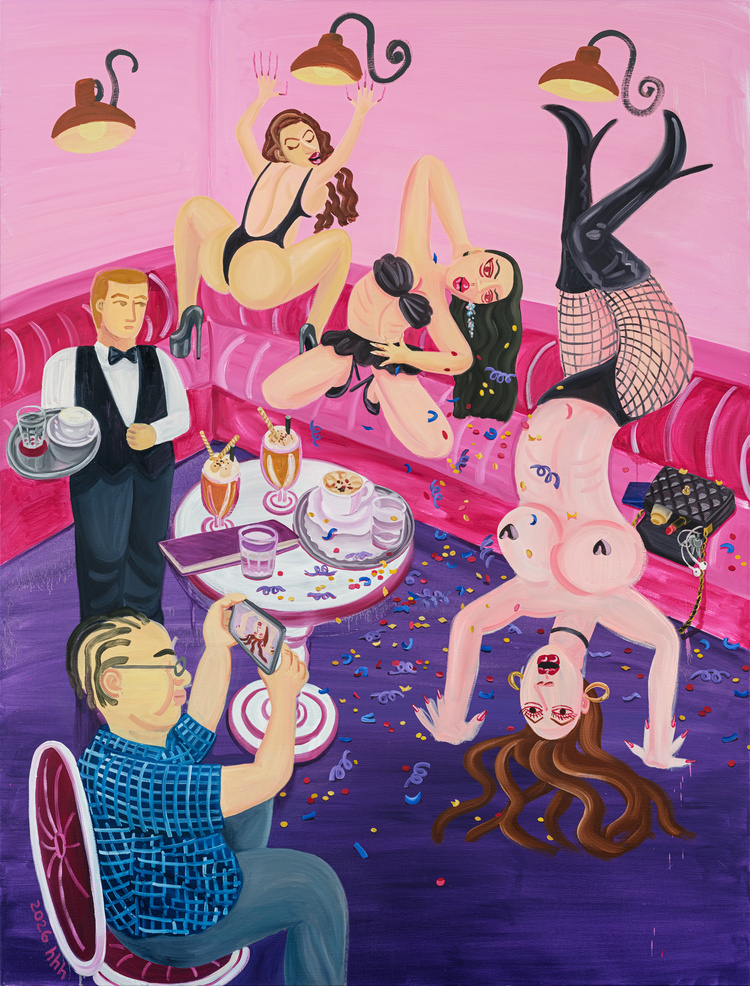
Huang’s practice changes alongside her own life. Earlier works contained a more openly sarcastic and anxious tone; in recent years, her gaze has become more empathetic. After returning to Taiwan during the pandemic, she observed the explosion of hiking and outdoor life in Springtime Hills, while the parallel 2024 exhibitions In the Gym and On the Road turned towards fitness culture and landscapes encountered in everyday movement. Huang herself has described how criticism of others gradually gave way to a greater acceptance of their differences.
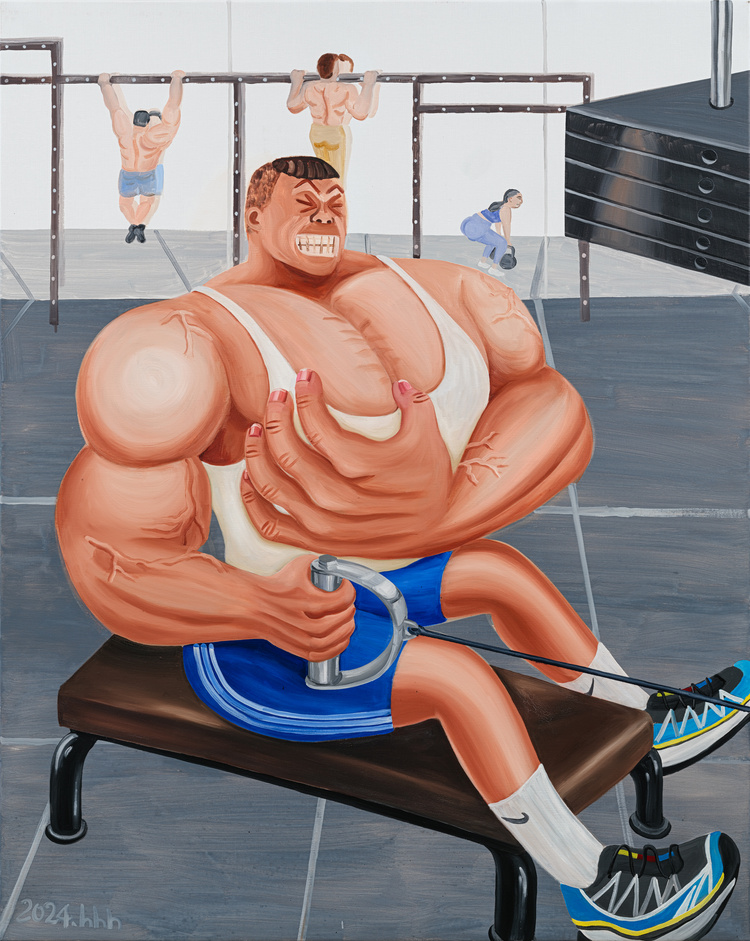
The crowd as a contemporary portrait
Many of Huang’s works are crowded with people. There is not necessarily a protagonist: the crowd itself becomes the subject. In works centred on museums, cities, mountains, or public spaces, dozens of small figures form scenes that can almost be read as social maps. Each person performs a different gesture, yet all participate in the same system. It is a particularly effective way to address contemporary life because so much of our experience emerges from the tension between individuality and collective behaviour. Jut Art Museum describes her paintings as observations of the absurdities and anxieties of modern urban life, including the ways people ignore or evade the crises around them.
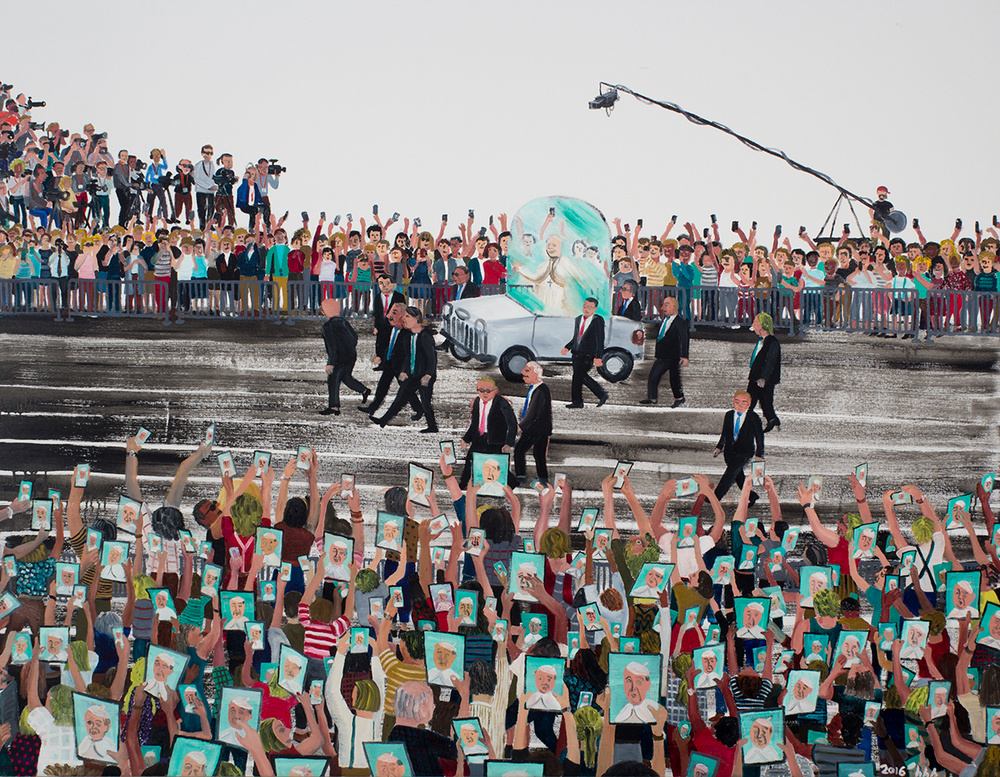
A career built across places
After studying at the National Taipei University of Education and completing an MFA at New York’s School of Visual Arts, Huang developed a career spanning Asia, Europe, and the United States. Her work has been shown at institutions including Taipei Fine Arts Museum, Museum der bildenden Künste Leipzig, Mori Art Museum, Centre Pompidou-Metz, and the Art Gallery of Western Australia; her works are also held in collections including Taipei Fine Arts Museum, White Rabbit Gallery, UBS Art Collection, and the Art Gallery of Western Australia. In 2024, she received a NYSCA/NYFA Artist Fellowship in Painting.
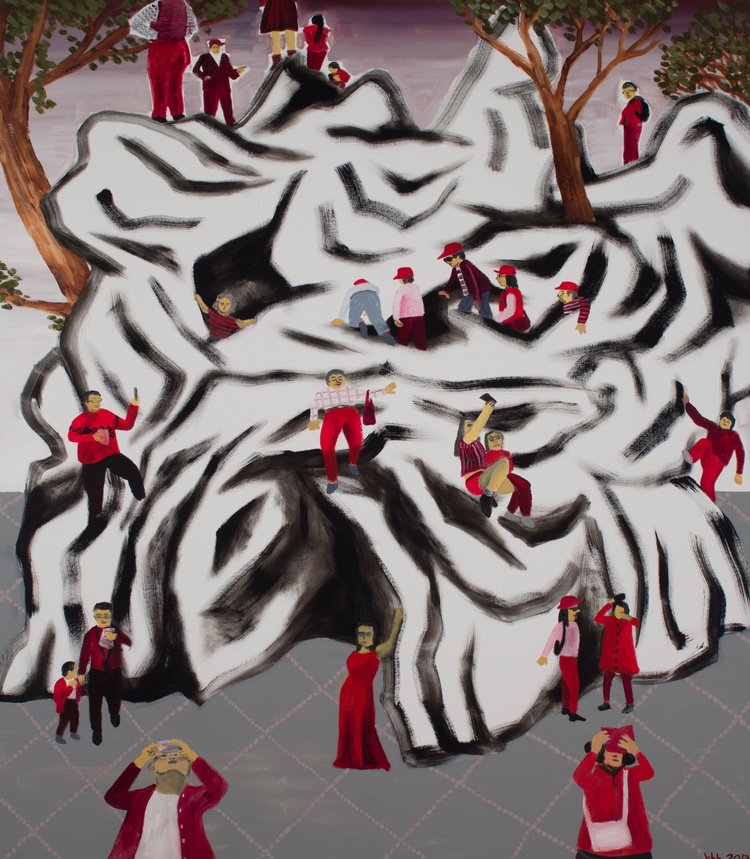
Everyday life is enough
Hai-Hsin Huang does not appear interested in making reality more spectacular than it already is. Observing it is enough. A gym can reveal narcissism, discipline, and the desire to belong. A mountain can become a portrait of a society searching for freedom in the same place at the same time. An art fair can reveal as much about its visitors as about the artworks on display. Her painting reminds us that everyday life is not the opposite of complexity: it is often where complexity hides most effectively.
What if the scenes we find absurd in her paintings were simply the most accurate way of representing how we live?
Keep reading
Helen Beard: desire changes perspective
Saturated colours, tightly framed bodies, and images suspended between figuration and abstraction. Helen Beard uses painting to place female desire at the centre of the image, turning eroticism into a question of perspective, freedom, and representation.
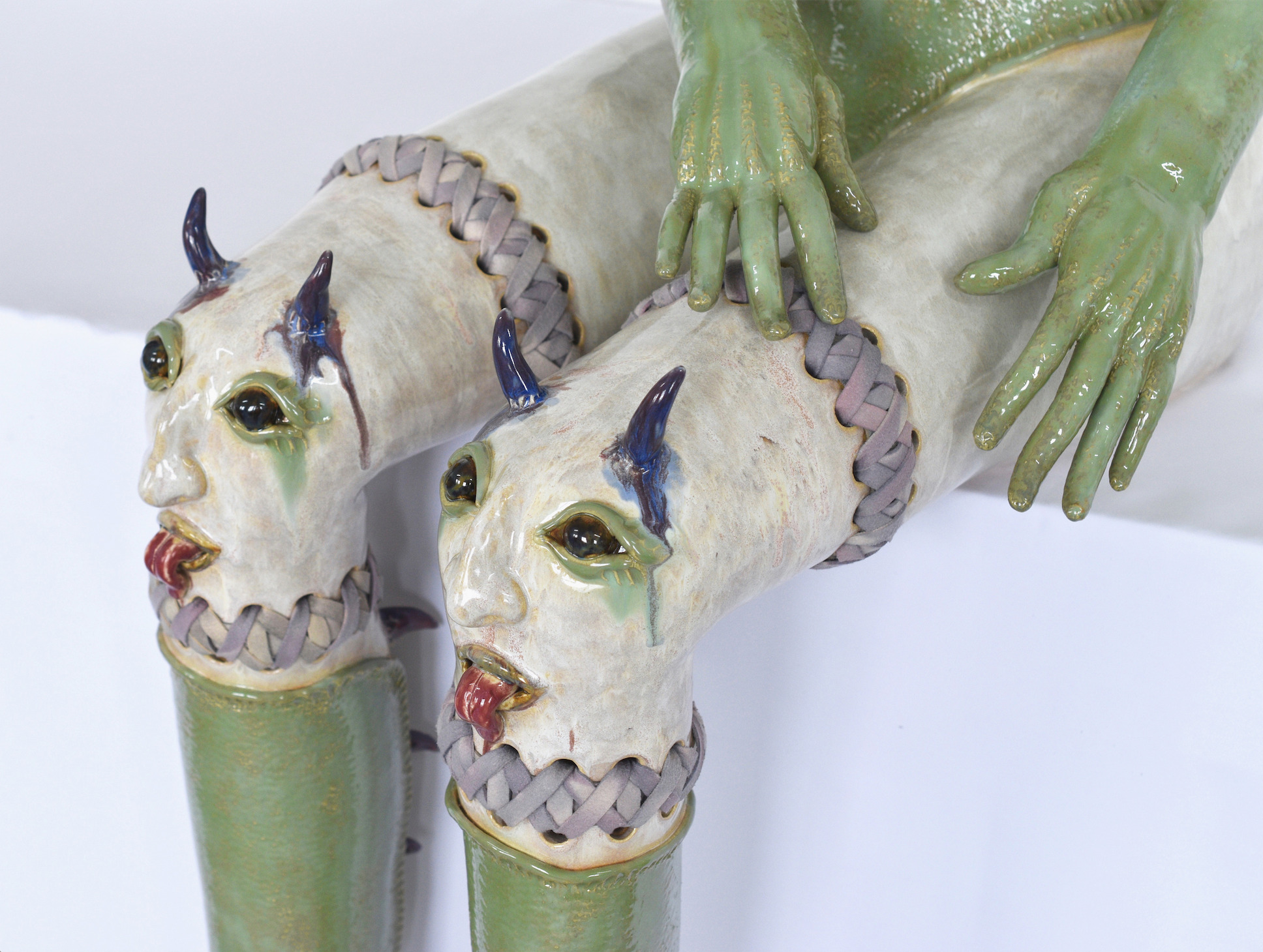
Becky Tucker: what if the future looked like an archaeological artefact?
Pale creatures, impossible reptiles, armour, faces emerging from knees and ceramics that could be a hundred or three thousand years old. Becky Tucker creates objects deliberately difficult to place in time, bringing archaeology, mythology, horror and science fiction together. But if someone were to discover the remains of our civilisation one day, how much would they really understand about us?
Ben Crase: what happens when the cowboy no longer has to be tough?
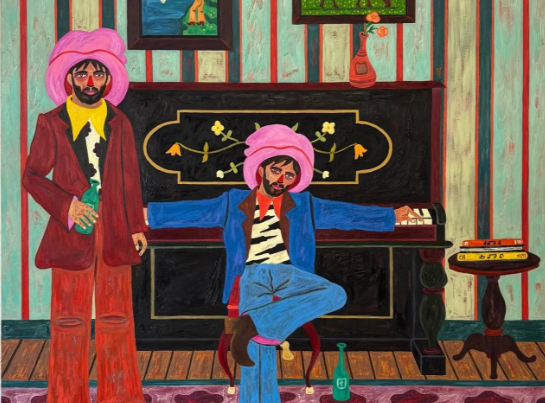
Pink hats, saloons, bears, big cats, chandeliers and men who look like brothers. Ben Crase takes one of the most enduring symbols of the American imagination—the cowboy—and moves him away from conquest, toughness and solitude to explore friendship, vulnerability and belonging. But how much can a myth change when we finally allow its men to be gentle?