
GaHee Park: what happens when no one is looking
Solitary women, cocktails, fish, windows, lovers, and presences that seem to emerge from dreams. GaHee Park creates paintings suspended between desire and unease, where private life is never completely protected from the gaze.
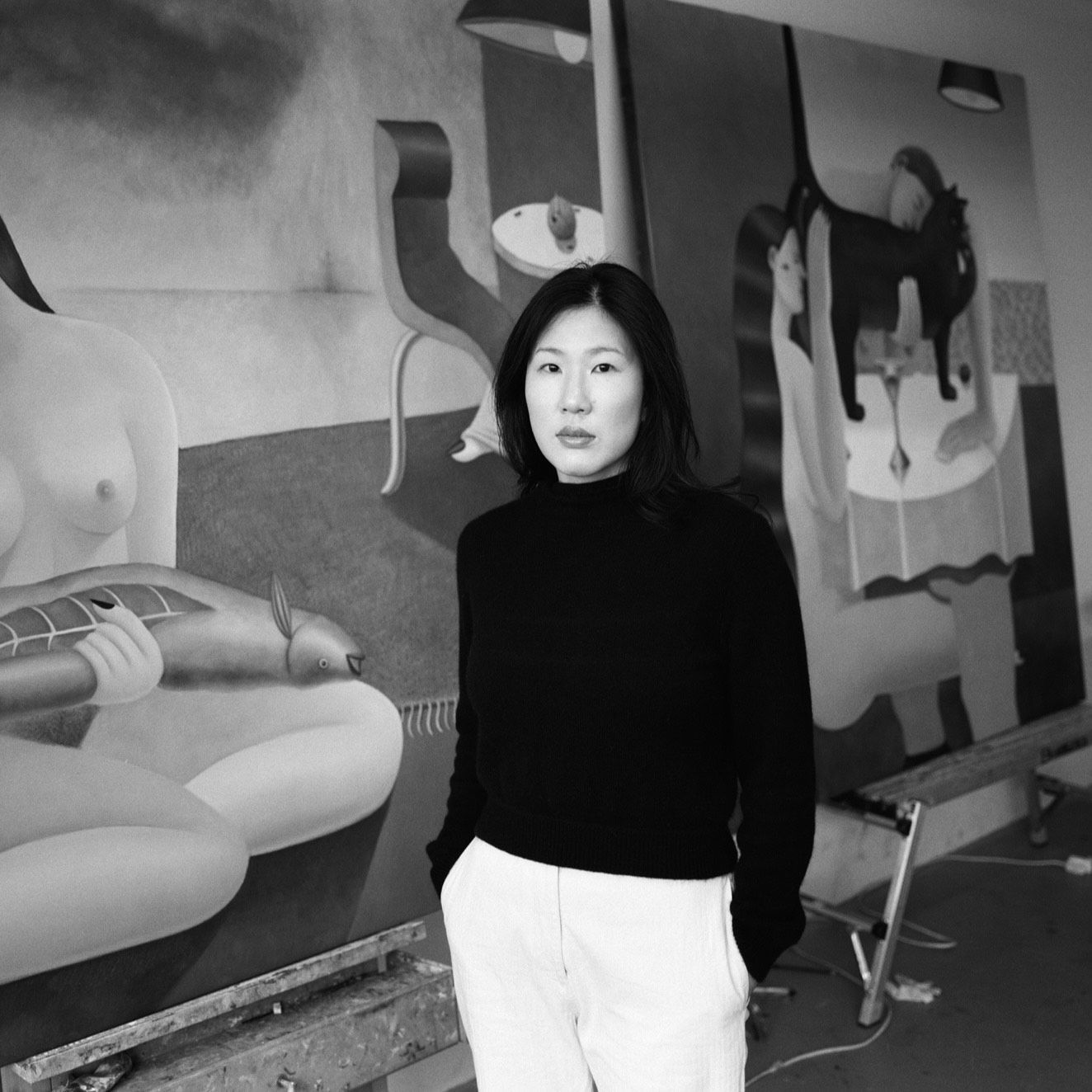
“I wanted to find a way that reflected my experience and my own gaze in my work.”
— GaHee Park, interview with Elephant, 2020
Behind the curtain
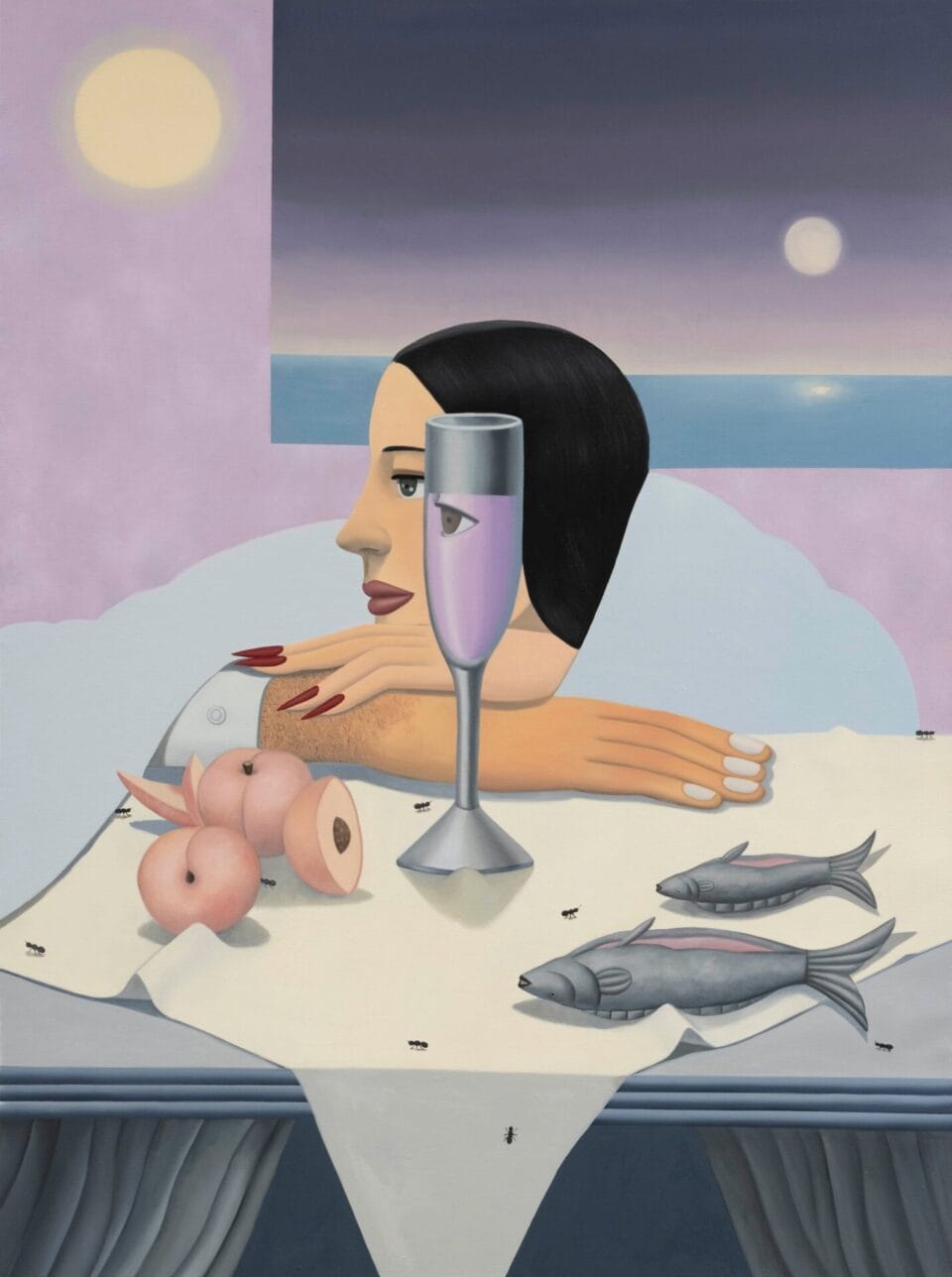
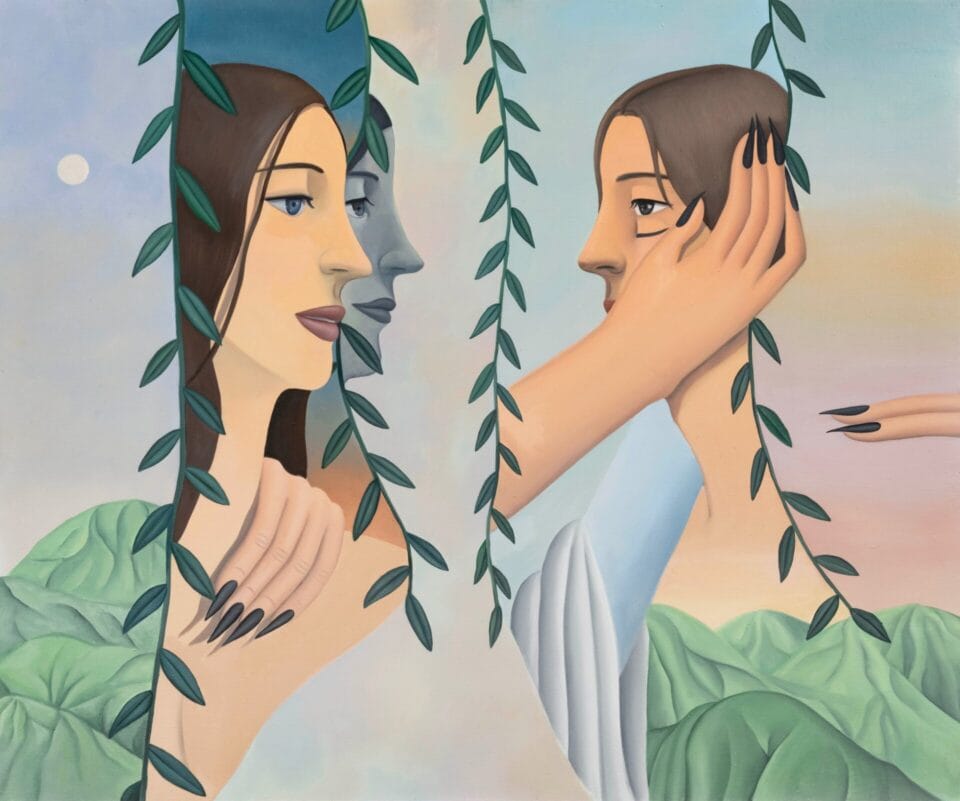
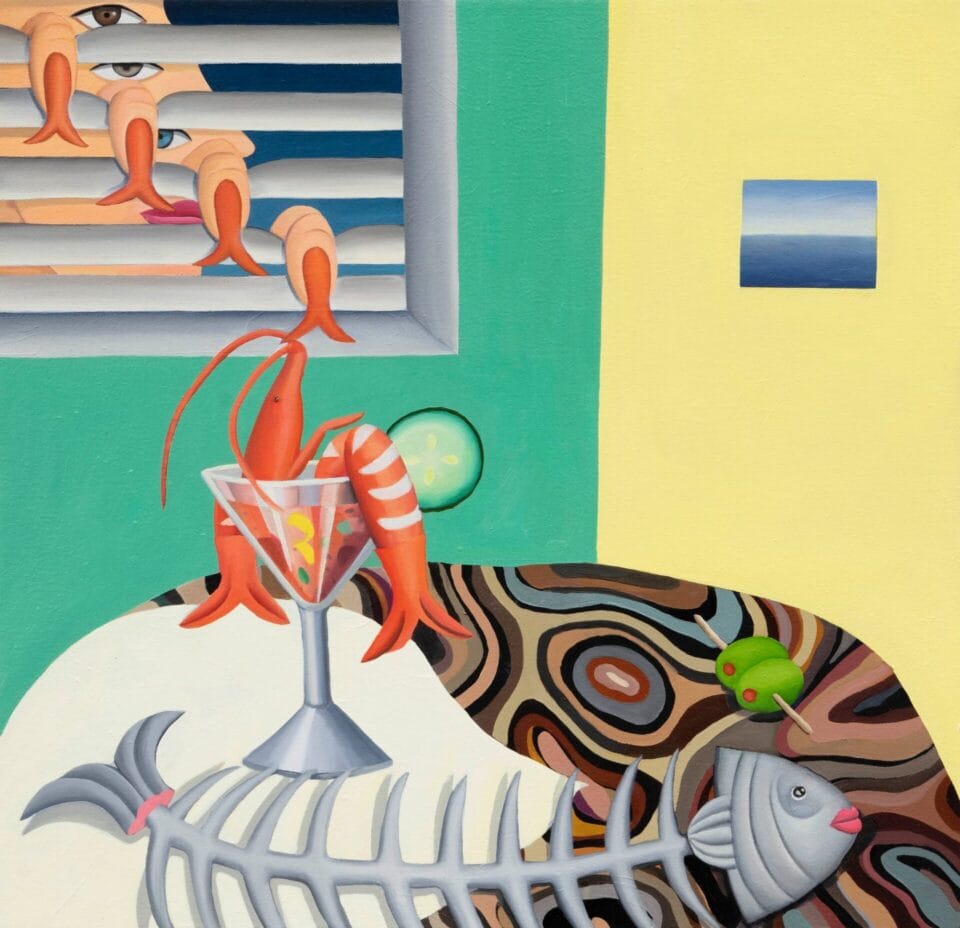
A woman looks into a cocktail glass. A fish lies beside fruit. A shadow seems to belong to someone we cannot see. A window may open onto the sea—or perhaps it is another image inside the image. In GaHee Park’s paintings, individual elements remain perfectly recognisable, yet the scene as a whole never fully resolves. This instability is what makes her work so compelling. Born in Seoul in 1985 and now based in Montreal, Park constructs interiors, still lifes, landscapes, and portraits in which reality continually slips towards fantasy. On 7 August 2026, San Francisco’s Yerba Buena Center for the Arts opened Behind the Curtain, her first solo institutional exhibition in the United States.
The calm is only apparent
The colours are delicate. The surfaces appear controlled. Many figures possess a simplicity that can recall Henri Rousseau and deliberately naïve painting. Yet the subjects tell another story. Eroticism, solitude, desire, mortality, and small signs of danger continually enter apparently peaceful environments. Perrotin has long described this tension in her work: scenes of intimacy and romance in which the idyll has often already begun to turn sour. In more recent works, even a still life can become unstable: fruit ripens, animals appear, and time seems to move through several moments of the same scene at once.
Who has the right to look?
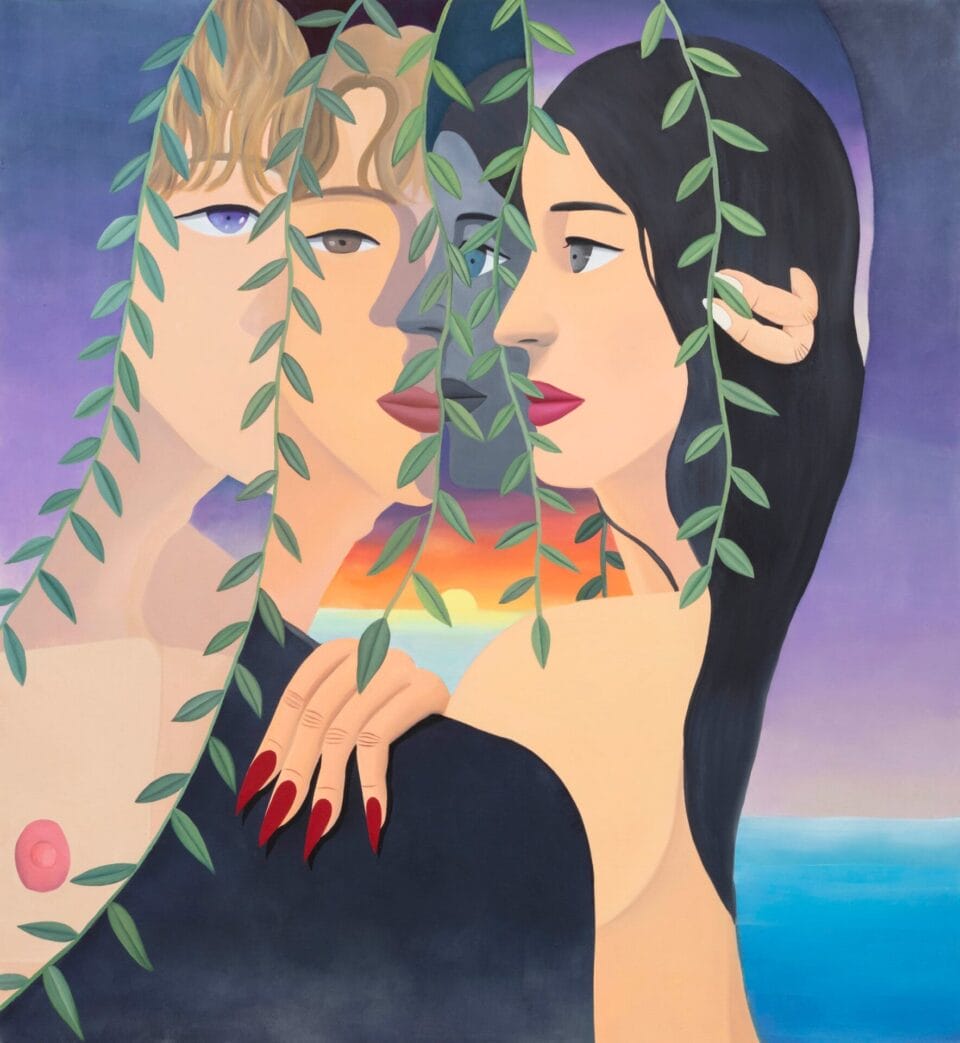
For Park, intimacy is not simply an erotic subject. It is a question of power. Growing up in South Korea, the artist has described drawing sexual images secretly as a child and having them burned by her mother when they were discovered. After moving to the United States, studying art history made her increasingly aware of the extent to which women’s bodies had been sexualised through a predominantly male gaze. Her response was not to stop representing the body, but to change the position from which it could be seen.
Desire in her paintings can therefore belong to the woman represented, to the artist constructing the image, or to the viewer looking at it. These positions do not necessarily coincide. How much of what we call intimacy remains truly private once someone begins to look?
Memories that behave like dreams
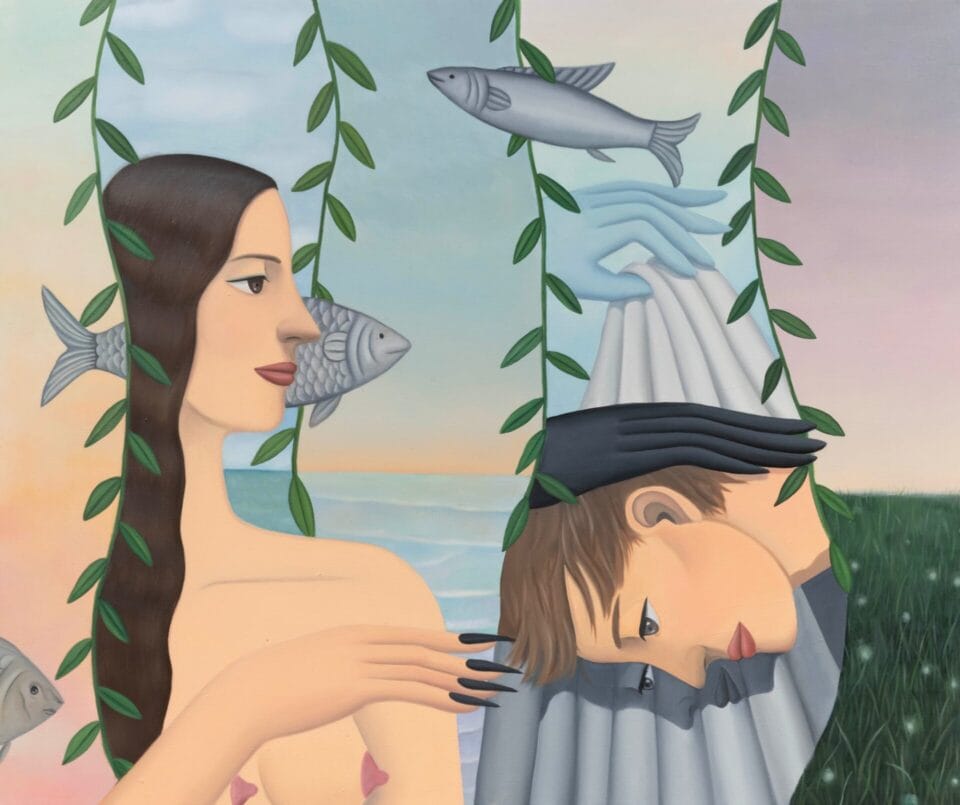
One of the most interesting aspects of Park’s painting is the way she handles time. Her scenes rarely seem to belong to a precise moment. Discussing her practice, the artist has compared time to circles moving like a spiral: similar experiences may continually return in different configurations. Memory, fantasy, dreams, and imagination consequently occupy the same plane. This helps explain why some works seem to contain several perspectives at once, or a painting inside another painting. The canvas does not record an instant. It behaves more like memory: layering what happened, what we imagine happened, and what we might have wished had happened.
The animals see everything
Fish, insects, snails, plants, birds, and other small observers continually appear in Park’s work. They are not merely decorative elements. When she first moved to the United States and was not yet fully confident in English, the artist has described feeling almost invisible—present within situations but unable to participate completely. She compared the experience to the perspective of an animal or houseplant: watching what happens without being able to fully enter the conversation. That sensation found its way into the paintings.
Since then, it is not always clear who the real spectator is within her scenes. We look at a woman. An animal looks at her. A figure outside the frame may be watching both. Painting becomes a chain of gazes in which nobody completely possesses the scene.
The cinema behind the painting
The theatrical quality of Park’s work does not emerge from painting alone. Cinema, narrative, and framing have become important references within her practice. Alongside Behind the Curtain, the artist has co-curated a film programme for YBCA with filmmaker Michael Vass, bringing together films from different periods and countries. Their connections run through voyeurism, identity, social rituals, desire, doppelgängers, theatricality, and stories nested within other stories. Even Park’s 2024 painting Seafood Heaven takes inspiration from a shot in Nagisa Ōshima’s The Ceremony.
From secrecy to public space
Park’s trajectory makes her current San Francisco exhibition particularly significant. After studying in the United States—at Tyler School of Art and later completing her MFA at Hunter College in New York—her practice moved through Perrotin exhibitions in Seoul, New York, Paris, and Tokyo, followed by a 2023 solo presentation at Académie Conti, Consortium Museum, curated by Éric Troncy. Today, Behind the Curtain, curated by Dorothy Dávila and on view through 3 January 2027, brings images shaped by secrecy, desire, and interior spaces into a public American institution.
Not everything needs to be explained
Park has described beginning some paintings with a loose or partial narrative while knowing that the viewer will not necessarily arrive at the same story. A shadow might be a memory, a fantasy, or perhaps someone really is hiding beneath the table. The painting must be capable of sustaining several possibilities at once. This may be where her painting feels particularly contemporary. We live surrounded by images designed to be understood quickly: we scroll, recognise, classify, and move on. Park does almost the opposite. She gives us enough information to enter the scene, but never quite enough to close it. If an image can contain desire, fear, memory, and invention at the same time, why should we force it to have only one meaning? The strength of these paintings lies precisely in their resistance to resolution. Behind the curtain, we do not necessarily find an answer. We find another room.
Keep reading
Helen Beard: desire changes perspective
Saturated colours, tightly framed bodies, and images suspended between figuration and abstraction. Helen Beard uses painting to place female desire at the centre of the image, turning eroticism into a question of perspective, freedom, and representation.
Becky Tucker: what if the future looked like an archaeological artefact?
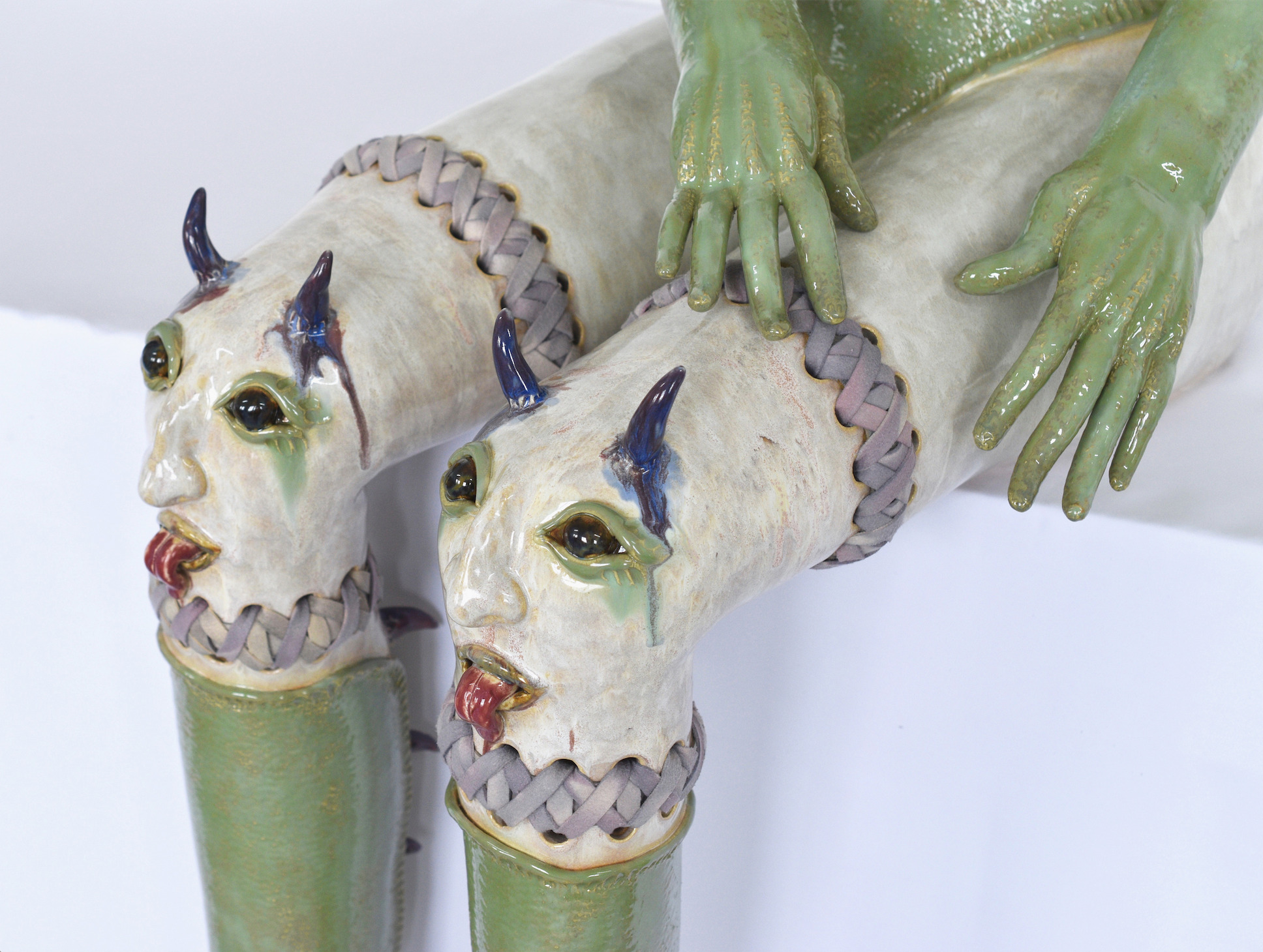
Pale creatures, impossible reptiles, armour, faces emerging from knees and ceramics that could be a hundred or three thousand years old. Becky Tucker creates objects deliberately difficult to place in time, bringing archaeology, mythology, horror and science fiction together. But if someone were to discover the remains of our civilisation one day, how much would they really understand about us?
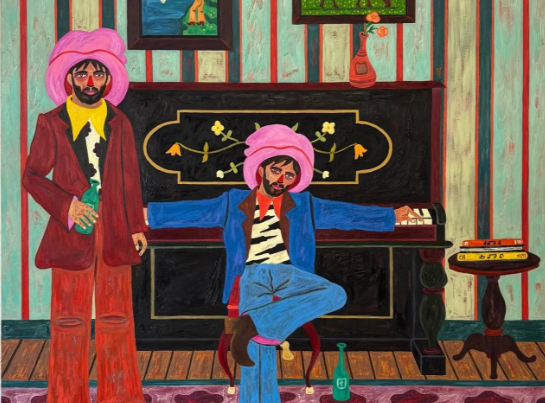
Ben Crase: what happens when the cowboy no longer has to be tough?
Pink hats, saloons, bears, big cats, chandeliers and men who look like brothers. Ben Crase takes one of the most enduring symbols of the American imagination—the cowboy—and moves him away from conquest, toughness and solitude to explore friendship, vulnerability and belonging. But how much can a myth change when we finally allow its men to be gentle?