
Ella Bril: painting when your time is no longer yours alone
Motherhood changed the subjects of Ella Bril’s paintings, but more importantly the conditions under which they are made. Motherhood: Luminous Origins begins with bodies, sleepless nights, and acts of care to open a broader question: what happens to the figure of the artist when making art can no longer be separated from the rest of life?
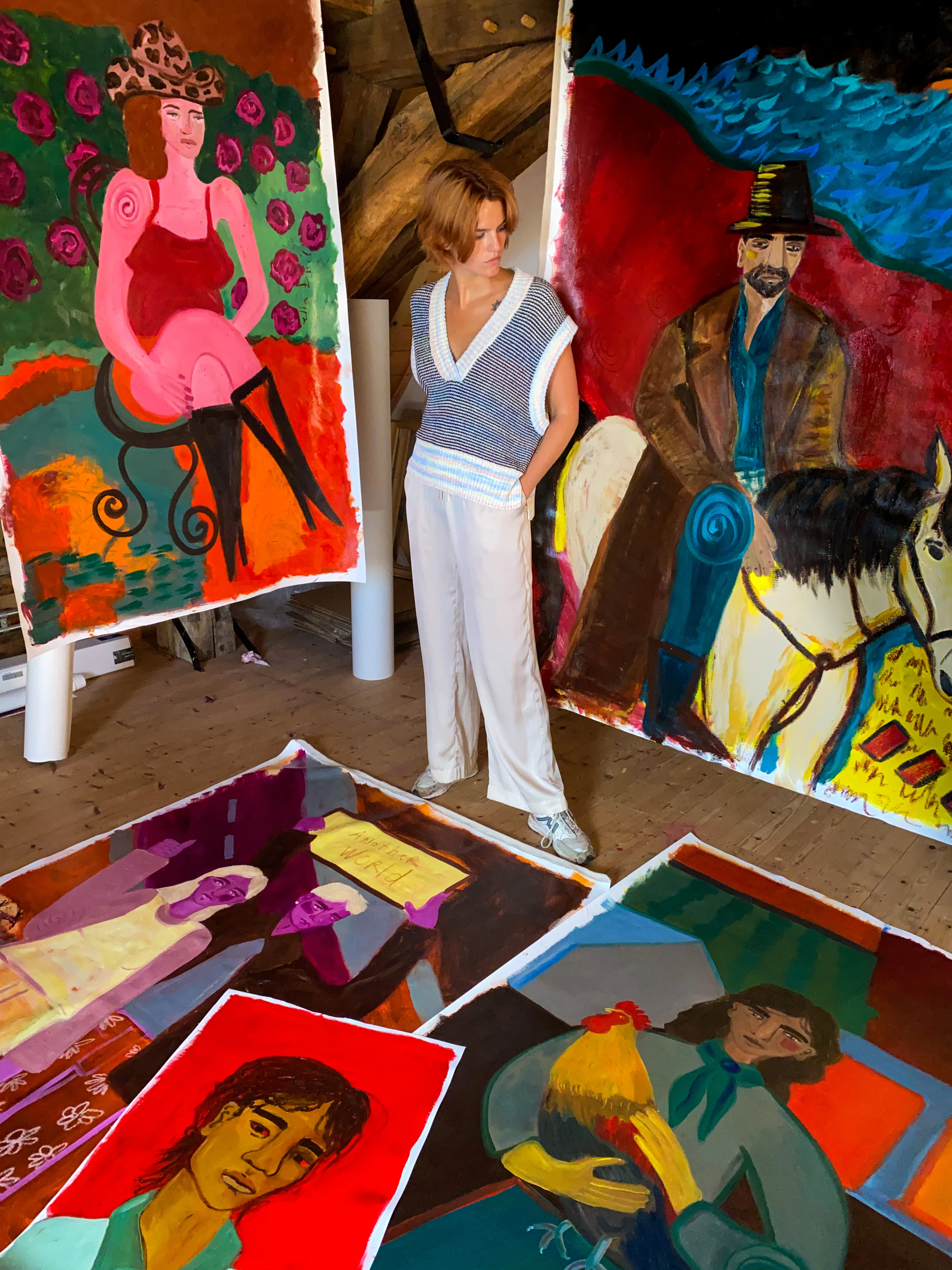
“Motherhood didn’t erase who I was; it stretched me, expanded me, forced me to meet parts of myself I hadn’t encountered before.”
— Ella Bril, interview with Luminary Mothers, 2025
Before everything changed
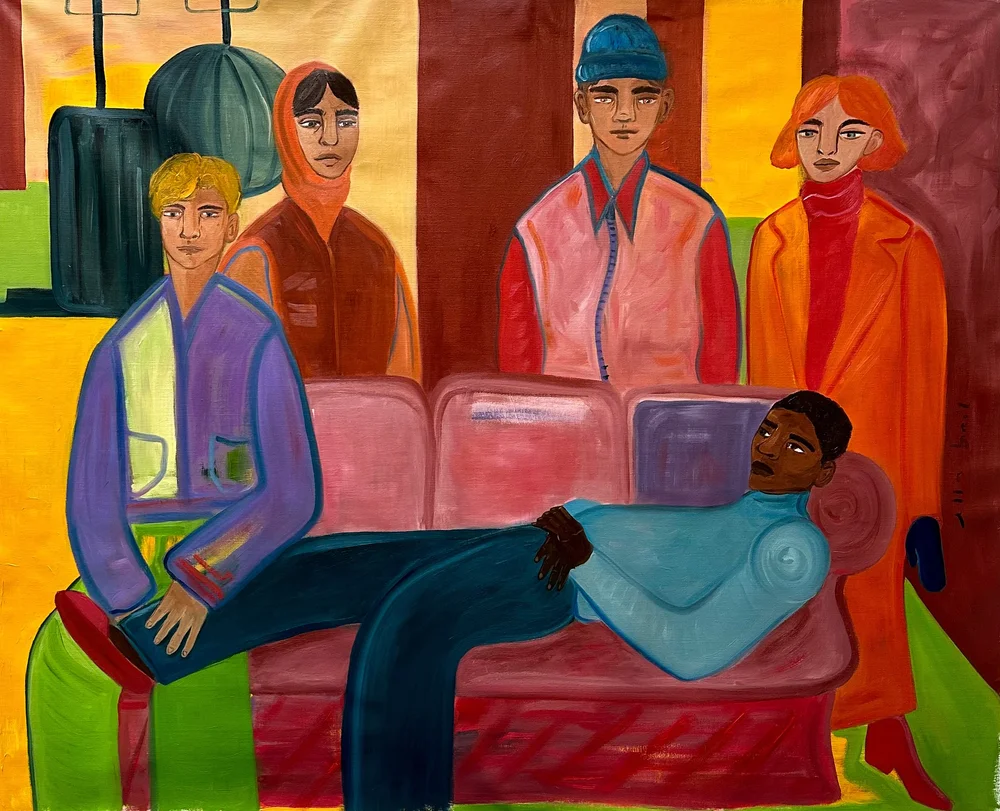
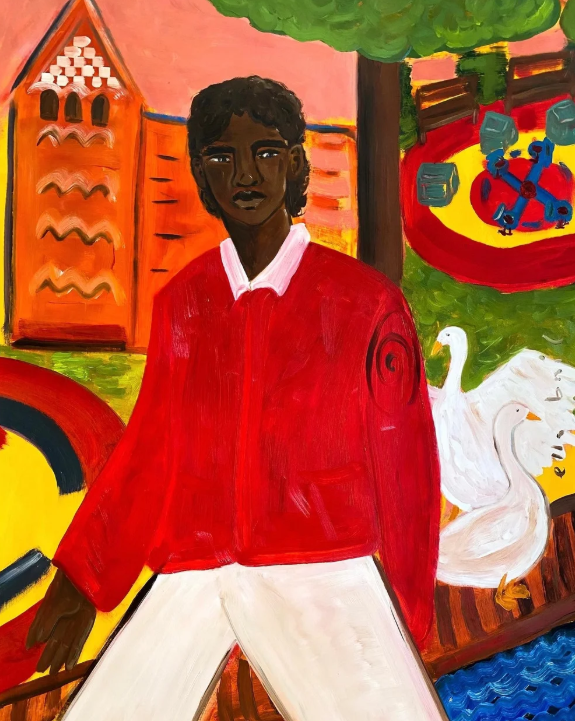
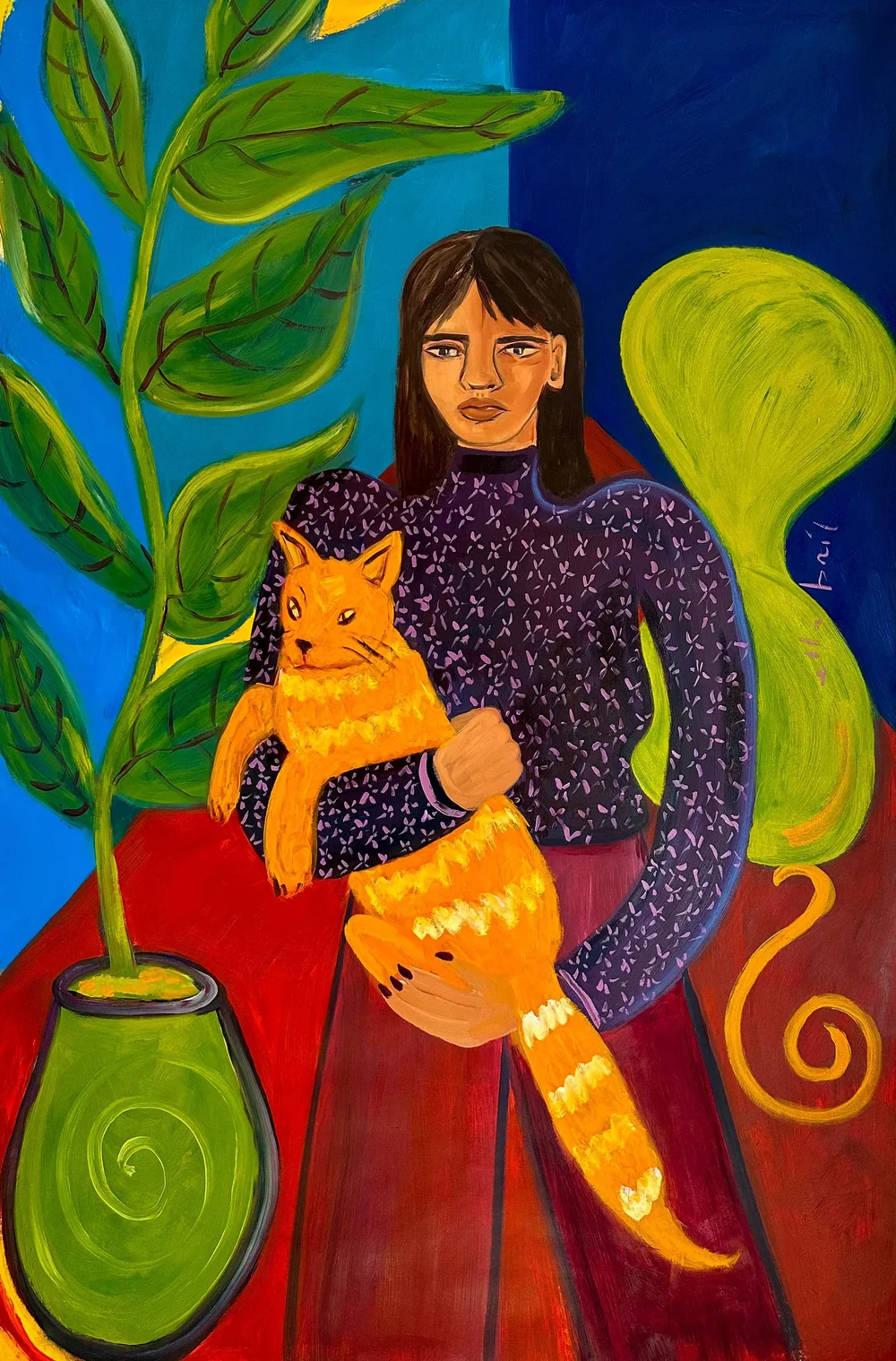
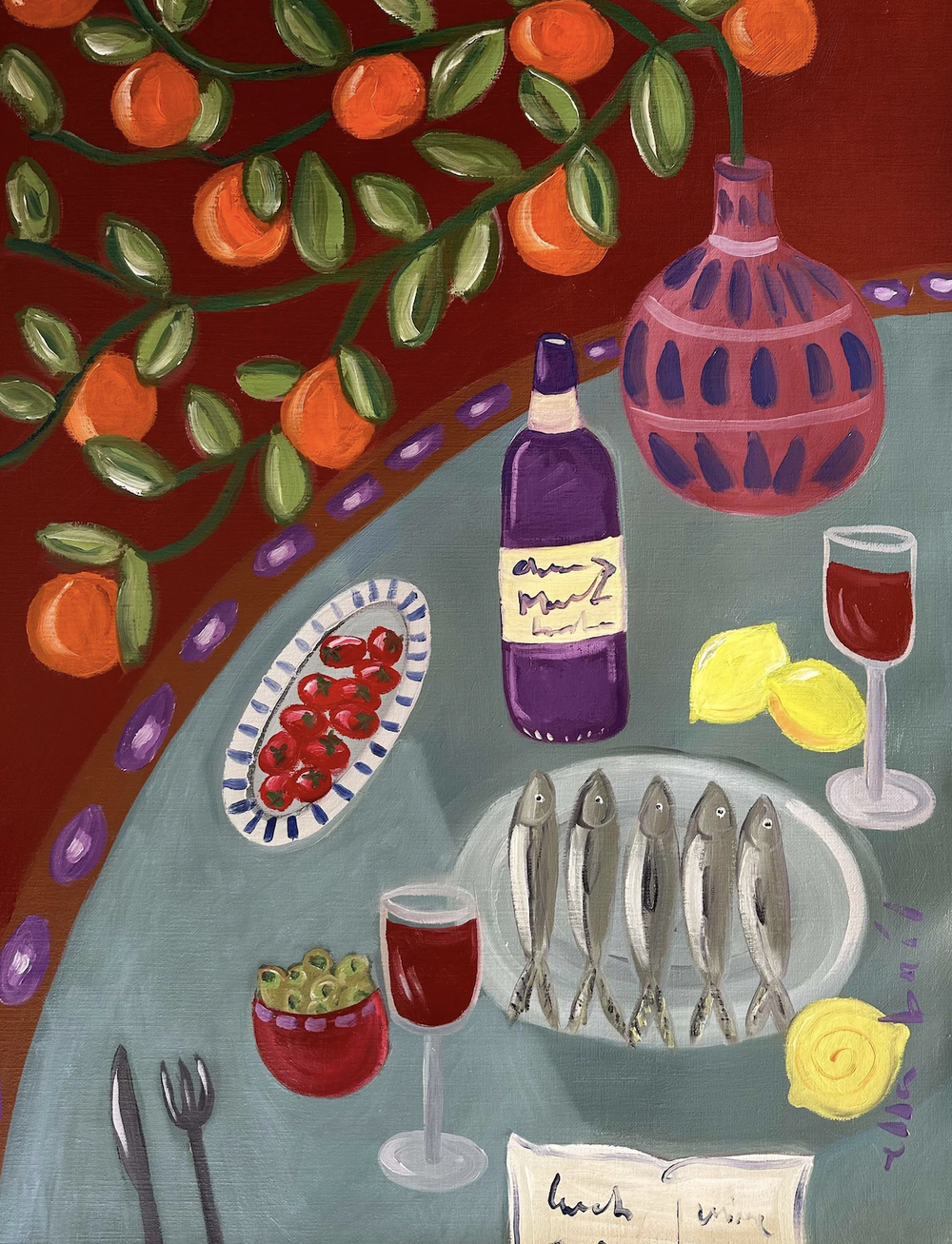
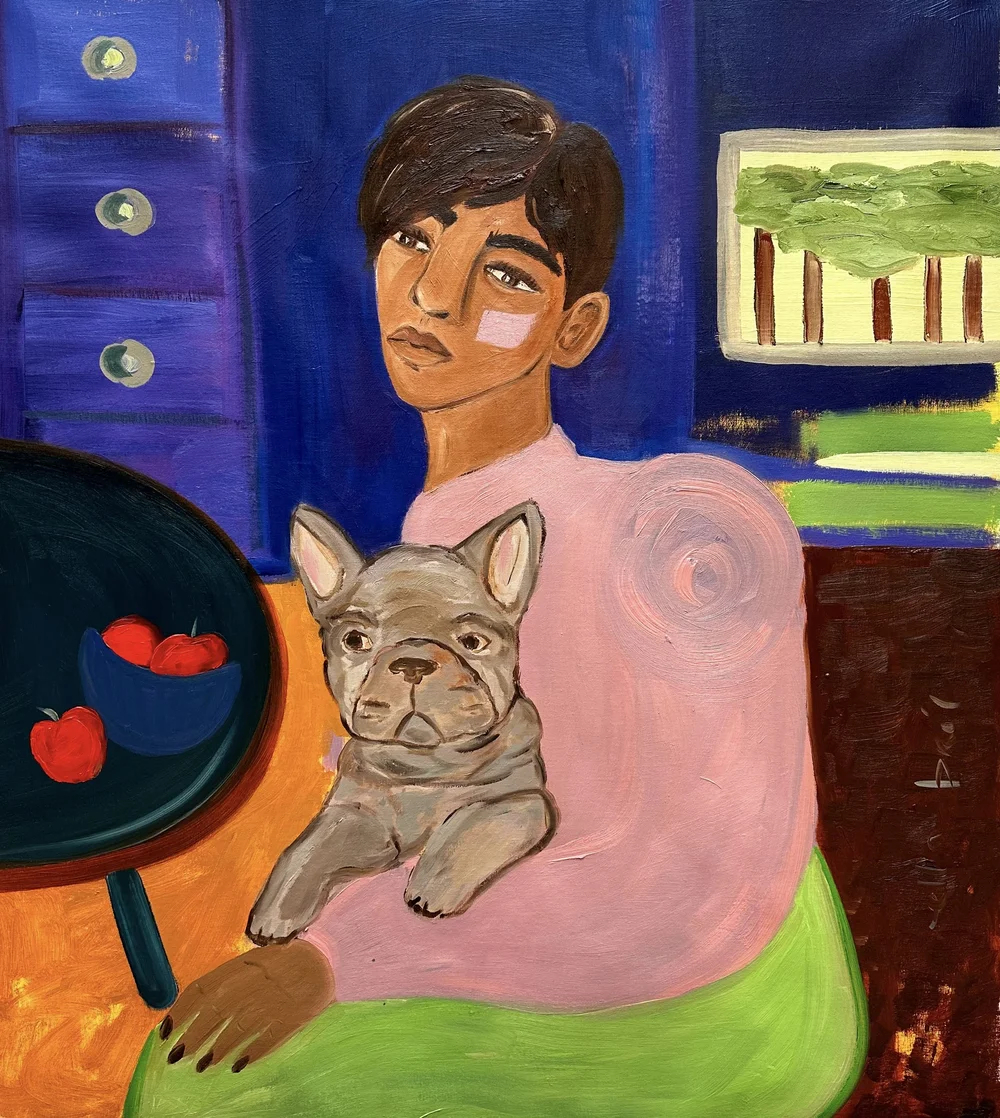
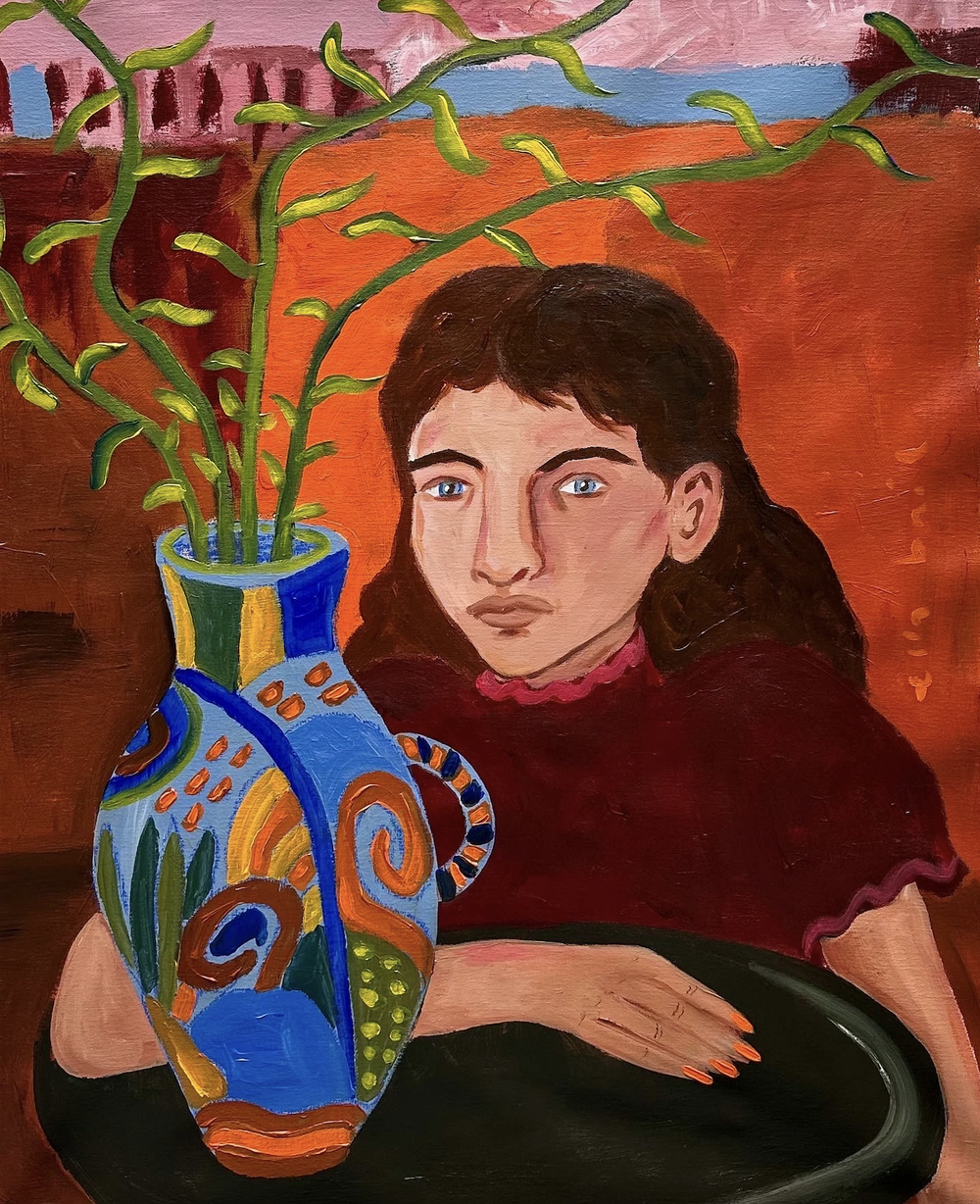
Before painting motherhood, Ella Bril was already painting relationships. Solitary figures and groups occupied large canvases shaped by saturated colours, natural elements, and deliberately unstable perspectives. A Dutch painter based in Amsterdam, Bril describes her work as a territory suspended between reality and imagination, built from people encountered in everyday life and from an interest in what drives human behaviour. In her paintings, colour can become as important as the figure itself: it does not simply accompany the scene, but changes its atmosphere and meaning.
Then someone needs you
The birth of her daughter Polly altered this position. Bril describes motherhood as simultaneously expansive and destabilising: a new kind of love, continuous responsibility, and the feeling that her previous identity could not simply continue unchanged. From this transformation emerged Motherhood: Luminous Origins, presented by MTArt Agency at London’s TM Gallery from 16 October to 12 December 2025. Nine oil paintings explored motherhood, care, and emotional presence through intensely specific experiences.
This is not simply a change of subject. When another person depends on you twenty-four hours a day, the position from which you see the world changes too.
The work almost nobody sees
Some of the most compelling works in the series emerge precisely from what is usually absent from public representations of motherhood. Breastfeeding by Moonlight grew from nights spent breastfeeding, when, in the artist’s words, the world seemed to contract around herself and her daughter. Safe With Me began with the discovery of an almost animal instinct to protect. In the paintings, bodies can move so close that their boundaries begin to dissolve, while light and shadow make tenderness and unease impossible to separate.
Care is often made of small, repetitive, unspectacular gestures. That is precisely why it so easily becomes invisible. How do you represent something whose value increases as its visibility disappears? Bril’s answer is not to artificially monumentalise those gestures. She brings them onto the canvas and allows their ordinary intensity to take up space.
When time changes, painting changes too
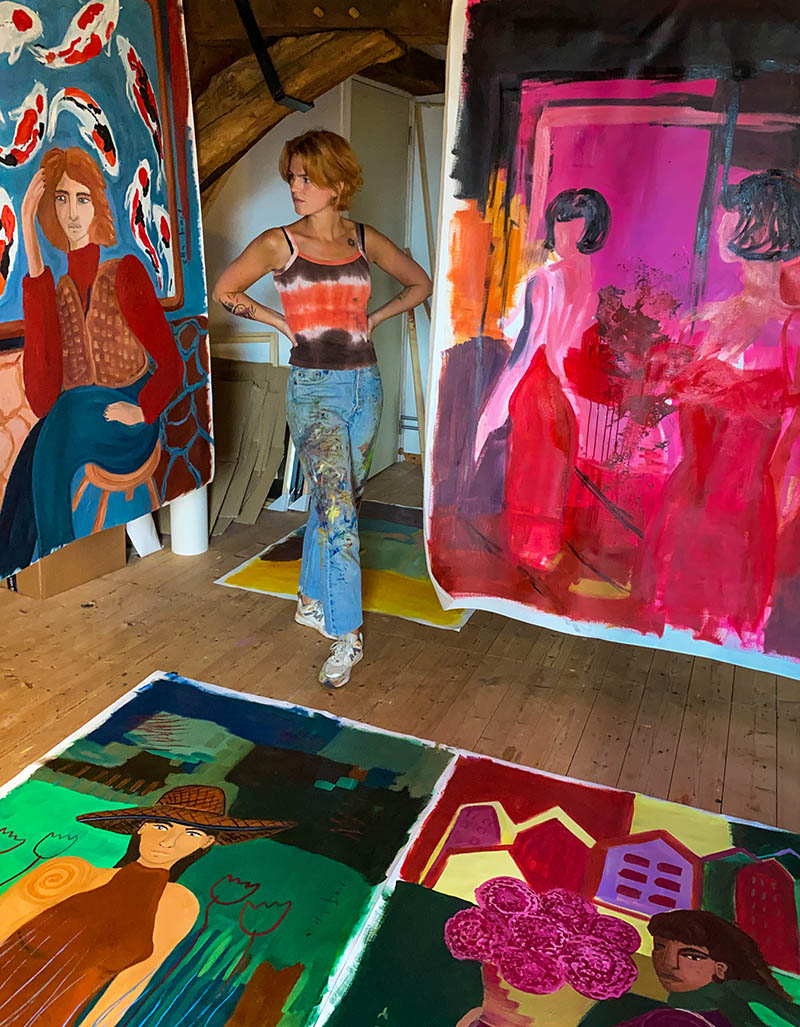
The most interesting transformation, however, may not be iconographic at all. It is temporal. Bril has explained that after becoming a mother, the organisation of her work became far less spontaneous. Studio time must fit into defined windows; parts of the process move into the home; when time to paint becomes available, it has to be used immediately. She describes this new condition as difficult, but also as something that has reduced overthinking and made certain decisions more instinctive.
This is where Motherhood: Luminous Origins moves beyond personal biography. The romantic image of the artist often assumes time, concentration, isolation, and the possibility of temporarily shutting out the rest of the world. Care works in the opposite way: it interrupts, fragments, and demands presence. What happens to an artistic practice when making art can no longer be the only priority? In Bril’s case, limitation does not appear to have reduced urgency. It concentrated it.
The artist does not disappear inside the mother
It is easy to narrate motherhood through the language of sacrifice: an old identity retreats so that a maternal one can emerge. Bril describes something more complex. Some parts of her previous life change in importance, others recede, while painting remains a necessity. Motherhood, she argues, did not erase who she was; it expanded that identity, forcing her to encounter parts of herself she had not known before.
This distinction matters culturally as well. Motherhood does not become the identity that replaces all others. It becomes a force entering into relation with those that already exist. For this reason, the strongest works in the series do not simply illustrate “motherhood.” They examine the difficulty of continuing to exist simultaneously as artist, individual, partner, autonomous body, and person responsible for someone else.
Motherhood is also an art-world question
At this point, the question moves beyond Ella Bril’s studio. The art world constantly discusses production, mobility, residencies, openings, studio visits, fairs, and international opportunities. It speaks far less often about the material conditions that allow an artist to be present in those places. Time, family support, financial stability, and care work do not normally appear on a CV, yet they can profoundly determine who is able to build one. Bril speaks openly about finding small pockets of time and, when possible, relying on a support system in order to return to her creative space.
This does not mean asking a cultural system to eliminate the complexity of life. It means recognising that the possibility of producing art does not depend on talent alone. Perhaps the more uncomfortable question is this: how much of our idea of the artist still depends on the privilege of having someone else take care of the rest?
From her own body to other lives
Bril does not appear interested in keeping this research confined to autobiography. She has spoken about inviting other mothers into her studio, listening to them, and painting them, introducing experiences beyond her own into the work. It could become a decisive shift: what begins as an individual transformation may develop into a broader space for thinking about care, bodies, and invisible labour
Specificity, in this case, does not reduce the possibility of speaking to others. It expands it. A night spent breastfeeding belongs to one particular person. Exhaustion, the fear of not being enough, the instinct to protect someone, and the difficulty of recognising oneself after a transformation belong to a far wider emotional territory. This is how biography can become painting without becoming a diary.
Perhaps there is no need to choose
Motherhood: Luminous Origins becomes most interesting when it stops being simply an exhibition about motherhood. It is about the difficulty of maintaining an identity when life introduces another one. About the time required to produce culture. About the invisible work behind visible work. And it challenges an image of the artist too often built as though creation depended on the ability to temporarily withdraw from everything else. Ella Bril finds herself in the opposite situation. Painting and care, studio and home, artistic identity and personal transformation cannot be completely separated. Perhaps that is precisely why her recent work possesses a tension that could not have existed before. Not because becoming a mother automatically makes someone a better artist. That would be far too simple. But because when the conditions of life genuinely change, the language of art must decide whether it will change with them. What if one of the most contemporary forms of artistic freedom is to stop pretending that art is made separately from the life that makes it possible?
Keep reading
Helen Beard: desire changes perspective
Saturated colours, tightly framed bodies, and images suspended between figuration and abstraction. Helen Beard uses painting to place female desire at the centre of the image, turning eroticism into a question of perspective, freedom, and representation.
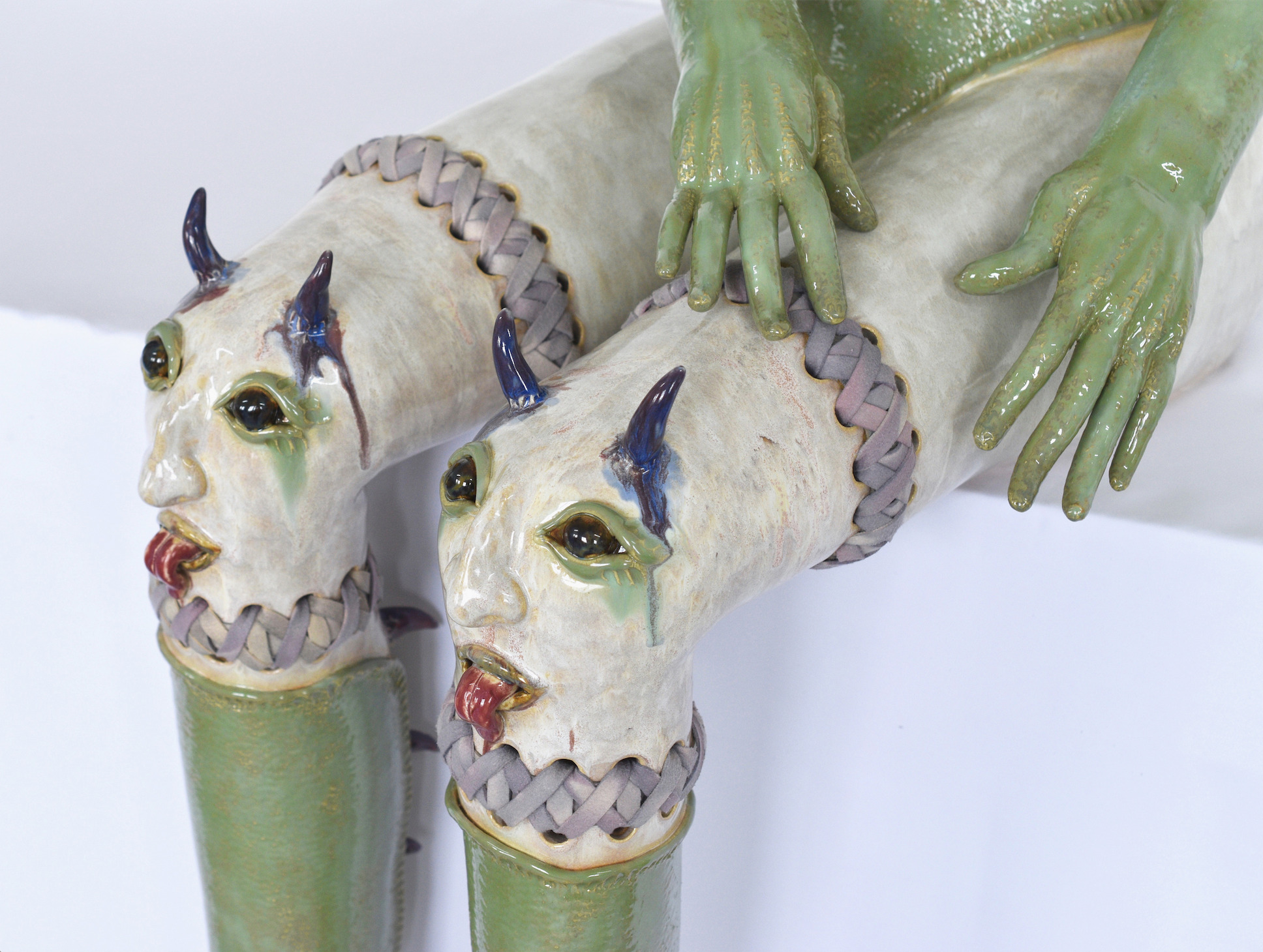
Becky Tucker: what if the future looked like an archaeological artefact?
Pale creatures, impossible reptiles, armour, faces emerging from knees and ceramics that could be a hundred or three thousand years old. Becky Tucker creates objects deliberately difficult to place in time, bringing archaeology, mythology, horror and science fiction together. But if someone were to discover the remains of our civilisation one day, how much would they really understand about us?
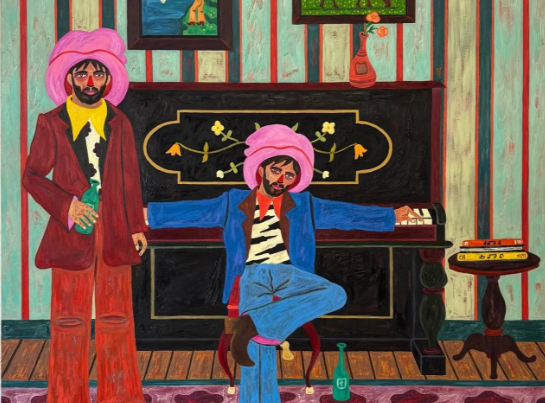
Ben Crase: what happens when the cowboy no longer has to be tough?
Pink hats, saloons, bears, big cats, chandeliers and men who look like brothers. Ben Crase takes one of the most enduring symbols of the American imagination—the cowboy—and moves him away from conquest, toughness and solitude to explore friendship, vulnerability and belonging. But how much can a myth change when we finally allow its men to be gentle?