
VISIONS in Venice: two ways of seeing through painting and photography
In Venice, during the Biennale, VISIONS brought together more than one hundred artists from over forty countries. Darte joined the co-production with two curators and two distinct projects dedicated to painting and photo
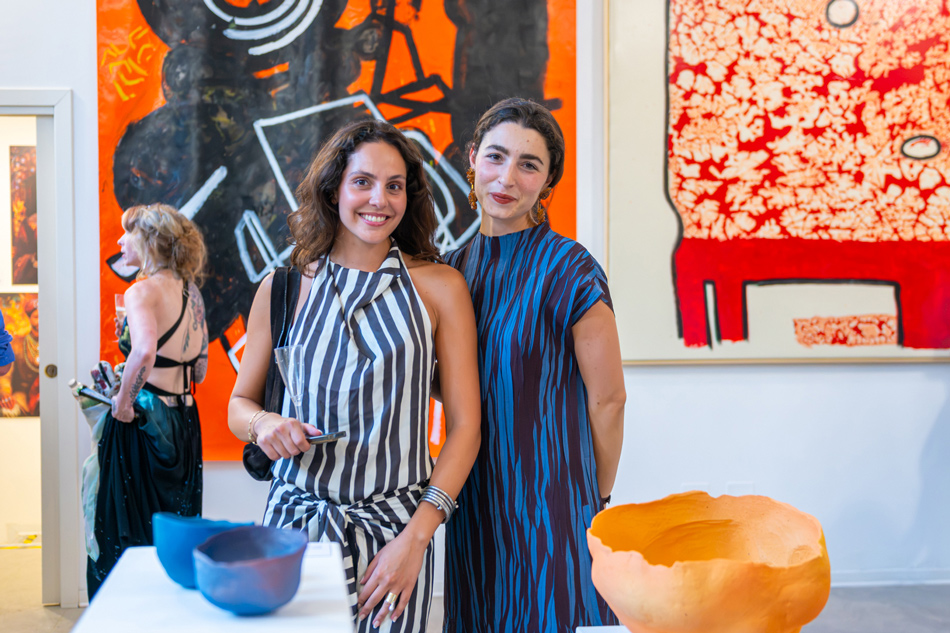
In Venice, during the Biennale, VISIONS brought together more than one hundred artists from over forty countries. Darte joined the co-production with two curators and two distinct projects dedicated to painting and photography, exploring the relationship between the external world and inner experience.
Venice, where everything meets
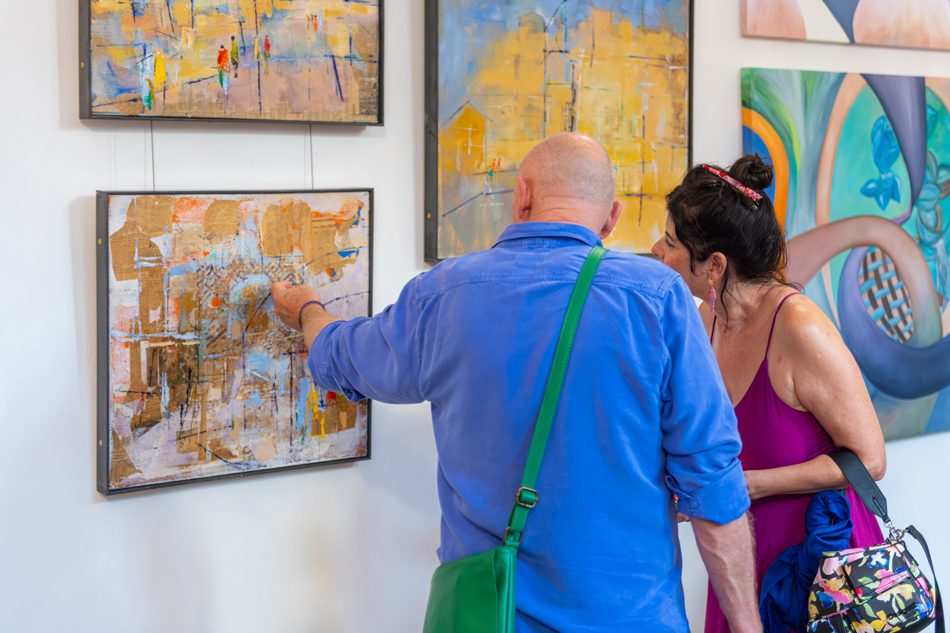
In July, Venice is still moving to the rhythm of the Biennale. Artists, curators, and visitors cross the city through routes that frequently leave the Giardini and Arsenale behind, entering palaces, courtyards, and independent spaces scattered across its neighbourhoods. It was within this context that VISIONS, the third chapter of ANIMA MUNDI 2026, opened on 17 July 2026 at the 16th-century Palazzo Albrizzi-Capello. The exhibition brought together more than one hundred artists from over forty countries, creating an environment where painting, photography, mixed media, and other contemporary practices could coexist.
An ancient idea for looking at the present
The title ANIMA MUNDI draws on the philosophical idea of a force capable of moving through and connecting every form of existence. Within VISIONS, that idea becomes a contemporary question: what relationships exist today between body and environment, individual and society, nature and artificial systems, what we see and what we perceive? Visitors do not need to know Plato to enter the exhibition. The concept works primarily as an open framework in which each artist develops a different response through images, materials, and experiences.
Two curators, two languages
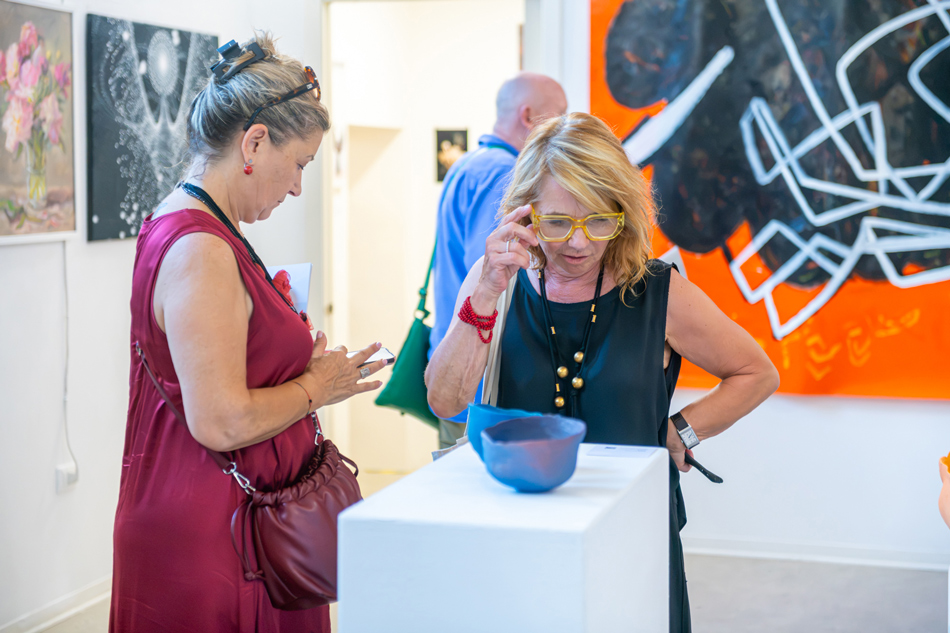
Within this international framework, Darte joined the co-production of VISIONS through two parallel curatorial projects: one dedicated to painting and one to photography, each developed by a curator. Keeping the two languages distinct was not intended to separate them, but to better understand their possibilities. Painting and photography begin from almost opposite conditions. Photography encounters an existing reality and decides what to retain. Painting gradually constructs its own reality through material, gesture, colour, and time. Yet when considered together, both ask the same question: how much of what we see belongs to the world itself, and how much to the way we interpret it?
Photography does more than record the world
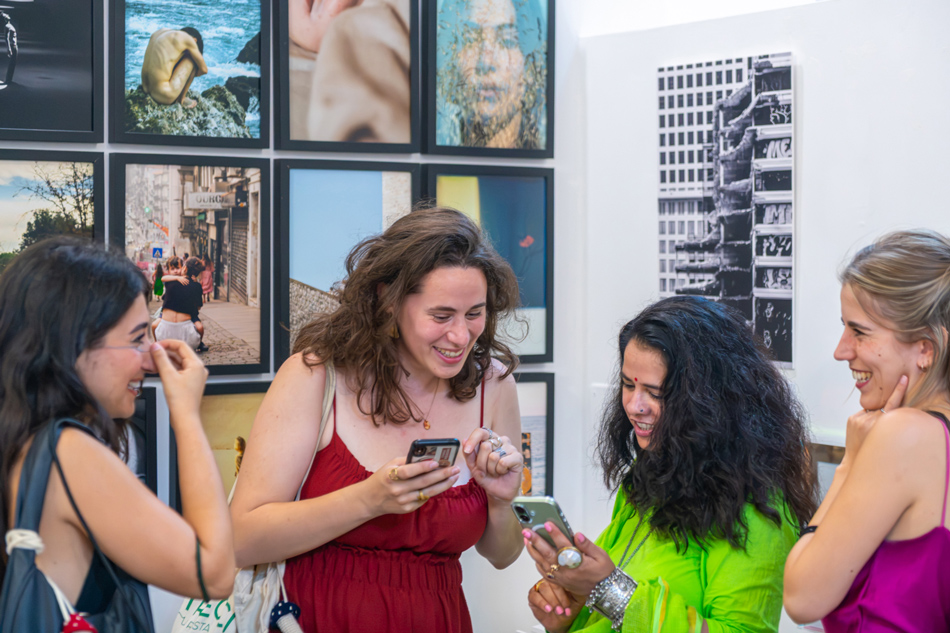
The photographic practices presented in VISIONS reveal how far contemporary photography has moved from the idea of simply documenting reality. In Danny Johananoff’s images, movement and colour dissolve documentary precision, transforming encounters and landscapes into unstable perceptions. Magnus Østermann approaches photography as a personal space, constructing fragmented images shaped by vulnerability and resilience. Vladan Marinkovic moves the medium towards a different territory, suspended between mythology, self-representation, and the search for beauty. These approaches demonstrate that a camera never produces a completely neutral truth: every image already contains a choice, and therefore a point of view.
Painting constructs what does not yet exist
In painting, the process is reversed. Adrï Menéghïni works through layers, gestures, and experimentation in which imperfection itself becomes part of the image-making process. Andrew Gibbs uses cities and architecture as vessels of memory, while Patricia Graham moves between figuration and abstraction to give form to vulnerability and transformation. In Diana Rîmbu’s practice, painting assumes an introspective dimension in which colour and composition search for something that cannot simply be described. The canvas therefore does not reproduce an already existing world: it creates the possibility of constructing another one.
When languages begin to overlap
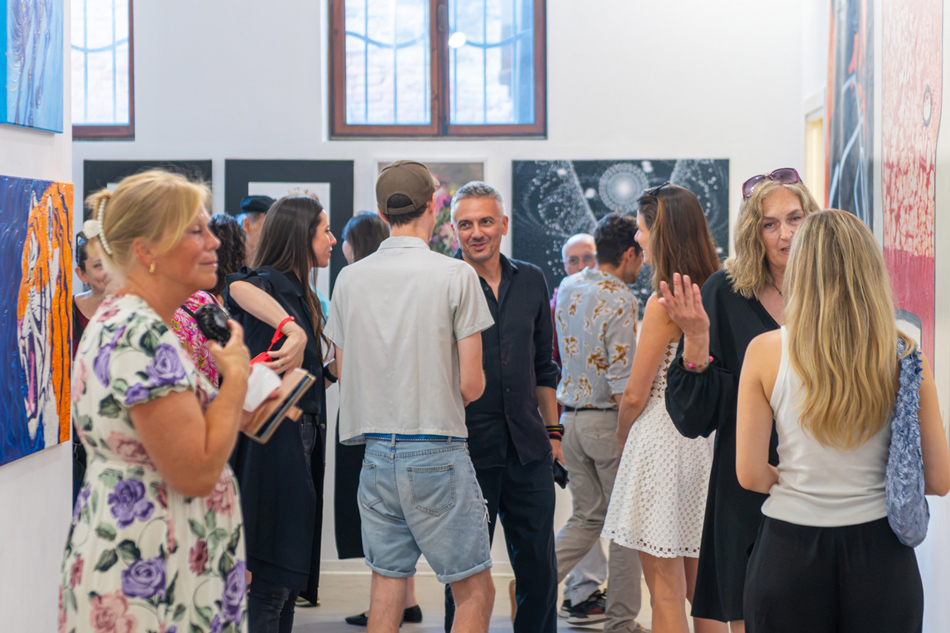
The distinction between painting and photography becomes less clear as soon as the works enter the same space. A photographer can approach colour like a painter; a painter can structure an image with the precision of a photographic frame. This is where the group exhibition becomes particularly interesting. VISIONS did not ask which medium was better equipped to represent the present. Instead, it allowed visitors to see how different tools can arrive at similar questions. The exhibition review itself emphasises the convergence of perception, emotion, and transformation, presenting painting, photography, and mixed media as parts of a shared journey between external reality and inner experience.
Producing connections, not only exhibitions
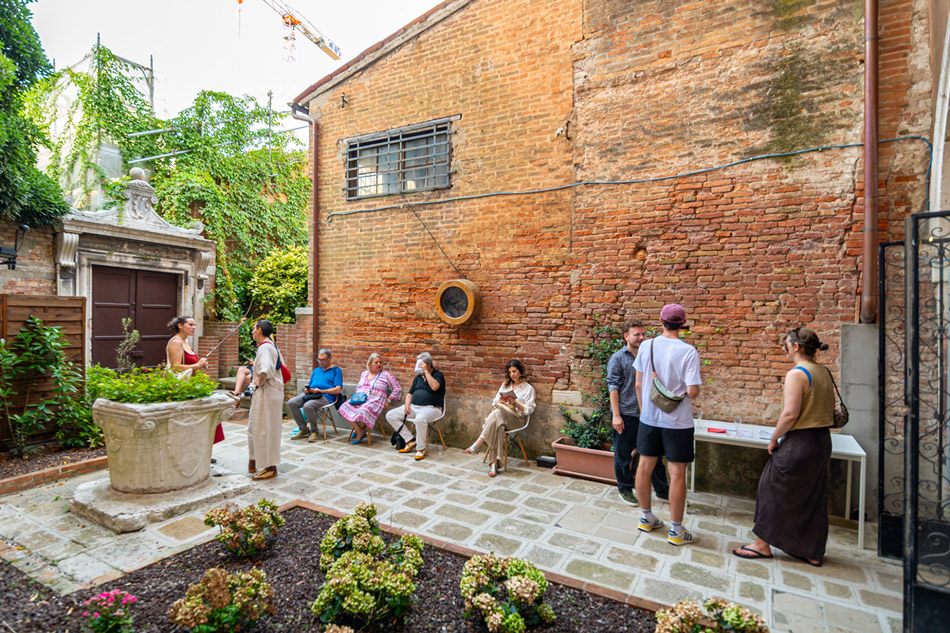
Darte’s co-production and the two curatorial projects form part of a broader system of European connections. Venice creates a particular condition: during the Biennale, artists working in very different contexts can find themselves in the same city alongside curators, professionals, and international audiences. Palazzo Albrizzi-Capello intensifies this experience. Its historic rooms, stuccoes, and frescoes continually contrast with contemporary works, making the exhibition feel less like a neutral sequence of objects and more like an experience shaped by the space itself. ITSLIQUID has developed international exhibition programmes at Palazzo Albrizzi-Capello for years in collaboration with ACIT Venice.
To see is always to choose
Perhaps the most interesting idea left by VISIONS lies in its title. A vision never completely corresponds to what stands before us. It contains experience, memory, culture, and desire. Photography may begin with reality and transform it; painting may begin with imagination and make it visible. Both remind us that seeing is never a passive act. An international exhibition becomes meaningful when it does more than gather a large number of works, creating instead the conditions for distant perspectives to enter into relation. In a city hosting one of the world’s greatest concentrations of contemporary art at that moment, VISIONS offered another possibility: to consider how much the world can change when the way we look at it changes.
“Art becomes a space of transformation, connection, and shared human experience.”
— ITSLIQUID, VISIONS – ANIMA MUNDI 2026 exhibition review
JOIN DARTE.
If you are an artist you can be part of our next exhibition. Start your journey now!
Become a member