
Less is less
We turned minimalism into a religion of good taste. Sometimes an empty room is just an empty room.
ART FRIED® Contemporary culture, served hot. Read in one shot. Digest later. For years, we were taught that removing things was automatically more sophisticated. Fewer colours, fewer objects, fewer words, less noise, less everything. Minimalism moved from being a radical aesthetic position to becoming the default language of respectable taste: white galleries, beige homes, near-empty packaging, logos stripped to the edge of anonymity, restaurants where dinner arrives as three objects on a plate and one of them appears to be air. At some point, “less is more” stopped sounding like a provocation and started reading like a corporate guideline. The problem is that subtraction does not automatically create precision. It can also create sterility, timidity and a suspicious lack of ideas. An empty wall can be powerful. It can also just be the place where nobody knew what to put. Maybe the more interesting form of luxury now is knowing when to add. Colour, ornament, density, contradiction, even excess — all the things good taste spent years treating with suspicion are starting to feel alive again. Not because minimalism is dead, but because it succeeded too completely. Once a code becomes dominant, it stops feeling neutral and starts feeling predictable. And in matters of taste, predictability is far more dangerous than excess. Less can be more. But when everyone is doing less, sometimes less is just less. Art. Culture. No cold takes.
Keep reading
AI isn’t the problem. It’s showing us how predictable we are.
AI isn’t just learning how to make images. It’s learning how easily it can imitate what we call style.
Art is no longer competing only with art
An artwork now has to survive in the same world as fashion campaigns, music videos, memes, cinema, design and images generated in seconds.
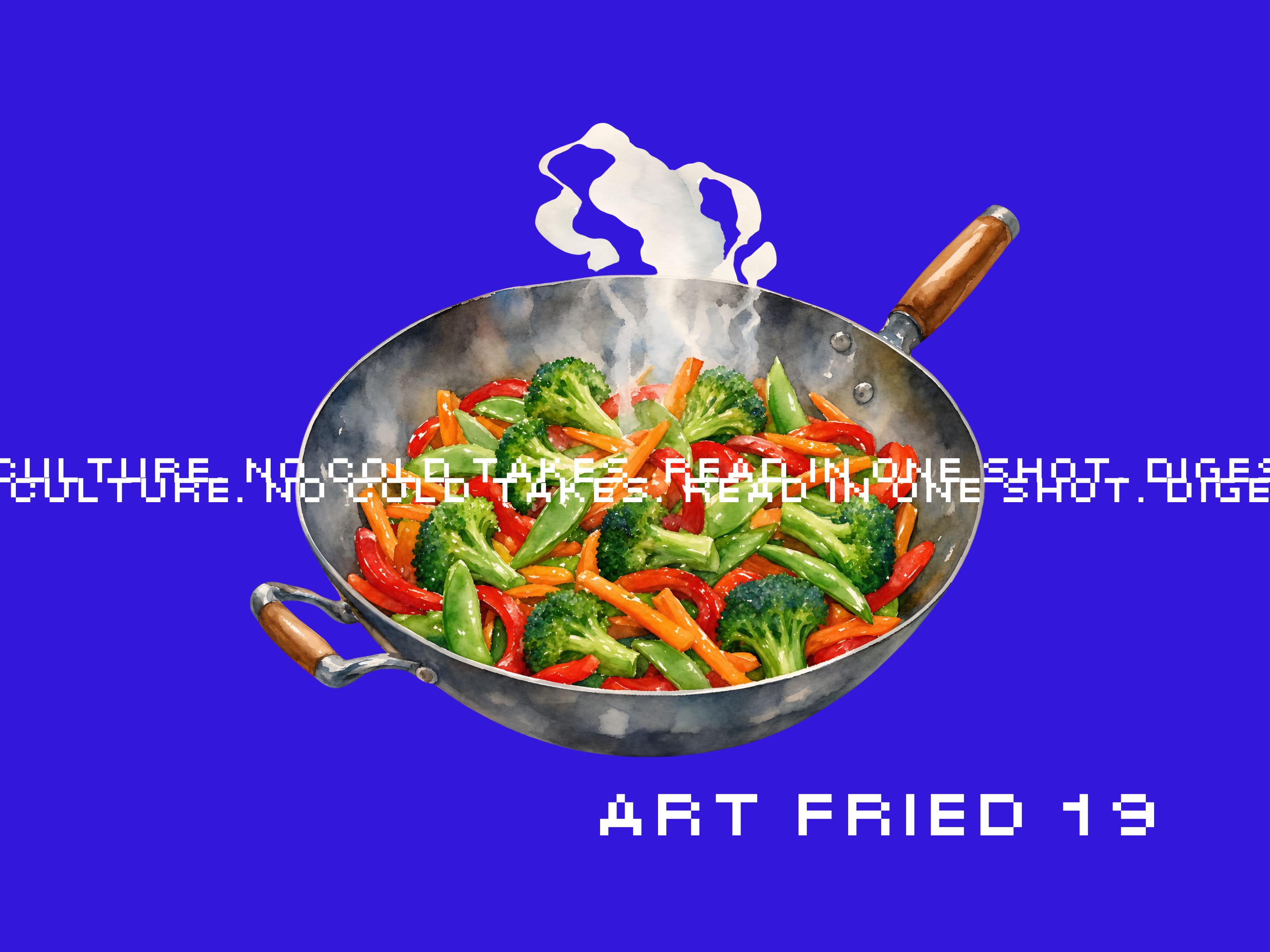
Why does everyone want to look like they don’t care?
We turned not caring into a performance. It takes an extraordinary amount of effort.