
Antonio Ligabue: when art arrives before the system
Obsessive self-portraits, wild animals, landscapes of the Po Valley, and a practice developed outside academic pathways. Antonio Ligabue’s story has often been told through marginalisation and suffering. But what happens if we stop looking at his biography first and begin with the work?
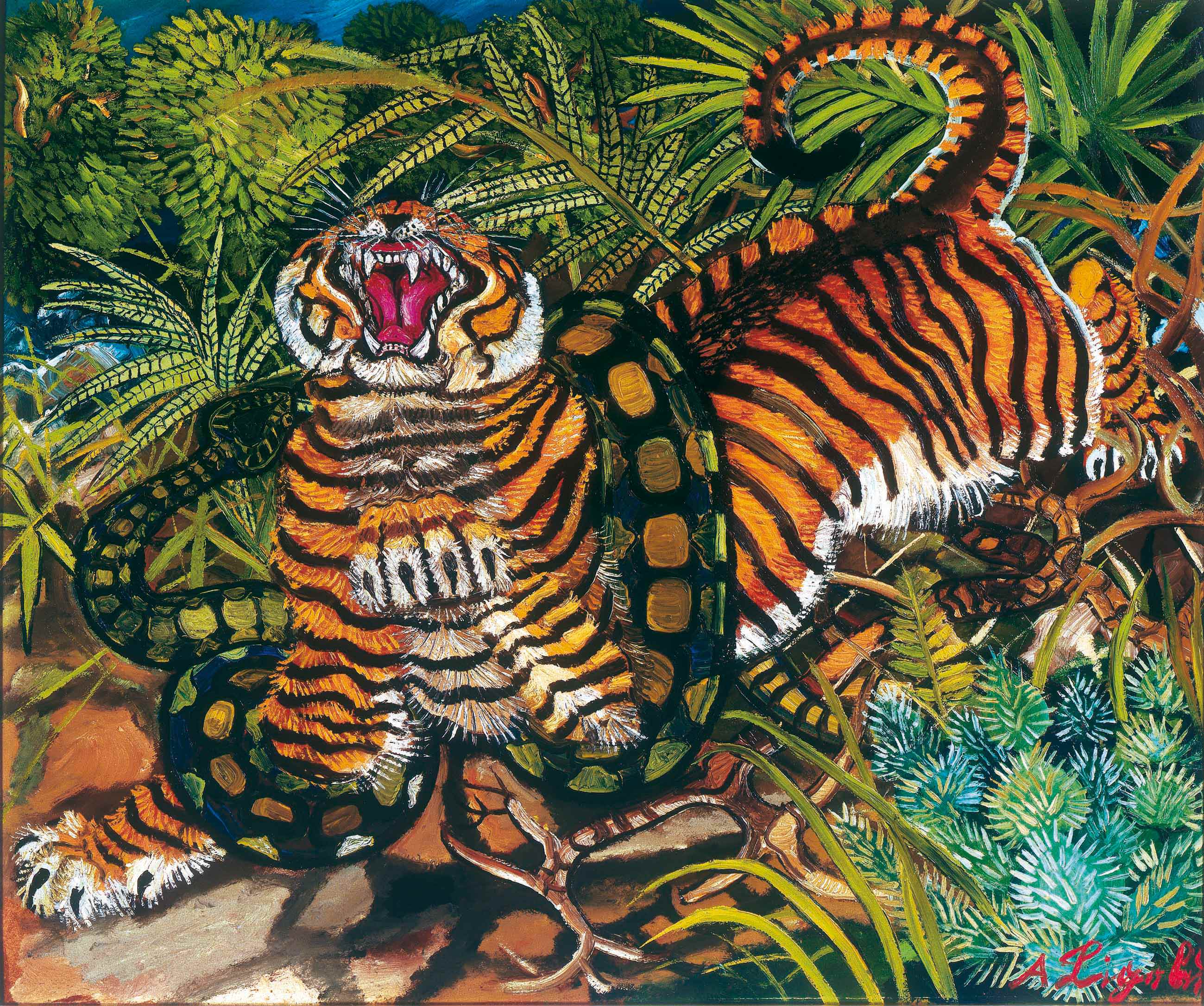
“Sometimes the art system does not discover an artist. It simply arrives late.”
— Andrea Tapparini - Darte Editorial
First comes the man. Then comes the label
Antonio Ligabue arrived in Gualtieri on 9 August 1919. He had been born in Zurich twenty years earlier, spent a childhood marked by instability and repeated displacement, and had been expelled from Switzerland. When he was taken to the town connected to his adoptive father’s origins, he spoke no Italian and almost immediately tried to return to Switzerland. He failed. A new life began along the Po, between occasional labour, public assistance, and long periods of isolation. It was during these years that painting gradually became central to his existence.
Self-taught does not mean without research
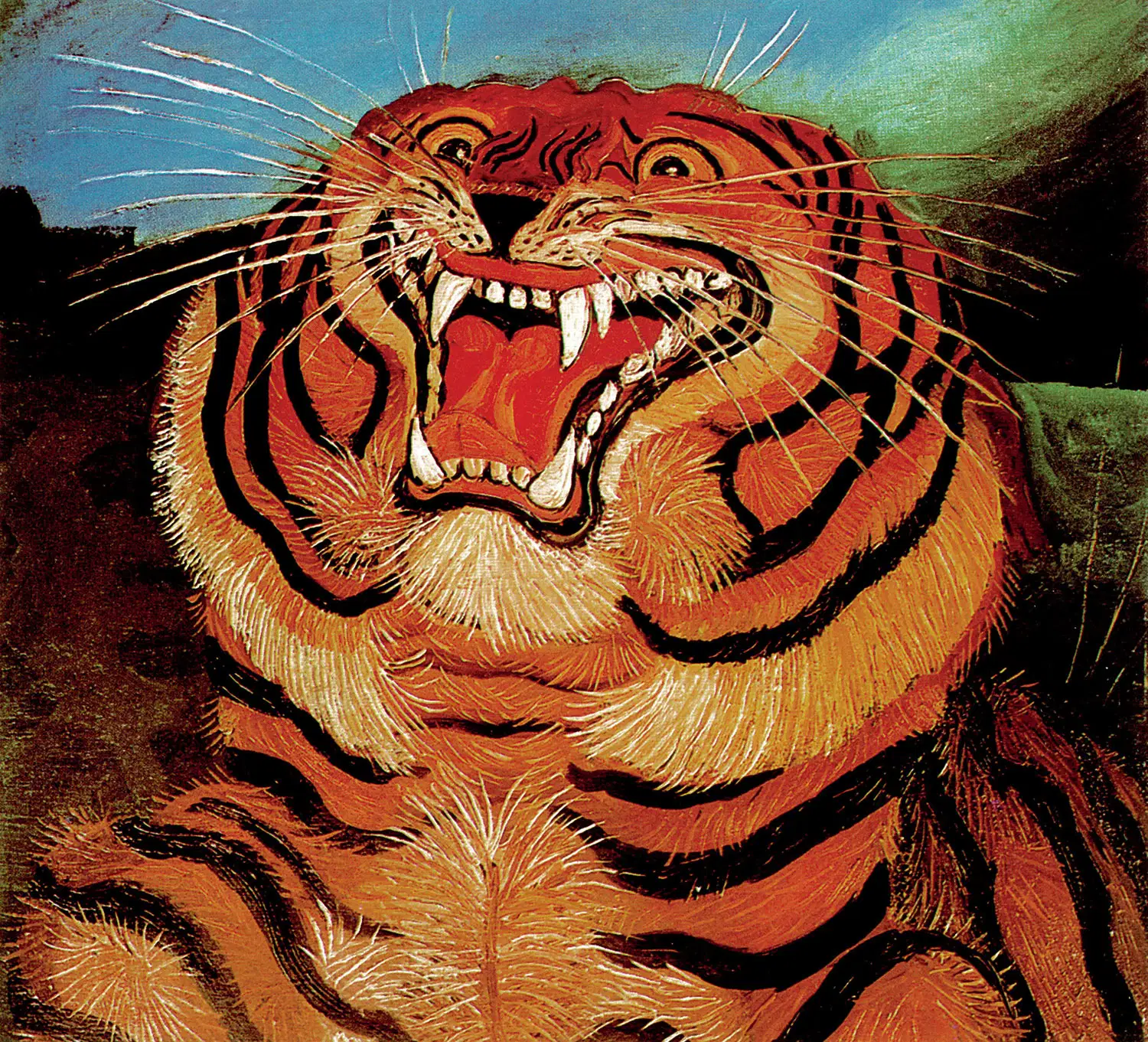
Ligabue is still frequently described as a naïve and self-taught artist. These categories can be useful, but they become problematic when they imply a practice without structure, references, or awareness. His path was certainly far removed from the academy, but it did not develop in a vacuum. In 1928 he met Renato Marino Mazzacurati, one of the first artists to recognise the quality of his work, support him materially, and encourage his use of oil paint.
Ligabue also constructed images through an intense visual memory. Landscapes, daily life, animals, photographs, postcards, cinema, and art reproductions could all become material to absorb and reconstruct. His painting therefore did not emerge from an absence of visual culture, but from a personal and non-institutional way of building one. How much art do we risk misunderstanding when we confuse the absence of academic training with the absence of research?
The animals are never just animals
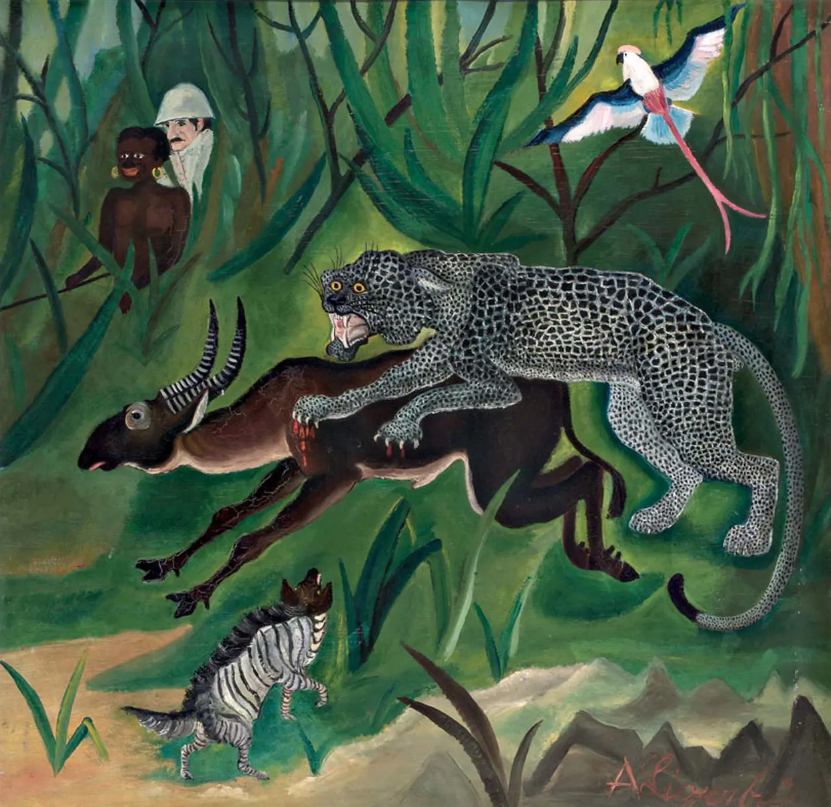
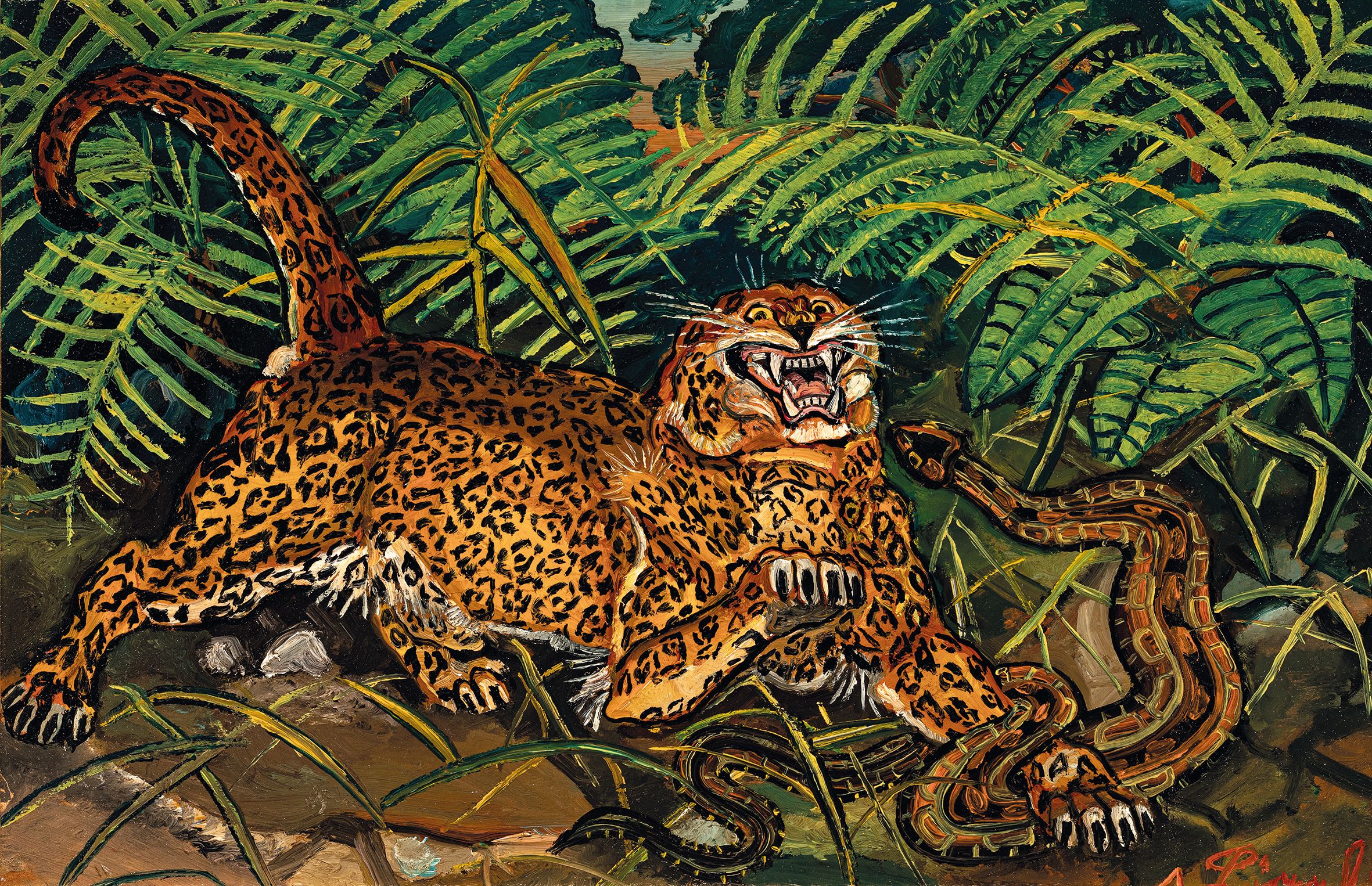
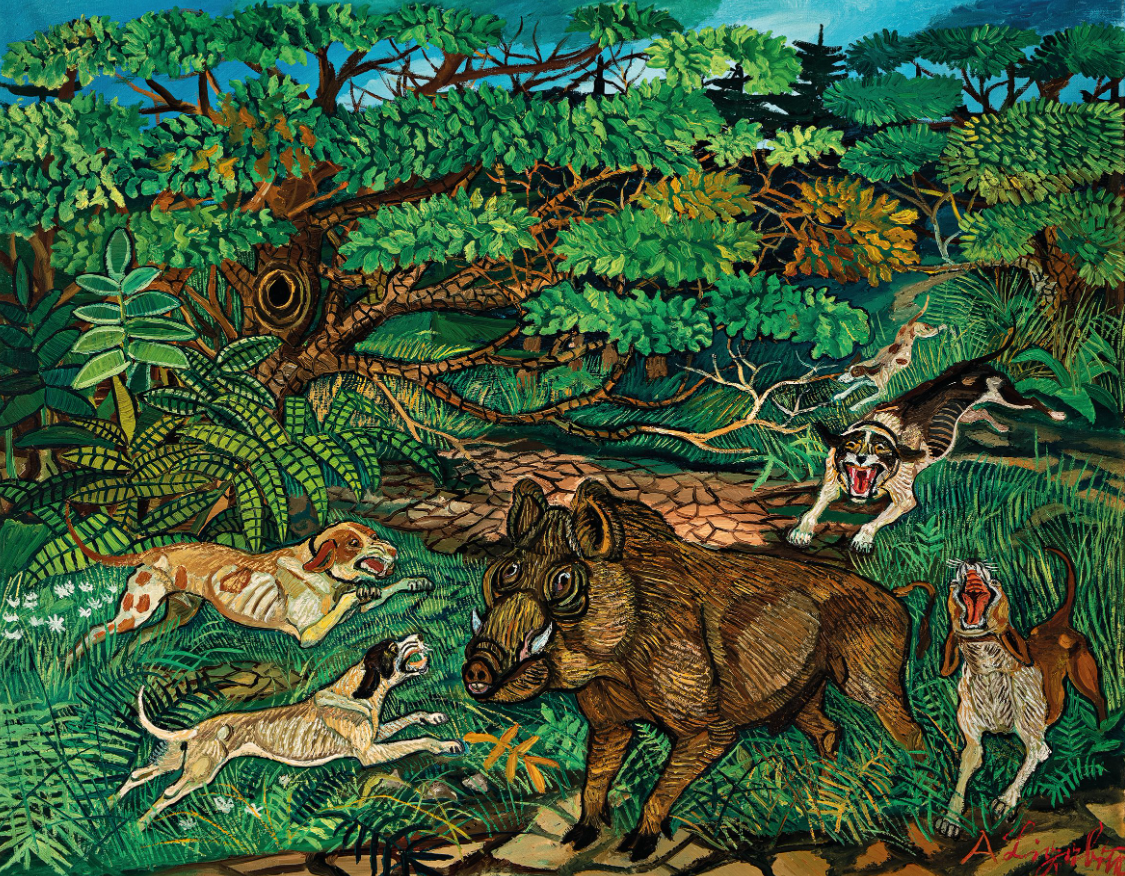
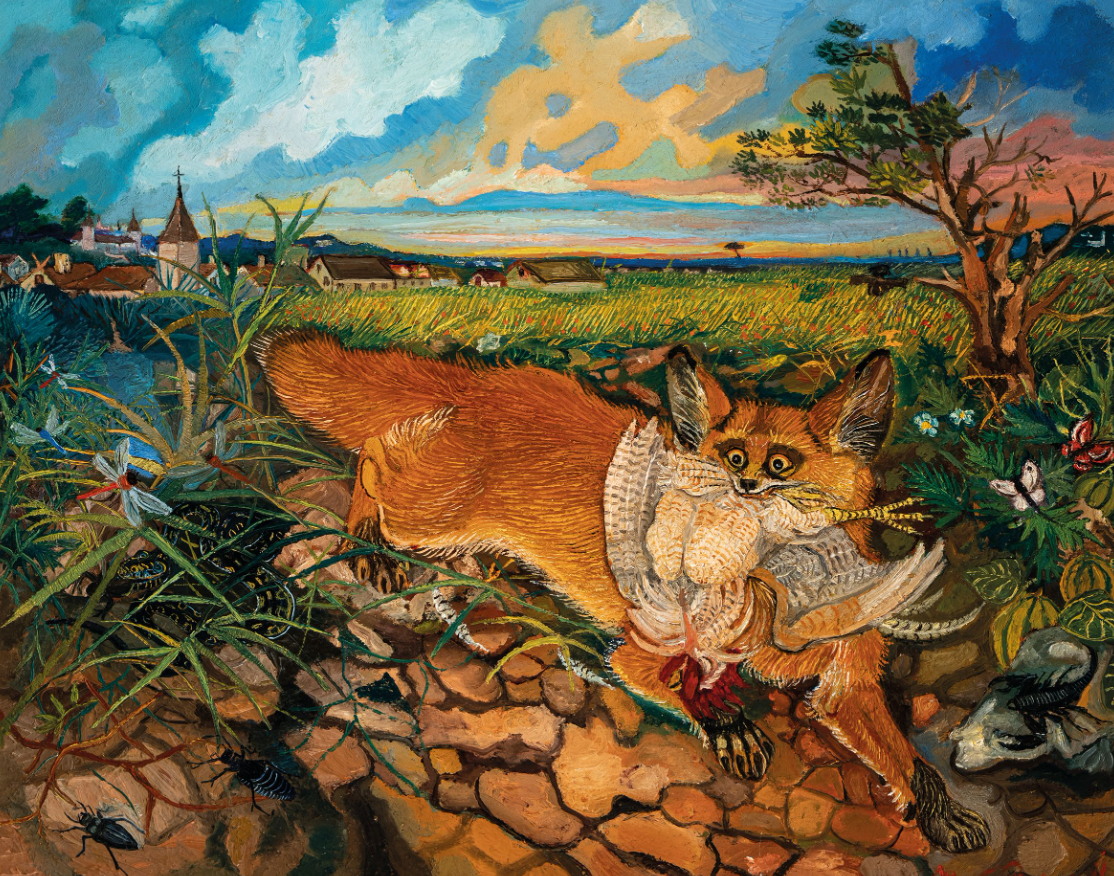
Tigers, leopards, eagles, roosters, foxes, and domestic animals obsessively populate his visual universe. They may appear still, but far more often seem caught immediately before an attack, in the middle of a fight, or struggling to survive. Treccani identifies wild animals as one of the most recognisable subjects of his painting, while Palazzo dei Diamanti has reconstructed a much broader repertoire including agricultural landscapes, hunts, snowstorms, still lifes, and scenes of rural life.
It is tempting to turn those animals into a psychological explanation of the artist’s troubled life. But an artwork should not become merely a symptom of its maker’s biography. Ligabue’s images also reveal a precise understanding of tension: muscles, teeth, claws, posture, vegetation, and colour all contribute to scenes in which something always seems about to happen. The artist’s life can help us understand these images. It should not prevent us from actually looking at them.
Looking at himself, again and again
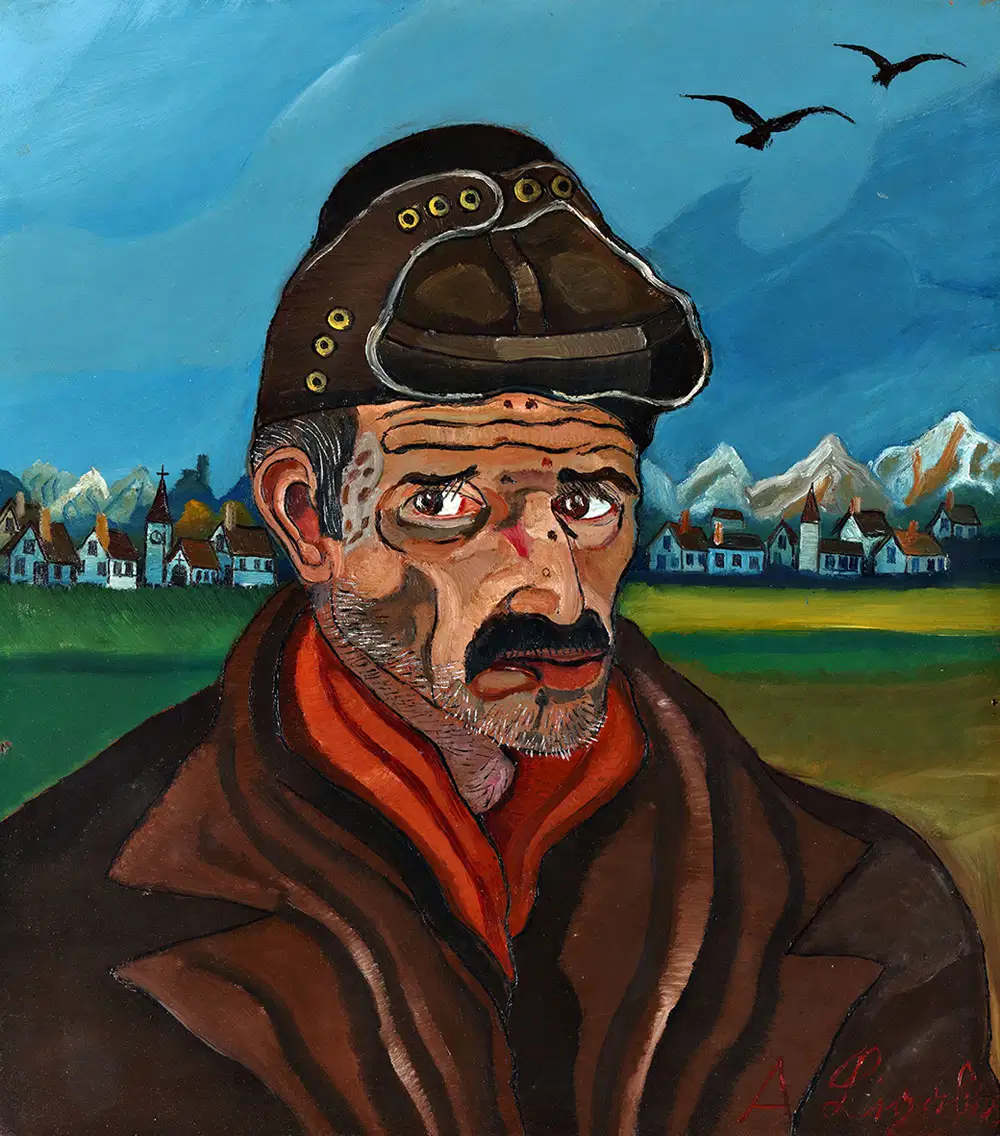
Then there are the self-portraits. Ligabue repeatedly returned to his own face: the frontal eyes, ears, nose, wrinkles, neck, and clothing. Palazzo dei Diamanti has described these works as an intimate diary, while its educational interpretation of the exhibition presented portraiture as a process of analysis and self-analysis rather than a simple search for aesthetic resemblance.
These images matter because they reverse the position in which Ligabue was so often placed. For much of his life, other people looked at him, described him, judged him, and defined him through his difference. In the self-portrait, the direction changes: he constructs his own image. Not necessarily to make it more beautiful. To make it his.
The problem with categories
Calling Ligabue “naïve” is not historically incorrect. Treccani identifies him as the best-known Italian naïve painter. The problem begins when a category stops helping us read an artwork and starts replacing the artwork itself.
It is significant that the major retrospective organised in 2020 by Palazzo dei Diamanti and Fondazione Ferrara Arte brought together more than one hundred paintings, sculptures, and drawings while explicitly seeking to examine Ligabue’s entire career beyond rigid labels and critical categories. Animals, self-portraits, landscapes, still lifes, and sculpture revealed a practice considerably more complex than the stereotypical image of an instinctive and isolated painter. Categories are necessary to art history. But they should remain doors through which we enter, not rooms in which we permanently confine an artist.
The system arrives late
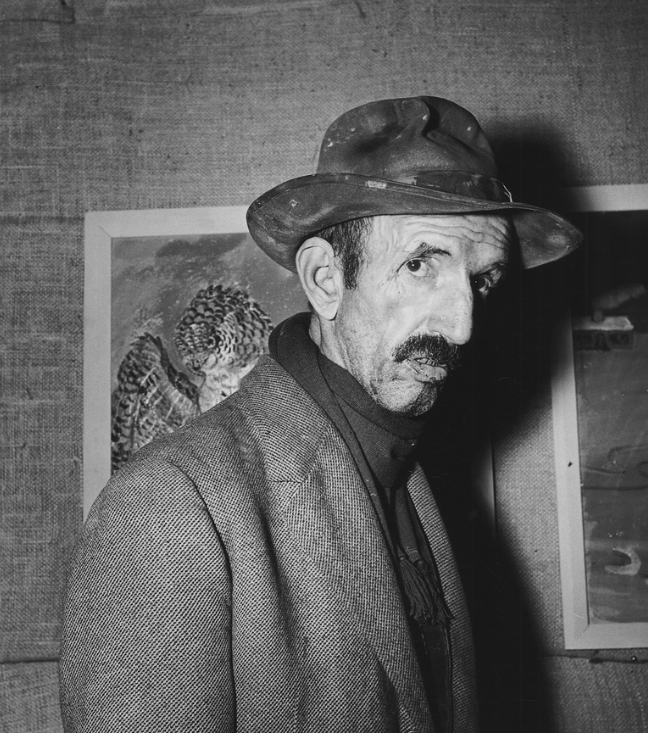
For years, Ligabue painted before the art system found a way to properly position him. Critical interest began to grow only towards the end of the 1940s. In 1957, journalist Severo Boschi and photojournalist Aldo Ferrari travelled to Gualtieri and produced a feature that contributed to his growing recognition. His first solo exhibition arrived in 1961 at Galleria La Barcaccia in Rome. In 1963, Guastalla dedicated a major retrospective to him. Two years later, on 27 May 1965, Ligabue died in Gualtieri.
The sequence matters. An artist is not born at the moment someone discovers them. By the time the gallery, newspaper, exhibition, and critics arrived, Ligabue’s practice had already existed for decades. That is true of Ligabue, but it opens a question about the art system as a whole. How many artists are considered marginal simply because the system has not yet built the context required to understand them?
Do not romanticise the margins
There is, however, an opposite risk: turning Ligabue into the romantic symbol of the pure artist who creates better precisely because he exists outside society. Precarity, marginalisation, institutionalisation, and solitude do not need to be transformed into necessary conditions for talent. His story instead shows how an artist can continue producing despite circumstances that make the work harder. His encounter with Mazzacurati also demonstrates how even a deeply autonomous practice can change when someone provides tools, attention, and recognition.
This also changes how we can think about accessibility in art. Recognising non-academic paths does not mean glorifying isolation. It means creating more opportunities for a practice to encounter knowledge, tools, audiences, and critical attention without first having to resemble what the system already knows how to recognise.
The work comes before its position
Today Antonio Ligabue has a museum and foundation in Gualtieri, appears in collections and major retrospectives, and occupies a place within popular culture. His life has been retold through cinema, while exhibitions continue to generate new critical interpretations of his work. The system that for so long struggled to determine where he belonged eventually built an increasingly complex history around his practice.
But perhaps the point is not to celebrate the eventual triumph of the misunderstood genius. It is to remember that value and recognition do not necessarily emerge at the same moment. An artist can possess a practice before having a CV. They can develop a language before having a network. They can produce important work before a convenient category exists to describe it. Who decides, then, when an artist truly enters art history? Ligabue still forces us to consider a less reassuring possibility: sometimes the artist was already there. It was the system that had not yet arrived.
Keep reading
Gil Zablodowsky: dove il suono diventa geometria
Per IMAGO al MUST di Lecce, Gil Zablodowsky porta l’astrazione digitale in dialogo con l’architettura, il suono e lo spazio fisico. In questa conversazione con DARTE, l’artista riflette sulla geometria come linguaggio visivo, sulla traduzione delle frequenze acustiche in immagini, sulla tensione tra precisione tecnologica e presenza umana e su ciò che accade quando l’arte digitale abbandona lo schermo per entrare nello spazio reale.
AI isn’t the problem. It’s showing us how predictable we are.
AI isn’t just learning how to make images. It’s learning how easily it can imitate what we call style.
Art is no longer competing only with art
An artwork now has to survive in the same world as fashion campaigns, music videos, memes, cinema, design and images generated in seconds.